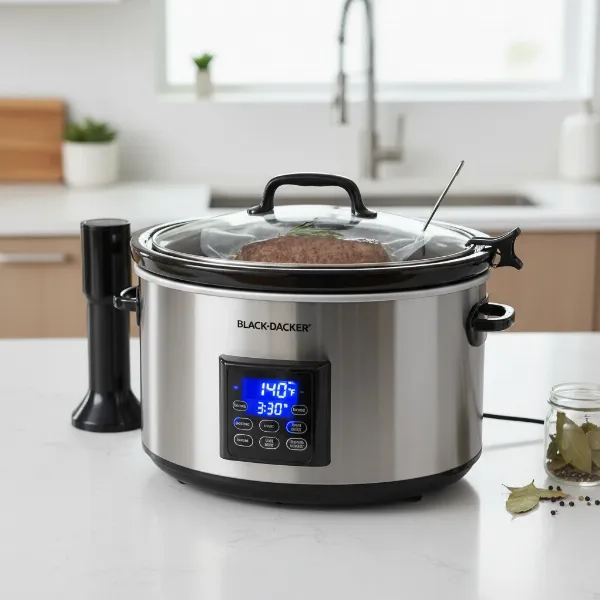
For busy home cooks, the slow cooker is a cherished kitchen companion, simplifying meal prep and delivering comforting dishes with minimal effort. But as health consciousness grows, many are questioning the materials used in their cookware, especially the liners of slow cookers that are exposed to food for extended periods. GreenPan has emerged as a prominent brand focusing on “healthy” ceramic non-stick solutions, prompting the question: is a GreenPan slow cooker, with its ceramic non-stick coating, truly a better and healthier alternative to traditional options? Let’s delve into the features of GreenPan’s offerings and compare them to other materials on the market.
What is a Slow Cooker and How Does GreenPan Innovate?
A slow cooker is an electric appliance designed to cook food at lower temperatures over an extended period, making tougher cuts of meat tender and infusing dishes with rich flavors. It typically consists of a heating unit, a removable inner pot, and a lid. Traditional slow cookers often feature ceramic or stoneware crocks, while more modern versions, including those by GreenPan, incorporate advanced non-stick materials.
GreenPan distinguishes itself with its commitment to toxin-free cooking. The brand utilizes a proprietary Thermolon Volt ceramic non-stick coating in its slow cookers. This innovative coating is specifically engineered to be free of PFAS (per- and polyfluoroalkyl substances), PFOA (perfluorooctanoic acid), lead, and cadmium, addressing common concerns associated with conventional non-stick cookware. GreenPan’s approach emphasizes not just convenience but also promoting healthier cooking practices, appealing to a growing segment of consumers prioritizing food safety.
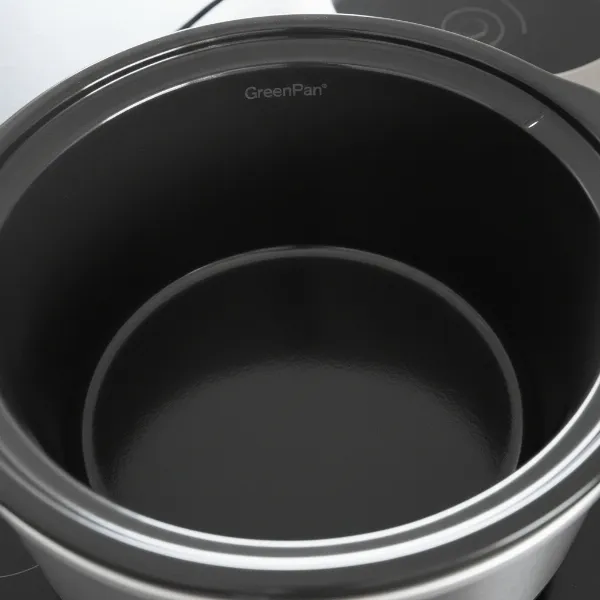 Close-up of a GreenPan slow cooker's Thermolon Volt ceramic non-stick interior, highlighting its smooth surface.
The GreenPan Elite Slow Cooker: Features and Benefits
GreenPan offers several popular slow cooker models, such as the Elite 6-Quart, 8-in-1, and 14-in-1 programmable multi-cookers, all built around their signature ceramic non-stick technology. These appliances are designed to be versatile powerhouses in the kitchen, offering more than just slow cooking.
Key features often include:
- PFAS-Free Thermolon Volt Ceramic Non-Stick Coating: This is the cornerstone of GreenPan’s appeal, providing a non-toxic cooking surface that ensures easy food release and cleanup. The coating is often infused with diamonds for enhanced durability.
- Multi-Functional Capabilities: Many GreenPan Elite models boast numerous presets, ranging from 8-in-1 to 14-in-1 functions. These can include:
- Slow Cook (High, Medium, Low, Simmer)
- Sear/Sauté/Brown
- Roast
- Steam (often with a steamer basket)
- Bake
- Rice (white and brown)
- Soup
- Reheat
- Keep Warm
- Delay Timer
- Hard-Anodized Pot Construction: The removable inner pot is typically made from hard-anodized aluminum, providing a durable and robust base that often allows for stovetop browning before slow cooking.
- Precise Temperature Control: GreenPan slow cookers maintain steady temperatures, ensuring consistent cooking results for tender, evenly cooked meals. For instance, the low setting often hovers between 194℉ and 208℉, ideal for slow cooking.
- Easy Cleanup: The non-stick surface, combined with dishwasher-safe components like the lid and inner pot, makes post-meal cleaning remarkably simple.
- Convenient Design Elements: Features like a lid rest or kickstand, stay-cool handles, and intuitive digital controls with LED displays enhance the user experience.
The benefits of these features are clear: GreenPan slow cookers offer exceptional versatility, allowing you to sear ingredients directly in the pot to build flavor before slow cooking, thus reducing the number of dirty dishes. The commitment to a non-toxic coating provides peace of mind for health-conscious individuals, while the ease of use and cleaning adds to overall kitchen efficiency.
Ceramic Non-Stick vs. Traditional Non-Stick: A Health and Performance Showdown
When considering a slow cooker, the material of the cooking pot is paramount, influencing both performance and health implications. The primary debate often centers around traditional non-stick, ceramic non-stick, and other materials.
Traditional Non-Stick (PTFE/Teflon): The Concerns
|
Our Picks for the Best Slow cooker in 2026
As an Amazon Associate I earn from qualifying purchases.
|
||
| Num | Product | Action |
|---|---|---|
| 1 | Ninja MC1101 Foodi Everyday Possible Cooker Pro, 8-in-1 Versatility, One-Pot Faster Cooking Replaces 10 Tools, Family-Sized Capacity with Adjustable Temp Control, 6.5 quarts, Midnight Blue |

|
| 2 | Crock-Pot 6 Quart Programmable Slow Cooker with Timer and Auto Food Warmer Setting, Stainless Steel |
|
| 3 | Hamilton Beach Slow Cooker, Extra Large 10 Quart, Stay or Go Portable With Lid Lock, Dishwasher Safe Crock, Black (33195) |
|
| 4 | Ninja MC1001 Foodi PossibleCooker PRO 8.5 Quart Multi-Cooker, with 8-in-1 Slow Cooker, Dutch Oven, Steamer, Glass Lid Integrated Spoon, Nonstick, Oven Safe Pot to 500°F, Sea Salt Gray |
|
| 5 | Crock-Pot 7 Quart Oval Manual Slow Cooker, Stainless Steel (SCV700-S-BR), Versatile Cookware for Large Families or Entertaining |
|
| 6 | Crock-Pot 6 Quart Cook & Carry Programmable Slow Cooker with Digital Timer Stainless Steel (CPSCVC60LL-S) pack of 1 |
|
| 7 | Slow Cooker 10-Quart - PFOA-Free Ceramic Coating, Oven Safe to 450°F - Keep Warm Function for Large Family Gatherings (Includes Silicone Spoon) |
|
| 8 | Hamilton Beach 6-Quart Slow Cooker with 3 Cooking Settings, Dishwasher-Safe Stoneware Crock & Glass Lid, Silver (33665G) |
|
| 9 | Ninja® 12-in-1 PossibleCooker™ PLUS - 8.5-qt - Sous Vide & Proof Multi-Cooker - Slow Cooker, Dutch Oven & More - Glass Lid & Integrated Spoon - Nonstick - Oven Safe Pot to 500°F - Black - MC1010 |
|
| 10 | Crock-Pot Large 8-Quart Programmable Slow Cooker with Auto Warm Setting Black Stainless Steel |
|
Traditional non-stick coatings, often made with polytetrafluoroethylene (PTFE), commonly known as Teflon, have been a kitchen staple for decades due to their superior food release. However, these coatings belong to a group of chemicals called PFAS (per- and polyfluoroalkyl substances). While generally considered safe when unscratched and used below certain temperatures (around 480°F), traditional non-stick can degrade at higher heats, potentially emitting gases. More significantly, PFAS are known as “forever chemicals” because they break down slowly and can accumulate in the environment and human body, with some research suggesting potential adverse effects on health, including impacts on cholesterol levels, reproduction, and immunity. For slow cooking, which involves extended cooking times, there’s an increased concern about the potential for substances to leach into food if the coating is compromised or degrades.
GreenPan’s Ceramic Non-Stick (Thermolon Volt): A Healthier Alternative?
GreenPan’s Thermolon Volt ceramic non-stick coating presents itself as a significantly healthier alternative. Unlike traditional non-stick, it is proudly PFAS-free, PFOA-free, lead-free, and cadmium-free. This means it avoids the “forever chemicals” and heavy metals often associated with conventional non-stick cookware. The diamond-infused nature of GreenPan’s coating also aims to enhance its durability, a common concern with ceramic non-stick in general.
From a performance standpoint, GreenPan’s ceramic non-stick provides excellent food release, making cooking and cleanup effortless. Users consistently praise how easily food slides off the surface. For home cooks looking to minimize chemical exposure without sacrificing convenience, GreenPan’s ceramic non-stick offers a compelling option.
Durability and Lifespan Considerations
While GreenPan’s Thermolon Volt is designed for durability, ceramic non-stick coatings, in general, tend to be more brittle than PTFE-based coatings and can be prone to chipping or scratching if not handled with care. GreenPan states its coating is metal utensil safe; however, many experts still recommend using wooden or silicone utensils to maximize the coating’s longevity. It’s also important to remember that all non-stick coatings, regardless of type, will inevitably wear down over time, leading to a decline in their non-stick performance. Even with proper care, a non-stick slow cooker insert might need replacement after a few years. Any significant scratches or chips could potentially expose underlying materials and reduce the effectiveness of the non-stick surface.
Exploring Other Non-Toxic Slow Cooker Options
While GreenPan offers a leading ceramic non-stick solution, it’s worth exploring other materials for slow cooker inserts, each with its own advantages and considerations.
Stainless Steel: The Gold Standard for Durability and Safety
For those prioritizing ultimate longevity and a completely inert cooking surface, stainless steel is often considered the safest and most durable material for a slow cooker insert. High-quality stainless steel (e.g., 18/8 or 18/10 surgical grade) is non-reactive and naturally free of coatings, lead, PFAS, and aluminum. It won’t leach chemicals into your food, even during prolonged cooking, and is far less prone to cracking or chipping than ceramic. Brands like 360 Cookware are known for their “heirloom quality” stainless steel slow cookers, which can often be used directly on the stovetop. While stainless steel is not inherently non-stick, it performs exceptionally well for moist dishes like soups, stews, and chilis that are typical for slow cooking.
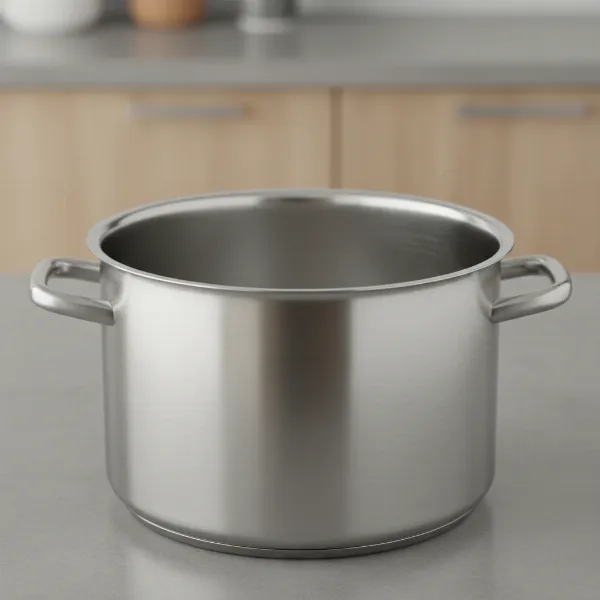 Shiny stainless steel slow cooker insert, emphasizing durability and a chemical-free cooking surface.
Glazed Ceramic & Aluminum: What to Watch Out For
Traditional glazed ceramic crocks are common in slow cookers, but older models may contain lead or cadmium in their glazes, which can leach into food, especially when cooking acidic ingredients. Newer ceramic slow cookers are generally safer, but trace amounts of these heavy metals can still be a concern for some. Furthermore, ceramic can crack if subjected to sudden temperature changes or accidental drops.
Aluminum inserts are lightweight and good conductors of heat, but there’s a long-standing debate about whether aluminum leaching into food, particularly with acidic ingredients or extended cooking, poses health risks, such as a potential link to Alzheimer’s disease. Many modern aluminum inserts are hard-anodized or coated to prevent direct food contact, but cautious consumers often prefer to avoid it.
Choosing the Right Slow Cooker for Your Kitchen
The best slow cooker for you ultimately depends on your priorities:
- For Health-Conscious Users Prioritizing Non-Stick Convenience: The GreenPan slow cooker with its Thermolon Volt ceramic non-stick coating is an excellent choice. It offers the convenience of easy food release and cleanup while being demonstrably free of PFAS, PFOA, lead, and cadmium. Its multi-functional capabilities further enhance its value, allowing for browning and other cooking methods in a single pot.
- For Maximum Durability and Zero Chemical Exposure: A slow cooker with a high-quality stainless steel insert is your best bet. While it won’t offer the slick non-stick properties, it provides unparalleled peace of mind regarding material safety and often boasts superior longevity.
- For Budget-Conscious Users: Traditional slow cookers with glazed ceramic crocks can be more affordable. If opting for these, ensure they are from reputable brands that certify their products are lead and cadmium-free.
Ultimately, understanding the materials and their implications empowers you to make an informed decision. For many, GreenPan strikes a desirable balance between health considerations and practical cooking convenience, making its ceramic non-stick a compelling option in today’s market.
GreenPan Slow Cooker: Pros and Cons at a Glance
| Feature/Aspect | Pros | Cons |
|---|---|---|
| Coating Safety | PFAS-free, PFOA-free, lead-free, cadmium-free ceramic non-stick | Coating can degrade over time, leading to reduced non-stick performance |
| Versatility | Multi-functional (sear, sauté, roast, steam, bake, slow cook, etc.) | May be bulkier than single-function slow cookers |
| Ease of Use | Intuitive controls, one-touch presets, digital display | Some models have a learning curve for menu navigation |
| Cleaning | Excellent non-stick properties, removable pot often dishwasher safe | Requires careful handling (wooden/silicone utensils recommended) |
| Durability | Diamond-infused Thermolon Volt for enhanced scratch resistance | Ceramic coatings can be more brittle than traditional non-stick |
| Price | Offers premium functionality and health benefits | Generally a higher price point than basic slow cookers |
Conclusion
The GreenPan slow cooker, with its innovative Thermolon Volt ceramic non-stick coating, offers a compelling solution for modern kitchens. It stands out by providing a robust, multi-functional appliance that prioritizes health, being free from PFAS, PFOA, lead, and cadmium. While traditional non-stick raises valid health concerns and stainless steel offers the utmost in inertness and durability, GreenPan successfully bridges the gap, delivering a convenient, easy-to-clean, and genuinely healthier non-stick experience. For those who frequently rely on their slow cooker and seek to minimize chemical exposure, GreenPan’s ceramic non-stick is indeed a superior and worthwhile choice. What healthy slow-cooked meal will you prepare next?
Frequently Asked Questions
Is the GreenPan slow cooker truly PFAS-free?
Yes, GreenPan’s slow cookers feature their proprietary Thermolon Volt ceramic non-stick coating, which is certified free of PFAS, PFOA, lead, and cadmium. This commitment to eliminating “forever chemicals” is a core tenet of the brand’s design and manufacturing process, offering peace of mind for health-conscious cooks.
Can I use metal utensils with GreenPan’s ceramic coating?
GreenPan states that its Thermolon Volt coating is metal utensil safe due to its diamond infusion. However, to maximize the longevity and preserve the non-stick performance of the coating, it is generally recommended to use wooden or silicone utensils. Avoiding sharp objects or aggressive scraping motions will help prevent potential damage.
How long do GreenPan slow cookers last?
Like all non-stick cookware, the lifespan of a GreenPan slow cooker’s ceramic coating can vary depending on usage and care. While designed for durability, the coating will naturally wear over time, typically lasting several years with proper maintenance. Following care instructions, such as hand-washing when possible and using appropriate utensils, can extend its life.
What are the main cooking modes on a GreenPan Elite slow cooker?
The GreenPan Elite slow cookers are highly versatile, often featuring 8-in-1 or even 14-in-1 programmable functions. Common modes include slow cook (high, medium, low), sear/sauté, roast, steam, bake, soup, rice cooking, reheat, keep warm, and a delay timer. This wide array of functions allows the appliance to perform many tasks beyond just traditional slow cooking.