There’s nothing quite like the convenience of a slow cooker, letting delicious aromas fill your home as a meal simmers to perfection. Yet, a common frustration for many home cooks is ending up with a thin, watery sauce or stew instead of the rich, thick gravy they envisioned. If your slow cooker dishes often leave you stirring, hoping for a miracle, you’re not alone. This guide will reveal the secrets to achieving beautifully thick, deeply flavorful sauces and stews every time, transforming your slow-cooked meals from good to absolutely glorious.
The Mystery of Thin Slow Cooker Sauces: Why It Happens
Understanding why slow cooker sauces tend to be thin is the first step toward correcting the issue. Unlike traditional stovetop or oven cooking, the unique environment of a slow cooker works against natural thickening.
The Sealed Environment: Trapped Moisture and Minimal Evaporation
|
Our Picks for the Best Slow cooker in 2026
As an Amazon Associate I earn from qualifying purchases.
|
||
| Num | Product | Action |
|---|---|---|
| 1 | Ninja MC1001 Foodi PossibleCooker PRO 8.5 Quart Multi-Cooker, with 8-in-1 Slow Cooker, Dutch Oven, Steamer, Glass Lid Integrated Spoon, Nonstick, Oven Safe Pot to 500°F, Sea Salt Gray |

|
| 2 | Crock-Pot 7 Quart Oval Manual Slow Cooker, Stainless Steel (SCV700-S-BR), Versatile Cookware for Large Families or Entertaining |
|
| 3 | Ninja MC1101 Foodi Everyday Possible Cooker Pro, 8-in-1 Versatility, One-Pot Faster Cooking Replaces 10 Tools, Family-Sized Capacity with Adjustable Temp Control, 6.5 quarts, Midnight Blue |
|
| 4 | Hamilton Beach 6-Quart Slow Cooker with 3 Cooking Settings, Dishwasher-Safe Stoneware Crock & Glass Lid, Silver (33665G) |
|
| 5 | Slow Cooker 10-Quart - PFOA-Free Ceramic Coating, Oven Safe to 450°F - Keep Warm Function for Large Family Gatherings (Includes Silicone Spoon) |
|
| 6 | Crock-Pot 6 Quart Cook & Carry Programmable Slow Cooker with Digital Timer Stainless Steel (CPSCVC60LL-S) pack of 1 |
|
| 7 | Crock-Pot Large 8-Quart Programmable Slow Cooker with Auto Warm Setting Black Stainless Steel |
|
| 8 | Crock-Pot 6 Quart Programmable Slow Cooker with Timer and Auto Food Warmer Setting, Stainless Steel |
|
| 9 | Ninja® 12-in-1 PossibleCooker™ PLUS - 8.5-qt - Sous Vide & Proof Multi-Cooker - Slow Cooker, Dutch Oven & More - Glass Lid & Integrated Spoon - Nonstick - Oven Safe Pot to 500°F - Black - MC1010 |
|
| 10 | Hamilton Beach Slow Cooker, Extra Large 10 Quart, Stay or Go Portable With Lid Lock, Dishwasher Safe Crock, Black (33195) |
|
Slow cookers operate at low temperatures and typically feature a tightly fitted lid. This design is fantastic for tenderizing meats and melding flavors over hours, but it significantly reduces the evaporation that naturally thickens sauces in conventional cooking. Any moisture released from ingredients or added as liquid remains largely trapped within the pot, diluting the sauce. This condensation often drips back into the dish, adding even more liquid.
Ingredients That Release Liquid: Vegetables and Meats
Many common slow cooker ingredients, particularly vegetables like onions, mushrooms, celery, and even meats, release a substantial amount of water as they cook. While essential for flavor and tenderness, this natural moisture contributes to the overall liquid volume in your pot, further thinning your sauce or stew. Without sufficient evaporation, this extra liquid has nowhere to go.
Proactive Steps: Preventing Watery Sauces from the Start
The best way to achieve a thick sauce is to manage liquid from the outset. A few smart adjustments to your preparation can make a significant difference, reducing the need for last-minute thickening.
Don’t Skimp on Searing: Browning Meat and Sautéing Aromatics
One of the most impactful steps you can take is to brown your meat and sauté your aromatics (like onions and garlic) before adding them to the slow cooker. Searing meat creates a flavorful crust through the Maillard reaction, which not only deepens the taste of your dish but also helps to seal in juices, preventing too much liquid release. Similarly, sautéing vegetables allows some of their inherent moisture to evaporate before they hit the slow cooker, concentrating their flavor and reducing their contribution to a watery sauce.
Mind Your Liquids: Using Less Than You Think You Need
Slow cooker recipes often require less liquid than their stovetop counterparts. A good rule of thumb is to reduce the amount of broth, water, or other liquids by about a third compared to traditional recipes. You can always add more liquid later if the dish seems too dry, but it’s much harder to remove excess. Many ingredients, especially high-moisture vegetables, will create a surprising amount of liquid during the long cooking process.
The Flour Dredge: A Simple Pre-Cooking Thickener
Coating your meat or heartier vegetables in a light dusting of flour before browning them can provide an initial thickening boost. As the flour cooks, it absorbs some of the released moisture and starts to thicken the sauce right from the beginning. This method is particularly effective for beef stews or pot roasts, contributing to a rich, cohesive gravy.
The Lid Trick: Allowing Controlled Evaporation
If your slow cooker dish is looking particularly soupy towards the end of its cooking time, you can encourage some natural evaporation. Prop the lid open slightly (using a chopstick or wooden spoon) for the last 30-60 minutes of cooking. This allows steam to escape, reducing the liquid without drying out your meal. Another effective trick is to place a paper towel under the lid to absorb condensation, preventing it from dripping back into the food. [cite: 2, search 3]
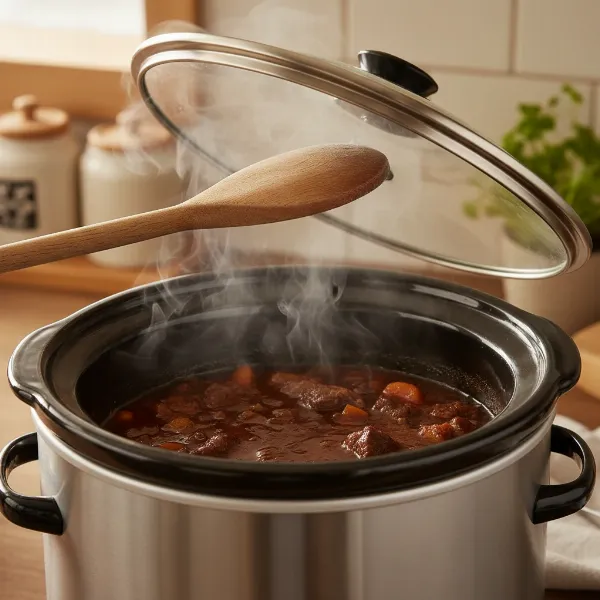 A slow cooker with its lid propped open slightly, allowing steam to escape for sauce reduction.
Effective Thickening Methods for Your Slow Cooker
Even with preventative measures, sometimes a slow cooker dish still needs a little help to reach that perfect, hearty consistency. Fortunately, several reliable techniques can be employed towards the end of the cooking process.
The Power of Starches: Cornstarch and Arrowroot Slurries
Starches are perhaps the most popular and effective way to thicken sauces and stews. Cornstarch (often called cornflour) and arrowroot powder are excellent choices. To use them, always create a “slurry” by mixing equal parts starch with cold water (or broth) until smooth and lump-free. A common ratio is 1-2 tablespoons of cornstarch per 1-2 tablespoons of cold water. [cite: 1, search 1] Add this slurry to your slow cooker during the last 20-30 minutes of cooking, stirring gently. For best results, switch the slow cooker to its “high” setting if possible to ensure the liquid reaches a simmer, activating the starch and allowing it to thicken. [cite: 1, 3, search 2]
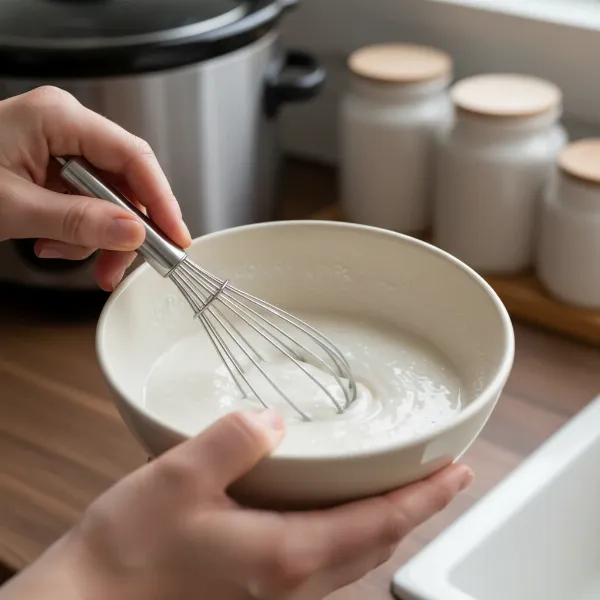 A person whisking a smooth cornstarch slurry in a small bowl, ready to add to a slow cooker.
Flour-Based Thickeners: Traditional Roux and Simple Slurries
While cornstarch is often preferred for its clear finish and potent thickening power, flour is a classic choice, especially for gravies.
- Traditional Roux: A roux, made by cooking equal parts butter and flour on the stovetop until a paste forms, offers a rich, nutty flavor. You’ll need to remove some hot liquid from your slow cooker, whisk it gradually into the roux in a saucepan, and then return the thickened mixture to the slow cooker. This method requires a bit more effort outside the slow cooker but delivers a deeply flavored sauce. [cite: 3, search 1]
- Simple Flour Slurries: You can also create a flour slurry with cold water, similar to cornstarch. However, flour needs more cooking time to lose its raw taste and thicken properly, usually at least 30 minutes on high. Some find that flour can produce a cloudier sauce and may occasionally clump if not whisked thoroughly.
Instant Helpers: Mashed Potato Flakes and Breadcrumbs
For a quick and easy thickening solution, especially in stews, instant mashed potato flakes are a secret weapon. Simply stir a tablespoon or two directly into your hot stew during the last few minutes of cooking. The flakes absorb excess liquid and disappear into the dish, adding body without altering the flavor or texture noticeably. [cite: 1, 5, search 2] Breadcrumbs can also be used similarly, adding texture and absorbing liquid, particularly good for meatloaves or dishes where a slight bread-like consistency is welcome.
Natural Thickening: Pureeing Vegetables or Beans
For a healthier, often unnoticed thickening method, consider pureeing a portion of your cooked vegetables. Remove a cup or two of the stew’s contents (mostly vegetables), blend them until smooth using an immersion blender or a standard blender, and then return the puree to the slow cooker. This adds body and richness without extra starches or fats. Pureed white beans or sweet potatoes can also be added for a similar effect and a nutritional boost. [cite: 2, search 2]
Enriching with Dairy: Cream and Evaporated Milk
If your dish permits, adding dairy can lend a luxurious, creamy texture and some thickening power. Heavy cream, evaporated milk, or even full-fat coconut milk (for dairy-free options) can be stirred in during the last 15-30 minutes of cooking. Be cautious with fresh cream or yogurt, as prolonged high heat can cause curdling; adding them towards the very end on a lower heat setting is safer. Evaporated milk is more stable for slow cooking. [cite: 2, search 2]
Comparing Thickening Agents: Which One is Right for Your Dish?
Choosing the best thickener depends on your desired outcome, dietary needs, and the type of dish.
| Thickener | Best Use Case | Pros | Cons | Method |
|---|---|---|---|---|
| Cornstarch/Arrowroot | Clear, glossy sauces; Asian dishes; most stews | Very effective; gluten-free (arrowroot); no flavor change; quick | Requires slurry; can become gummy if overused | Mix with equal cold water to form a slurry. Stir into hot liquid during the last 20-30 min of cooking (ideally on high) until thickened. |
| All-Purpose Flour | Hearty stews, gravies; rustic dishes | Traditional flavor; common pantry item | Can leave raw flour taste if not cooked enough; can clump; cloudier | Slurry: Mix with cold water, add to slow cooker for the last 30+ min on high. Roux: Cook with butter on stovetop, then whisk in liquid from slow cooker, return to pot. |
| Instant Potato Flakes | Beef stews, pot roasts; any savory stew | Very easy; no lumps; neutral flavor | Can make texture slightly mealy if too much is added | Stir 1-2 tablespoons directly into the hot stew at the end of cooking until dissolved and desired consistency is reached. |
| Pureed Vegetables/Beans | Healthy stews, soups; adding nutritional value | Natural, healthy; adds depth of flavor | Can alter the texture and color of the dish | Remove a cup of cooked vegetables/beans, puree, and stir back into the slow cooker for the last 30 min. |
| Dairy (Evaporated Milk, Cream) | Creamy sauces, rich stews | Adds richness and smooth texture | Risk of curdling (fresh dairy); adds calories/fat | Stir in evaporated milk during the last 30 min. For fresh cream, add during the last 15 min on low heat to prevent curdling. |
Expert Tips for Achieving the Perfect Consistency
Mastering the art of thickening slow cooker dishes goes beyond just knowing the agents; it’s about technique and timing.
Timing is Everything: Add Thickeners Near the End
The optimal time to add most thickeners, especially starches, is towards the end of the cooking cycle. Adding them too early can lead to an overly thick, gluey consistency or cause the thickener to break down over the long cooking period, losing its efficacy. Aim for the last 20-60 minutes, depending on the thickener and desired results.
Always Slurry Starches: Avoid Lumps
Never add dry cornstarch, arrowroot, or flour directly to your hot slow cooker liquid. This almost guarantees lumps that are impossible to dissolve. Always whisk these starches with an equal amount of cold water or broth until completely smooth before adding them to the hot liquid. This creates a “slurry” that incorporates seamlessly.
Start Small, Add Gradually: Don’t Over-Thicken
It’s far easier to add more thickener than to thin out an overly thick sauce. Begin with a small amount of your chosen agent, stir it in, and allow it a few minutes to work. Observe the consistency, and if it’s not thick enough, add a little more slurry or flakes, repeating until you reach your desired gravy-like texture. Remember that sauces often thicken slightly more as they cool.
The Power of the Whisk
When adding any thickener, a good whisk is your best friend. Stirring vigorously ensures even distribution of the thickening agent and helps prevent lumps, creating a smooth, uniform sauce. Ensure you scrape the bottom and sides of the pot to incorporate all ingredients.
Common Mistakes to Avoid for a Perfectly Thickened Meal
Even with the best intentions, a few missteps can sabotage your efforts to achieve a thick, delicious slow cooker sauce.
Adding Dry Powder Directly
This is arguably the most common mistake. As mentioned, dumping dry cornstarch, flour, or other powdered thickeners directly into a hot liquid results in intractable lumps that are unpleasant in texture and prevent proper thickening. Always make a slurry first!
Expecting Magic Instantly: Patience is Key
Thickeners, especially starches, need heat and a little time to activate and reach their full potential. Don’t expect an immediate transformation the moment you add a slurry. Give it at least 5-10 minutes, especially if your slow cooker is on a lower setting, for the sauce to visibly thicken.
Forgetting to Cook Out Raw Flour Taste
If you’re using flour as a thickener, particularly in a direct slurry, it’s crucial to ensure it cooks for long enough. A raw flour taste can be quite unappetizing. This is why a roux is often preferred, as the flour is cooked upfront. If using a flour slurry, ensure it simmers for at least 30 minutes in the slow cooker to cook off any raw flour flavor.
Conclusion
Say goodbye to watery, disappointing slow cooker meals and hello to rich, luscious sauces and stews! With a few preventative measures, a deeper understanding of your slow cooker, and the right thickening techniques, you can effortlessly transform your favorite comfort foods into culinary masterpieces. Whether you opt for a simple cornstarch slurry, ingenious potato flakes, or the natural body of pureed vegetables, achieving that perfect, satisfying consistency is within your reach.
What’s your go-to slow cooker dish that you’re excited to thicken perfectly this week?
Frequently Asked Questions
Can I use plain flour directly in a slow cooker to thicken sauce?
It is strongly recommended not to add plain flour directly to your slow cooker. Adding dry flour will almost certainly result in lumps that are difficult to remove. For best results, always mix flour with an equal amount of cold water or broth to create a smooth slurry before stirring it into your slow cooker during the last 30 minutes of cooking.
How long does it take for a slow cooker sauce to thicken after adding cornstarch?
After adding a cornstarch slurry to your slow cooker, the sauce typically begins to thicken within 10-20 minutes. For optimal results, ensure the slow cooker is on a “high” setting or the liquid is at a gentle simmer, as heat is required to activate the cornstarch and achieve the desired consistency.
Can I reduce the liquid in my slow cooker without a stovetop?
Yes, you can reduce the liquid in your slow cooker without transferring it to the stovetop. Towards the end of the cooking time, remove the lid and switch your slow cooker to the “high” setting for the last 30-60 minutes. This allows more moisture to evaporate, naturally reducing and thickening the sauce. You can also place a paper towel under the lid to absorb condensation, preventing it from returning to the pot.