There’s a special joy in returning home to the aroma of a delicious meal that’s been simmering all day, thanks to the magic of a slow cooker. This kitchen workhorse has become a beloved appliance for busy households, transforming tough cuts of meat into tender delights and simplifying meal prep. But amidst the convenience and culinary charm, a critical question has emerged: are slow cookers truly safe, particularly concerning lead content? Ensuring your kitchen tools are free from harmful substances is paramount for your family’s health. This comprehensive guide will delve into the concerns surrounding lead in slow cookers, explore regulatory standards, and highlight certified safe brands so you can make an informed choice for your home.
Understanding Lead in Slow Cookers: What You Need to Know
A slow cooker, often generically referred to as a Crock-Pot, is an electric appliance designed to cook food at low temperatures over an extended period. Its primary components typically include an outer heating unit, a lid, and an inner cooking pot, often made of ceramic or stoneware. These ceramic inserts are prized for their ability to retain and distribute heat evenly, creating flavorful dishes.
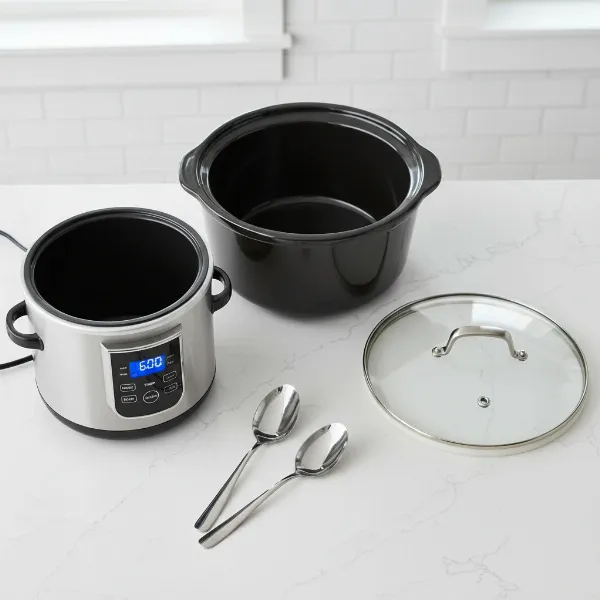 A disassembled slow cooker showing its main components, including a ceramic inner pot and heating base.
However, the concern about lead primarily stems from the glazes used on these ceramic or stoneware inserts. Historically, glazes contained lead to achieve vibrant colors, durability, or a smooth finish. While manufacturing standards have improved significantly, older slow cookers or those from less reputable manufacturers may still pose a risk. Even “lead-free” labels can be misleading; they often mean that lead levels fall below a specific regulatory threshold, not that the product is entirely free of lead. True “no lead” certification, verified by independent lab tests, offers a higher level of assurance.
The Hidden Dangers: Why Lead Exposure Matters
Lead is a well-documented neurotoxic heavy metal, and health experts widely agree that there is no safe level of lead exposure in food. Its presence, even in minute quantities, can accumulate in the body over time, leading to serious health issues affecting nearly every organ system. Chronic lead exposure can damage the brain, nervous system, kidneys, and blood.
Children and pregnant individuals are particularly vulnerable to lead’s adverse effects. In children, lead poisoning is linked to developmental delays, learning disabilities, lower IQ scores, and behavioral problems. For pregnant women, lead exposure can result in miscarriage, premature birth, and developmental problems for the fetus. Lead can leach from slow cooker glazes into food, especially when the glaze is chipped, cracked, or exposed to acidic ingredients like tomatoes, vinegar, or citrus juices over long cooking periods. This leaching process makes the potential for daily exposure a significant concern for families who rely on their slow cookers regularly.
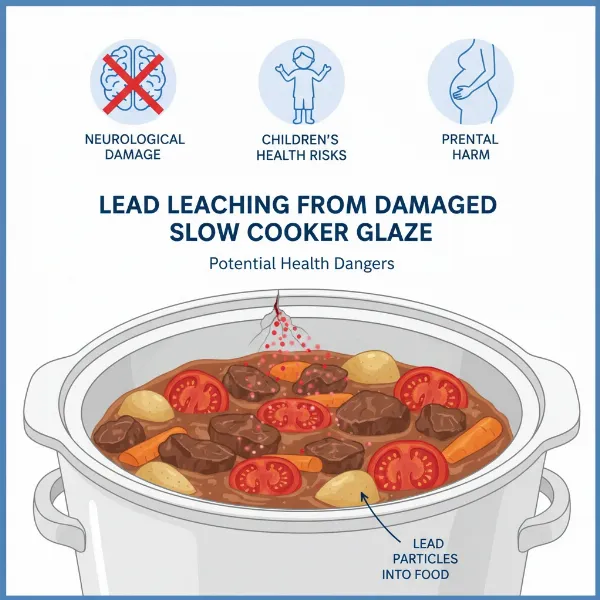 Diagram showing lead leaching from a chipped ceramic slow cooker into food, with symbols of health risks.
Navigating Regulations: FDA Guidelines and Certifications
In the United States, the Food and Drug Administration (FDA) plays a crucial role in safeguarding public health by monitoring contaminants in food and food contact surfaces. The FDA explicitly states that there are no regulations authorizing lead for use as a color additive or food additive in cookware or food contact surfaces. This means any cookware designed for food preparation should ideally be lead-free. The agency actively monitors lead levels in foods and leachable lead levels in cookware, issuing warnings and recalls for products found to leach significant amounts of lead. Recent FDA warnings have specifically targeted certain imported cookware made from aluminum, brass, and aluminum alloys (such as Hindalium/Indalium) that have demonstrated the potential to leach lead into food under cooking conditions.
Beyond federal guidelines, certifications like California’s Proposition 65 (Prop 65) offer an additional layer of consumer protection. Prop 65 requires businesses to provide warnings about significant exposures to chemicals that cause cancer, birth defects, or other reproductive harm. While not a complete ban on lead, compliance with Prop 65 standards often indicates a product has very low or undetectable levels of lead. Reputable brands frequently engage in rigorous third-party testing to ensure their products meet or exceed these stringent state and federal standards, providing consumers with greater peace of mind.
Identifying Safe Slow Cooker Materials
Choosing a slow cooker involves more than just selecting the right size or features; the material of the inner pot is a critical safety consideration. Different materials offer varying levels of protection against lead exposure and other potential toxins.
Stainless Steel
|
Our Picks for the Best Slow cooker in 2026
As an Amazon Associate I earn from qualifying purchases.
|
||
| Num | Product | Action |
|---|---|---|
| 1 | Ninja MC1001 Foodi PossibleCooker PRO 8.5 Quart Multi-Cooker, with 8-in-1 Slow Cooker, Dutch Oven, Steamer, Glass Lid Integrated Spoon, Nonstick, Oven Safe Pot to 500°F, Sea Salt Gray |

|
| 2 | Ninja® 12-in-1 PossibleCooker™ PLUS - 8.5-qt - Sous Vide & Proof Multi-Cooker - Slow Cooker, Dutch Oven & More - Glass Lid & Integrated Spoon - Nonstick - Oven Safe Pot to 500°F - Black - MC1010 |
|
| 3 | Crock-Pot 6 Quart Cook & Carry Programmable Slow Cooker with Digital Timer Stainless Steel (CPSCVC60LL-S) pack of 1 |
|
| 4 | Crock-Pot 7 Quart Oval Manual Slow Cooker, Stainless Steel (SCV700-S-BR), Versatile Cookware for Large Families or Entertaining |
|
| 5 | Crock-Pot Large 8-Quart Programmable Slow Cooker with Auto Warm Setting Black Stainless Steel |
|
| 6 | Crock-Pot 6 Quart Programmable Slow Cooker with Timer and Auto Food Warmer Setting, Stainless Steel |
|
| 7 | Hamilton Beach Slow Cooker, Extra Large 10 Quart, Stay or Go Portable With Lid Lock, Dishwasher Safe Crock, Black (33195) |
|
| 8 | Hamilton Beach 6-Quart Slow Cooker with 3 Cooking Settings, Dishwasher-Safe Stoneware Crock & Glass Lid, Silver (33665G) |
|
| 9 | Ninja MC1101 Foodi Everyday Possible Cooker Pro, 8-in-1 Versatility, One-Pot Faster Cooking Replaces 10 Tools, Family-Sized Capacity with Adjustable Temp Control, 6.5 quarts, Midnight Blue |
|
| 10 | Slow Cooker 10-Quart - PFOA-Free Ceramic Coating, Oven Safe to 450°F - Keep Warm Function for Large Family Gatherings (Includes Silicone Spoon) |
|
Uncoated stainless steel is widely considered one of the safest materials for cookware, including slow cooker inserts. It is non-reactive, meaning it won’t leach chemicals into your food, and it is naturally free of lead, PFAS (per- and polyfluoroalkyl substances), and aluminum. While trace amounts of nickel or chromium might leach, particularly during initial uses, these levels typically fall within safe limits for most individuals. Many modern multi-cookers and slow cookers now offer stainless steel inner pots, providing a durable and health-conscious option for daily cooking.
Non-toxic Ceramic/Stoneware
For those who prefer the traditional slow-cooking benefits of ceramic or stoneware, it’s essential to choose products carefully. Opt for reputable brands that explicitly state their ceramic inserts are Prop-65 certified and have undergone independent testing for leachable lead. These certifications indicate that the product contains minimal or no detectable lead that could migrate into food. It’s crucial to inspect ceramic inserts for any chips, cracks, or damage to the glaze, as these imperfections can compromise the integrity of the surface and increase the risk of lead leaching.
Pure Clay
Traditional pure clay cookware, such as that offered by Miriam’s Earthen Cookware (MEC), represents another excellent non-toxic option. These pots are crafted from lab-tested primary clay, free from glazes, additives, or chemicals. Products like MEC are certified “no lead” and are free from other contaminants, retaining the natural, earthy aesthetic of fired clay. They offer a unique way to slow cook, often on a stovetop, and are praised for preserving nutrients and enhancing flavors without the concern of leached toxins.
Ceramic Non-stick (PFAS-free)
Newer innovations in non-stick technology offer ceramic-coated options that are free from traditional harmful chemicals like PFOA (perfluorooctanoic acid) and PTFE (polytetrafluoroethylene), as well as the broader class of PFAS. Brands like GreenLife and Our Place are developing slow cookers with these advanced ceramic non-stick coatings, providing an easy-to-clean surface without the lead concerns associated with older ceramic glazes or the chemical risks of conventional non-stick. When considering these, always look for explicit “100% PFAS-free” claims from trusted manufacturers.
Certified Safe Slow Cooker Brands: Our Top Recommendations
When it comes to selecting a slow cooker, discerning which brands prioritize safety and adhere to strict standards can be challenging. Here are some of the brands that have demonstrated a commitment to minimizing or eliminating lead, using safer materials, and undergoing rigorous testing:
- Crock-Pot: The original slow cooker brand states that its ceramic pots are 100% safe, utilizing a silicate glaze composed of quartz, feldspar, and clay that does not contain PTFE or PFOA. They emphasize rigorous third-party testing to meet or exceed all applicable laws and industry standards for lead content. Some reports indicate their stoneware is Prop-65 certified with no leachable lead.
- Instant Pot (with Stainless Steel Inserts): While some Instant Pot models have had lead detected in non-food-contact heating elements, their inner cooking pots are typically made from stainless steel, which is a highly recommended lead-free material for food contact. When choosing an Instant Pot, focusing on models with stainless steel inserts, like the Instant Pot Duo Plus or Instant Pot Duo, helps ensure food safety.
- 360 Cookware: This brand stands out for its commitment to extremely low lead levels. Their slow cooker components, including the heating element, have been tested to contain less than 15 ppm (parts per million) of lead, which is significantly below the strict regulatory standards for children’s products (90-100 ppm). They are actively working towards entirely lead-free cooking bases.
- GreenLife & Our Place: These brands are known for their modern kitchenware featuring ceramic non-stick coatings that are explicitly 100% PFAS-free. Their slow cooker offerings with these advanced coatings provide a non-toxic alternative for those seeking easy clean-up without compromising health.
- Miriam’s Earthen Cookware (MEC): For a truly natural and “no lead” option, MEC offers handcrafted pure clay pots. These are lab-tested and certified free from lead and all other contaminants, as they use no glazes, colors, or additives. This is an ideal choice for the most health-conscious cook.
- Hamilton Beach: While less frequently highlighted in detailed lead testing reports, Hamilton Beach is a widely recognized brand that claims its products are lead-free. Anecdotal evidence from users who have conducted home lead tests on Hamilton Beach slow cookers has often shown positive results, giving many consumers peace of mind.
Here’s a quick overview of these brands and their key safety features:
| Brand | Inner Pot Material | Key Safety Feature |
|---|---|---|
| Crock-Pot | Ceramic/Stoneware | Prop-65 certified, rigorous third-party testing |
| Instant Pot | Stainless Steel (for inserts) | Naturally lead-free food contact surface |
| 360 Cookware | Stainless Steel (heating element) | <15 ppm lead in heating element, striving for zero lead |
| GreenLife | Ceramic Non-stick (PFAS-free) | 100% PFAS-free, non-toxic coating |
| Our Place | Ceramic Non-stick (PFAS-free) | 100% PFAS-free, non-toxic coating |
| Miriam’s Earthen Cookware | Pure Clay | Lab-tested “no lead,” no glazes or additives |
| Hamilton Beach | Ceramic/Stoneware or Stainless Steel | Claims lead-free, positive anecdotal user tests |
How to Choose a Lead-Safe Slow Cooker
Selecting the right slow cooker involves careful consideration of materials, certifications, and brand reputation. Here’s a guide to help you make an informed decision:
Prioritize Material
When possible, opt for slow cookers with stainless steel inserts. This material provides the highest assurance against lead leaching and offers excellent durability. If a ceramic or stoneware insert is your preference, ensure it comes from a reputable brand with clear safety declarations.
Look for Certifications
Seek out products that explicitly state compliance with rigorous safety standards. California Prop 65 certification for ceramic or stoneware inserts is a good indicator of minimal lead content. Even better is a brand that shares third-party lab tests demonstrating “no lead” or extremely low levels.
Inspect for Damage
Before purchasing and with every use, thoroughly inspect the interior of ceramic or stoneware pots for any chips, cracks, or visible damage to the glaze. Even minor imperfections can create pathways for lead to leach into your food, especially with prolonged cooking or acidic ingredients. A damaged pot should be replaced immediately.
Research Brands
Stick to well-established and reputable manufacturers known for their transparency and commitment to consumer safety. Check their official websites for information regarding material sourcing, manufacturing processes, and safety certifications. Online reviews and specialized non-toxic cookware blogs can also offer valuable insights.
Consider Usage
If you frequently cook acidic dishes such as chili, tomato-based sauces, or meals with vinegar, being extra vigilant about lead content is critical. Acidic environments are known to increase the potential for lead leaching from glazed surfaces. In these cases, a stainless steel insert or a pure clay pot is particularly advantageous.
Using and Maintaining Your Slow Cooker for Optimal Safety
Once you’ve chosen a lead-safe slow cooker, proper use and maintenance are key to ensuring its longevity and continued safety.
Initial Cleaning
Before its first use, always wash your slow cooker insert thoroughly with warm, soapy water. This removes any manufacturing residues or dust that may have accumulated.
Avoiding Damage
Handle ceramic and stoneware inserts with care to prevent chipping or cracking. Avoid sudden temperature changes, such as placing a hot ceramic pot directly into cold water, which can cause thermal shock and damage the glaze. Use non-abrasive utensils to prevent scratching the inner surface.
Cleaning & Care
After each use, clean the insert promptly. For ceramic and stoneware, use soft sponges or cloths and mild dish soap. Avoid harsh scourers or abrasive cleaners that could damage the glaze. Many inserts are dishwasher-safe, but handwashing is often gentler. For stainless steel, regular cleaning with soap and water is sufficient, and for stubborn stains, a baking soda paste can work wonders.
When to Replace
Regularly inspect your slow cooker insert. If you notice any significant chips, cracks, or degradation of the glaze, it’s time to replace the pot. Even if a slow cooker is “lead-safe,” damage can compromise its integrity and potentially expose you to underlying materials that may contain heavy metals. Don’t take chances with your health; when in doubt, replace it.
Where to Purchase Certified Lead-Safe Slow Cookers
Investing in a lead-safe slow cooker is an investment in your family’s health. To ensure you’re buying a genuine, high-quality product, always purchase from reputable sources.
Consider buying directly from manufacturer websites, as they often provide detailed product specifications, safety certifications, and warranty information. Major online retailers like Amazon, Wayfair, or specialty kitchen appliance stores are also good options, but always verify the seller’s reputation and read product descriptions carefully for safety claims. Brick-and-mortar stores specializing in kitchenware or electronics can allow you to physically inspect the product for quality and damage before purchase. Prioritize retailers that offer clear return policies and robust customer service, ensuring you can address any concerns promptly. Always confirm warranty information, as it provides protection for your investment and peace of mind regarding the product’s quality.
Conclusion
The slow cooker remains an invaluable appliance for simplifying meal preparation and enhancing culinary experiences. While historical concerns about lead in ceramic glazes have prompted careful consideration, modern manufacturing advancements and increased consumer awareness mean that numerous safe options are available today. By prioritizing materials like stainless steel, seeking out reputable brands with clear certifications such as Prop 65 compliance or “no lead” verification, and diligently inspecting for any damage, you can confidently choose a slow cooker that aligns with your commitment to healthy, non-toxic cooking. Empowering yourself with knowledge about lead in slow cookers allows you to make an informed decision, ensuring that every delicious meal prepared is not only convenient but also safe for you and your loved ones. What steps will you take to ensure your slow cooker meets the highest safety standards?
Frequently Asked Questions
Do all ceramic slow cookers contain lead?
No, not all ceramic slow cookers contain lead. Modern slow cookers from reputable brands often use lead-free glazes and undergo strict testing to ensure they meet safety standards like California Prop 65, which limits lead content. Always check for certifications and brand transparency.
How can I test my slow cooker for lead at home?
You can use a home lead test kit, typically involving a swab or a leach test with vinegar. While these kits can provide an indication of lead presence, they are not as precise as laboratory testing. For definitive results, professional lab testing is required.
Is stainless steel a completely lead-free option for slow cookers?
Yes, uncoated stainless steel is generally considered a completely lead-free and non-reactive material for slow cooker inserts. It is a preferred choice for many health-conscious consumers due to its durability and minimal risk of leaching harmful substances into food.
What are the dangers of lead leaching from a slow cooker?
Lead is a neurotoxin, and even low levels of exposure can be harmful, especially to children and pregnant women. It can cause developmental delays, neurological damage, and other health problems. Lead can leach from damaged glazes or when cooking acidic foods over extended periods.
What does “lead-free” mean for slow cookers, and is it sufficient?
“Lead-free” typically means lead content is below a certain regulatory threshold, such as 0.5% by weight. However, some argue that “no lead” verified by lab tests is a more accurate and safer standard, as no amount of lead exposure in food is considered truly safe.
Can older slow cookers pose a higher lead risk?
Yes, older slow cookers, particularly vintage models or those manufactured before stricter regulations were in place, are more likely to contain lead in their ceramic glazes. It’s often recommended to replace older ceramic slow cookers if their lead content cannot be verified as safe.
Are there any specific slow cooker brands the FDA has warned against for lead?
The FDA has issued warnings and recalls for specific imported cookware, often made from aluminum, brass, and aluminum alloys, found to leach lead. While these warnings have not specifically targeted major slow cooker brands (like Crock-Pot) for lead leaching, it underscores the importance of buying from reputable sources and checking for certifications.