The aroma of freshly baked bread is one of life’s simple pleasures, yet the idea of making it from scratch can feel daunting. Between kneading, proofing, and precisely timing the oven, many home cooks relegate bread baking to special occasions or store-bought alternatives. What if there was a way to achieve that comforting, homemade loaf with significantly less fuss? Enter the humble slow cooker – a kitchen workhorse typically reserved for stews and roasts, now ready to revolutionize your bread-making game. It actually works, delivering a moist, tender crumb that will surprise even seasoned bakers.
This comprehensive guide, drawn from years of experience with slow cookers, will walk you through the entire process, demystifying slow cooker bread and empowering you to bake delicious loaves effortlessly. We’ll cover everything from the basic science to advanced tips, ensuring your success from your very first attempt.
What is Slow Cooker Bread and How Does It Work?
Slow cooker bread refers to bread that is baked directly within the consistent, gentle heat of a slow cooker, often referred to as a Crockpot. Unlike traditional oven baking, which uses high, dry heat, a slow cooker creates a moist, enclosed environment, mimicking a Dutch oven or a steam-infused oven. This unique cooking method allows the dough to bake slowly and evenly, resulting in a distinctively soft and tender crumb.
The process leverages the slow cooker’s ability to maintain a steady temperature over an extended period. The heat radiates from the sides and bottom of the stoneware insert, gradually cooking the dough. Because the lid traps steam, the bread retains significant moisture, preventing it from drying out, which is a common challenge in conventional baking. While this method won’t produce the deeply golden, crispy crust characteristic of oven-baked bread on its top surface, it excels at creating a wonderfully soft interior and a surprisingly chewy bottom crust. The top will remain pale but fully cooked.
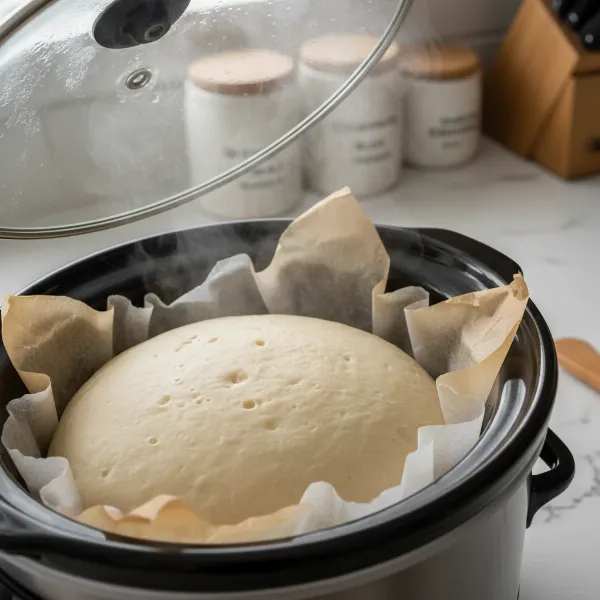 Bread dough rising and baking inside a slow cooker with the lid slightly ajar showing steam
The Surprising Benefits of Baking Bread in a Slow Cooker
Baking bread in a slow cooker offers a unique set of advantages that make it an attractive option for busy individuals, those with small kitchens, or anyone looking for a less hands-on approach to baking.
- Unparalleled Convenience and Time-Saving: Once the dough is prepared and placed in the slow cooker, it largely bakes unattended. This “set-it-and-forget-it” method frees you up to tackle other tasks or simply relax, making fresh bread a possibility even on the busiest weekdays.
- Consistent, Moist Results: The enclosed, steamy environment of a slow cooker ensures that your bread bakes evenly and retains an exceptional amount of moisture. This means consistently soft, tender loaves without the risk of dry or tough bread.
- Energy Efficiency: For smaller loaves or when you don’t want to heat your entire kitchen, a slow cooker can be more energy-efficient than preheating and running a large conventional oven. This is particularly noticeable during warmer months.
- Oven-Free Baking: This method is a lifesaver when your oven is occupied with other dishes, especially during holidays, or if you simply don’t have an oven. It’s also perfect for small apartments or dorm rooms where oven access might be limited.
- Easy Cleanup: Using parchment paper to line your slow cooker insert not only prevents sticking but also makes cleanup a breeze. Simply lift the parchment paper with the bread, and your slow cooker is ready for its next task.
Understanding Different Slow Cooker Bread Types and Recipes
The versatility of slow cooker bread is broader than you might imagine. While some specific types of bread might be challenging due to the lack of intense direct heat (like extremely crusty artisan loaves), many popular bread varieties can be adapted successfully.
- Basic White Bread: This is the most common and recommended starting point for slow cooker bread. Simple white flour doughs yield excellent, soft results.
- Whole Wheat & Multigrain Breads: You can easily swap out a portion or all of the white flour for whole wheat or multigrain blends. Just be mindful that whole wheat flours absorb more liquid, so you might need slight adjustments to the water content to achieve the right dough consistency.
- No-Knead Varieties: For ultimate ease, many no-knead bread recipes can be successfully adapted. These typically involve a longer, slower fermentation, which pairs well with the gentle cooking of a slow cooker.
- Enriched Doughs: Doughs with added butter, milk, or eggs, such as challah or brioche, can also be tried, though they might require careful attention to avoid overcooking due to their higher fat content.
- Savory Add-ins: Get creative with flavors! Incorporate herbs like rosemary or thyme, shredded cheese, minced garlic, sun-dried tomatoes, or olives directly into your dough for a custom savory loaf.
- Sweet Variations: Beyond traditional bread, the slow cooker is fantastic for sweet quick breads like banana bread or even dessert-style loaves with cinnamon and raisins. “I’ve personally found the slow cooker to be a game-changer for moist banana bread, providing a consistently tender texture that rivals oven-baked versions,” says a seasoned Crockpotz.com technician.
Essential Gear: What You Need for Slow Cooker Bread
Making bread in a slow cooker doesn’t require a lot of specialized equipment, but a few key items will ensure your success.
| Equipment/Ingredient | Description | Why It’s Essential |
|---|---|---|
| Slow Cooker (Crockpot) | A 6-quart (approx. 5.7-liter) or larger model is ideal for most standard loaf sizes. Round or oval shapes work best to accommodate the dough. Smaller sizes (3.5-4 quarts) can be used for smaller, taller loaves. | Provides the consistent, gentle heat and enclosed environment necessary for slow cooking bread. The size dictates the shape and rise of your loaf. |
| Parchment Paper | Heavy-duty baking parchment paper. You’ll need a large piece to line the slow cooker insert, extending up the sides. | Absolutely crucial! It prevents the dough from sticking to the stoneware crock and acts as a sling to easily lift the baked bread out without breaking or damaging the loaf. It also aids in even cooking and helps prevent the bottom from burning. |
| Basic Bread Ingredients | Flour: Strong bread flour, all-purpose flour, or wholemeal flour. Yeast: Active dry yeast or instant yeast. Ensure it’s fresh and not expired. Warm Water: Key for activating yeast. Salt: Essential for flavor and controlling yeast activity. Optional: Sugar (to feed yeast), oil/butter (for tenderness), seeds, herbs. | These are the fundamental building blocks of almost any yeast bread. Fresh yeast is paramount for a good rise. Quality flour impacts texture, and salt enhances flavor. |
| Instant-Read Thermometer | A digital thermometer capable of reading internal food temperatures accurately. | The most reliable way to check for doneness. Slow cooker bread won’t brown on top, so visual cues can be misleading. A reading of 190-210°F (88-99°C) indicates fully cooked bread. |
| Wire Cooling Rack | A rack that allows air circulation around the entire loaf. | Essential for cooling the bread properly after baking. Placing a hot loaf directly on a solid surface will trap steam, leading to a soggy bottom and a gummy interior. Proper cooling ensures the final texture sets correctly. |
| Mixing Bowls & Utensils | Large mixing bowls, a wooden spoon or spatula, measuring cups and spoons. | Standard kitchen tools for combining ingredients and mixing the dough. |
Step-by-Step Guide: How to Make Bread in Your Slow Cooker
Ready to bake? Follow these steps for a delicious slow cooker bread experience.
Step 1: Prepare Your Dough
|
Our Picks for the Best Slow cooker in 2026
As an Amazon Associate I earn from qualifying purchases.
|
||
| Num | Product | Action |
|---|---|---|
| 1 | Crock-Pot 6 Quart Programmable Slow Cooker with Timer and Auto Food Warmer Setting, Stainless Steel |

|
| 2 | Ninja MC1101 Foodi Everyday Possible Cooker Pro, 8-in-1 Versatility, One-Pot Faster Cooking Replaces 10 Tools, Family-Sized Capacity with Adjustable Temp Control, 6.5 quarts, Midnight Blue |
|
| 3 | Crock-Pot Large 8-Quart Programmable Slow Cooker with Auto Warm Setting Black Stainless Steel |
|
| 4 | Hamilton Beach 6-Quart Slow Cooker with 3 Cooking Settings, Dishwasher-Safe Stoneware Crock & Glass Lid, Silver (33665G) |
|
| 5 | Hamilton Beach Slow Cooker, Extra Large 10 Quart, Stay or Go Portable With Lid Lock, Dishwasher Safe Crock, Black (33195) |
|
| 6 | Ninja® 12-in-1 PossibleCooker™ PLUS - 8.5-qt - Sous Vide & Proof Multi-Cooker - Slow Cooker, Dutch Oven & More - Glass Lid & Integrated Spoon - Nonstick - Oven Safe Pot to 500°F - Black - MC1010 |
|
| 7 | Crock-Pot 6 Quart Cook & Carry Programmable Slow Cooker with Digital Timer Stainless Steel (CPSCVC60LL-S) pack of 1 |
|
| 8 | Slow Cooker 10-Quart - PFOA-Free Ceramic Coating, Oven Safe to 450°F - Keep Warm Function for Large Family Gatherings (Includes Silicone Spoon) |
|
| 9 | Crock-Pot 7 Quart Oval Manual Slow Cooker, Stainless Steel (SCV700-S-BR), Versatile Cookware for Large Families or Entertaining |
|
| 10 | Ninja MC1001 Foodi PossibleCooker PRO 8.5 Quart Multi-Cooker, with 8-in-1 Slow Cooker, Dutch Oven, Steamer, Glass Lid Integrated Spoon, Nonstick, Oven Safe Pot to 500°F, Sea Salt Gray |
|
Start with your favorite basic bread dough recipe. This typically involves:
- Activating the Yeast: In a large bowl, combine warm water (around 105-115°F or 40-46°C) with a pinch of sugar (if using) and your active dry yeast. Let it sit for 5-10 minutes until foamy, indicating the yeast is active. If using instant yeast, you can often add it directly with the flour.
- Mixing Ingredients: Add your flour and salt to the yeast mixture. Mix with a wooden spoon or your hands until a shaggy dough forms.
- Kneading: Turn the dough onto a lightly floured surface and knead for about 8-10 minutes until it’s smooth and elastic. Alternatively, use a stand mixer with a dough hook for about 5-7 minutes. If using a no-knead recipe, simply mix until combined and cover.
- First Rise (Proofing): Many recipes will call for a first rise, allowing the dough to double in size. Place the dough in a lightly oiled bowl, cover with plastic wrap, and let it rise in a warm spot for 1 to 1.5 hours. Some slow cooker bread recipes, however, recommend skipping this step entirely, with the rise occurring during the initial cooking phase. Others might suggest an overnight cold ferment for enhanced flavor. For best results with a typical quick loaf, a 1-hour rise is a good balance.
Step 2: Prepare Your Slow Cooker
Line the bottom and sides of your slow cooker insert generously with parchment paper. Make sure the paper extends up the sides, creating a sling that will allow you to easily lift the baked bread out later. You can also lightly grease the parchment paper with cooking spray for extra insurance against sticking. For slow cookers with removable stoneware, you can shape the parchment to fit snugly.
Step 3: Shape and Place the Dough
Gently punch down your risen dough (if you did a first rise) to release air. On a lightly floured surface, shape the dough into a round or oval loaf that fits your slow cooker’s shape. If adding seeds (like sesame or sunflower seeds), sprinkle some on the bottom of the slow cooker on the parchment paper, then place your shaped dough on top, and sprinkle the remaining seeds over the loaf.
Step 4: Cook Your Bread
Place the lid on your slow cooker. If you notice a lot of condensation forming during previous slow cooker uses, you can place a double layer of paper towels under the lid to absorb excess moisture and prevent it from dripping onto the bread. Set your slow cooker to the HIGH setting. Cook for 2 to 2.5 hours. Some recipes suggest lifting the lid a couple of times during cooking to release steam.
Step 5: Check for Doneness
After about 1.5 to 2 hours, begin checking the bread. The most reliable way to determine if your bread is fully cooked is to use an instant-read thermometer. Carefully lift the lid and insert the thermometer deep into the center of the loaf. It should register between 190°F and 210°F (88-99°C). The bottom of the loaf should feel crusty and sound hollow when tapped, while the top will remain pale and soft. If it’s not ready, continue cooking in 15-minute increments until it reaches the target temperature.
Step 6: Optional Browning (Broiler)
Since the slow cooker creates a moist environment, the top of your bread will not brown. If you desire a golden, crispy crust, carefully lift the bread out of the slow cooker using the parchment paper sling and transfer it to a baking sheet or broiler-safe rack. Place it under a preheated oven broiler for 1-5 minutes, watching it very closely to prevent burning. “A quick blast under the broiler transforms the pale top into a beautifully golden crust, adding an irresistible texture contrast to the soft interior,” advises a culinary expert.
Step 7: Cool Completely
Once removed from the slow cooker (and broiled, if desired), transfer the bread to a wire cooling rack. Allow it to cool completely for at least 1 hour before slicing. Slicing warm bread can result in a gummy texture. Patience is key for the perfect crumb!
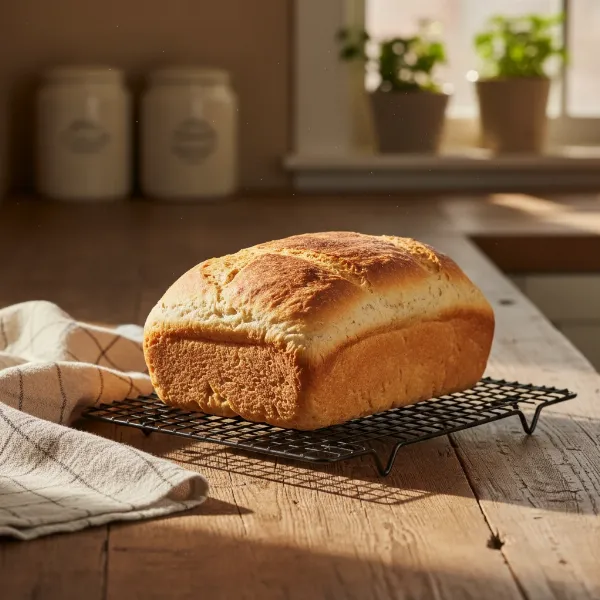 Freshly baked loaf of slow cooker bread cooling on a wire rack on a wooden surface
Troubleshooting Common Slow Cooker Bread Issues
Even with the best instructions, baking can sometimes present challenges. Here’s how to troubleshoot common issues with slow cooker bread:
- Gummy or Doughy Texture: This is often a sign of undercooked bread or slicing too soon. Ensure the internal temperature reaches 190-210°F (88-99°C). Always cool the bread completely on a wire rack before slicing. Excessive moisture inside the slow cooker can also contribute, so use paper towels under the lid if needed.
- No Crust (on top): This is entirely normal for slow cooker bread. The moist cooking environment prevents significant browning on the top. If a crust is desired, follow the optional broiling step.
- Dense Loaf: Several factors can cause a dense loaf:
- Old or inactive yeast: Always check the expiration date and ensure your yeast foams up during activation.
- Not enough rise time: While some recipes skip an initial rise, ensuring your yeast is active and the dough has a chance to expand is crucial.
- Too much flour: A stiff dough won’t rise as well. The dough should be tacky, not overly dry.
- Burnt Bottom: This can happen if the slow cooker runs too hot or if there isn’t enough protection at the bottom. Ensure you use ample parchment paper, extending up the sides. Some slow cookers naturally run hotter; consider a slightly shorter cooking time or even elevating the loaf slightly if this is a recurring issue.
- Sticking to the Pot: Insufficient parchment paper or not adequately greasing it can lead to sticking. Always ensure the parchment covers the entire inner surface where the dough will touch.
Expert Tips for Perfect Slow Cooker Bread Every Time
As an Admin with over a decade of experience with slow cookers, I’ve learned a few tricks that can elevate your slow cooker bread from good to extraordinary.
- Trust Your Thermometer: Visual cues alone can be misleading for slow cooker bread. An instant-read thermometer is your best friend for guaranteeing doneness and preventing either raw or overcooked results. Aim for 190-210°F (88-99°C) in the center.
- Parchment Paper is Non-Negotiable: Seriously, do not skip this step. It’s the secret to easy release and protects your loaf from direct heat, preventing a burnt bottom. Make sure it creates a “sling” for effortless removal.
- Manage That Moisture: The slow cooker is a moist environment. If your slow cooker tends to produce a lot of condensation, placing a clean kitchen towel or a few sheets of paper towel under the lid can absorb excess moisture, preventing it from dripping onto your bread and making it soggy.
- Experiment with Flavors: Don’t be afraid to customize! Add dried herbs like rosemary or oregano, grated cheese, garlic powder, or even a handful of seeds to the dough. For a subtle sweetness, try dried fruits or cinnamon.
- The Broiler is Your Friend (for crust): If you crave that golden, slightly crispy top crust, a quick minute or two under the broiler after baking makes all the difference. Just keep a hawk’s eye on it—it can go from perfect to burnt in seconds!
- Patience in Cooling: It’s tempting to slice into a warm loaf, but resist! Cooling completely on a wire rack allows the internal structure of the bread to set and prevents a gummy texture.
- Don’t Overfill: Ensure your dough has enough room to rise. A good rule of thumb is to fill the slow cooker no more than two-thirds full with the shaped dough.
- Check Yeast Freshness: This is perhaps the most common reason for failed bread. If your yeast doesn’t foam when activated, it’s likely dead, and your bread won’t rise.
“The beauty of slow cooker bread is its simplicity and ability to deliver a comforting loaf with minimal fuss, making homemade bread accessible to everyone, regardless of their baking skill level or kitchen setup.” – Admin, Crockpotz.com
Conclusion
Baking bread in a slow cooker might seem unconventional, but as you’ve discovered, it’s not only possible but yields consistently delicious results. With its hands-off approach, reliable moisture retention, and ability to bypass the oven, slow cooker bread is a fantastic option for anyone seeking homemade goodness without the traditional baking demands. Remember the key steps: prepare your dough, line your slow cooker with parchment paper, cook on high, check for doneness with a thermometer, and cool completely. Embrace this clever kitchen hack, and soon you’ll be enjoying warm, fresh bread with minimal effort. What will be the first slow cooker bread recipe you try?
Frequently Asked Questions
Can I use a slow cooker for no-knead bread?
Absolutely! Many no-knead bread recipes are perfectly suited for slow cooker baking. The longer fermentation times often associated with no-knead methods allow the flavors to develop beautifully, and the gentle heat of the slow cooker provides an ideal environment for these relaxed doughs to bake to perfection.
How do I get a crispy crust on slow cooker bread?
While the slow cooker creates a wonderfully soft crumb, it doesn’t typically produce a crispy crust on top. To achieve a golden, crispy top, simply transfer the baked loaf (after removing it from the slow cooker) to a baking sheet and place it under a preheated oven broiler for 1-5 minutes, watching it constantly to prevent burning.
What size slow cooker is best for bread?
A 6-quart (approximately 5.7-liter) slow cooker is generally recommended as it provides ample space for most standard loaf sizes to rise and bake evenly. However, a 3.5 to 4-quart slow cooker can work well for smaller, taller loaves. Ensure your shaped dough fits comfortably without touching the sides too much.
Can I make slow cooker bread without yeast?
While some quick breads (like banana bread or soda bread) can be made in a slow cooker without yeast, traditional leavened bread requires yeast for its characteristic rise and texture. Without yeast, you would end up with a very dense, flat loaf, more akin to a scone or biscuit rather than a light, airy bread.
Why is my slow cooker bread gummy?
Gummy slow cooker bread is usually a sign of one of two things: it was either undercooked or sliced before it had a chance to cool completely. Always use an instant-read thermometer to ensure the internal temperature reaches 190-210°F (88-99°C). After baking, let the bread cool fully on a wire rack for at least an hour to allow its internal structure to set.