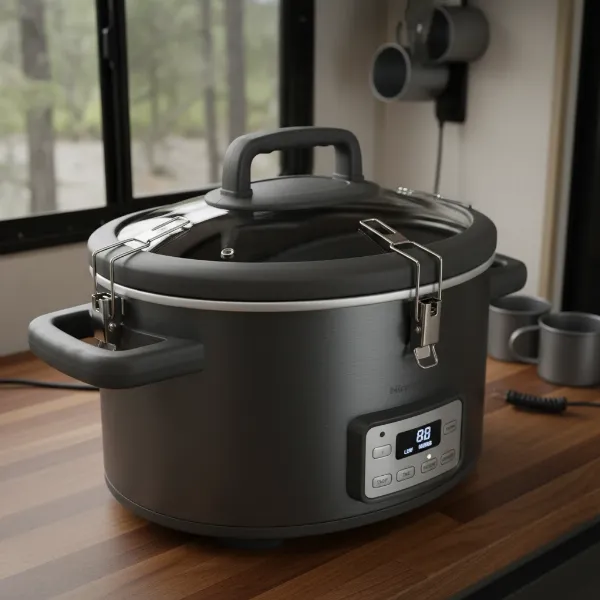
The slow cooker is a culinary marvel, promising tender, flavorful meals with minimal effort. Imagine returning home to the comforting aroma of a perfectly cooked roast or a rich stew. Yet, even this forgiving appliance has its quirks, and a few common blunders can quickly turn your culinary dreams into a disappointing dinner. Many home cooks inadvertently sabotage their slow cooker dishes, often without realizing the simple missteps they’re making. This guide will reveal the most frequent slow cooker mistakes, including the cardinal sin of lifting the lid, and equip you with the knowledge to consistently create mouthwatering, fuss-free meals.
The Cardinal Sin: Why Opening Your Slow Cooker Lid is a Recipe for Disaster
It’s tempting, isn’t it? That irresistible urge to peek, to stir, to check on your meal’s progress. But in the world of slow cooking, lifting the lid is perhaps the most significant error you can make. The slow cooker operates on a principle of consistent, low heat and trapped steam, creating a moist environment that tenderizes food over many hours. Every time that lid is removed, precious heat and accumulated steam escape.
This loss of heat instantly drops the internal temperature of your slow cooker, disrupting the delicate cooking cycle. It can take a considerable amount of time for the appliance to regain its optimal temperature—some experts suggest it can add anywhere from 10 to 30 minutes to your cooking time with each peek. This extended cooking period might seem minor, but it can lead to undercooked food if you adhere to the original recipe timing, or result in dry, tough meat if the moisture has escaped and cooking continues. The constant temperature fluctuation prevents the connective tissues in tougher cuts of meat from properly breaking down, which is essential for that fall-apart tender texture.
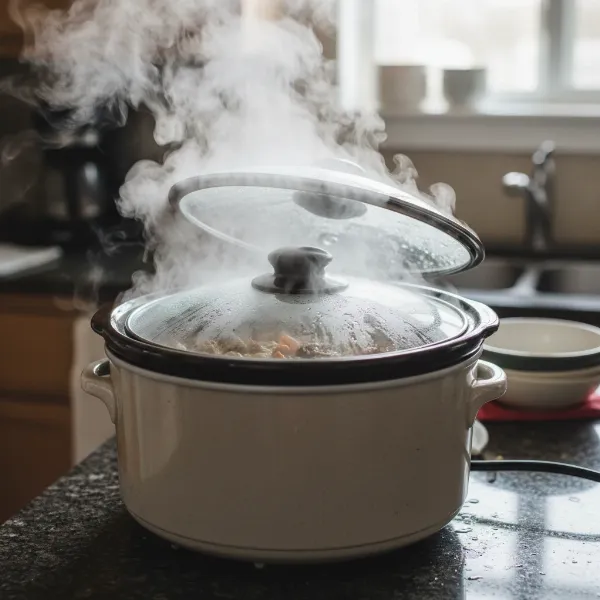 Steam escaping from a slow cooker lid, illustrating heat loss during cooking and impacting cook time and texture.
“Patience is a virtue in slow cooking. Opening the lid is like letting all the hard work dissipate into thin air, literally impacting both cook time and the final texture of your dish.” – Chef Maria Sanchez, Slow Cooking Specialist
Resist the urge to check on your masterpiece. Only lift the lid when the recipe explicitly calls for it, typically for adding final ingredients or checking for doneness in the last hour of cooking. If you must peek, do so quickly and efficiently, and be prepared to add a little extra cooking time to compensate for the heat loss.
Beyond the Lid: Other Common Slow Cooker Mistakes to Avoid
While lid-lifting is a major culprit, several other missteps can prevent your slow cooker meals from reaching their full potential. Understanding these pitfalls is key to elevating your slow cooking game.
Skipping the Searing Step
|
Our Picks for the Best Slow cooker in 2026
As an Amazon Associate I earn from qualifying purchases.
|
||
| Num | Product | Action |
|---|---|---|
| 1 | Hamilton Beach 6-Quart Slow Cooker with 3 Cooking Settings, Dishwasher-Safe Stoneware Crock & Glass Lid, Silver (33665G) |

|
| 2 | Crock-Pot 6 Quart Programmable Slow Cooker with Timer and Auto Food Warmer Setting, Stainless Steel |
|
| 3 | Hamilton Beach Slow Cooker, Extra Large 10 Quart, Stay or Go Portable With Lid Lock, Dishwasher Safe Crock, Black (33195) |
|
| 4 | Slow Cooker 10-Quart - PFOA-Free Ceramic Coating, Oven Safe to 450°F - Keep Warm Function for Large Family Gatherings (Includes Silicone Spoon) |
|
| 5 | Ninja MC1101 Foodi Everyday Possible Cooker Pro, 8-in-1 Versatility, One-Pot Faster Cooking Replaces 10 Tools, Family-Sized Capacity with Adjustable Temp Control, 6.5 quarts, Midnight Blue |
|
| 6 | Ninja® 12-in-1 PossibleCooker™ PLUS - 8.5-qt - Sous Vide & Proof Multi-Cooker - Slow Cooker, Dutch Oven & More - Glass Lid & Integrated Spoon - Nonstick - Oven Safe Pot to 500°F - Black - MC1010 |
|
| 7 | Crock-Pot 7 Quart Oval Manual Slow Cooker, Stainless Steel (SCV700-S-BR), Versatile Cookware for Large Families or Entertaining |
|
| 8 | Crock-Pot Large 8-Quart Programmable Slow Cooker with Auto Warm Setting Black Stainless Steel |
|
| 9 | Ninja MC1001 Foodi PossibleCooker PRO 8.5 Quart Multi-Cooker, with 8-in-1 Slow Cooker, Dutch Oven, Steamer, Glass Lid Integrated Spoon, Nonstick, Oven Safe Pot to 500°F, Sea Salt Gray |
|
| 10 | Crock-Pot 6 Quart Cook & Carry Programmable Slow Cooker with Digital Timer Stainless Steel (CPSCVC60LL-S) pack of 1 |
|
Many home cooks assume that since a slow cooker braises, searing meat beforehand is unnecessary. However, browning meat on all sides in a hot pan before adding it to your slow cooker develops a rich, complex flavor profile through the Maillard reaction. This caramelization adds depth and color that you simply can’t achieve with slow cooking alone. Skipping this step often results in paler, less flavorful meat, robbing your dish of an essential layer of taste.
Misjudging Liquid Amounts
Unlike stovetop cooking where liquids evaporate freely, slow cookers are highly efficient at trapping moisture. This means that if you’re adapting a traditional recipe, you’ll almost always need to reduce the amount of liquid significantly—often by as much as half. Too much liquid will result in a watery, diluted sauce or soup, diminishing the concentrated flavors that slow cooking is famous for. Aim to have just enough liquid to cover your ingredients or to create the desired sauce consistency, adding more only if absolutely necessary towards the end of cooking.
Adding Dairy Too Soon
Dairy products like milk, cream, sour cream, or cheese can curdle or separate when subjected to prolonged high heat. Adding them at the beginning of the cooking process can result in a grainy, unappetizing texture in your finished dish. To maintain a smooth and creamy consistency, always stir in dairy components during the last 30 minutes to an hour of cooking, allowing them just enough time to heat through and meld with the other ingredients without breaking down.
Incorrect Herb and Spice Timing
Herbs and spices are vital for flavor, but their potency changes with cooking time. Delicate fresh herbs, such as parsley, cilantro, or basil, will lose their vibrant flavor and color if cooked for several hours. They should be added closer to the end of the cooking process—typically in the last 15-30 minutes—to preserve their freshness. Dried herbs and spices, on the other hand, benefit from longer cooking to release their full aroma, though some stronger spices might need to be adjusted down for extended cooks.
Overfilling or Underfilling Your Pot
For optimal cooking, a slow cooker should be filled between one-half and three-quarters full. Overfilling can lead to uneven cooking, with food near the top potentially remaining undercooked while also risking boil-overs and a messy kitchen. Conversely, underfilling can cause food to cook too quickly or dry out, as there isn’t enough mass to absorb and retain the heat efficiently. Always match your recipe’s quantity to the appropriate slow cooker size.
Cooking from Frozen
Placing frozen meat or poultry directly into a slow cooker is a serious food safety hazard. Slow cookers operate at lower temperatures, and frozen ingredients take a prolonged time to reach a safe cooking temperature (above 140°F or 60°C). This extended period in the “danger zone” (between 40°F and 140°F) allows harmful bacteria to multiply rapidly. Always thaw frozen ingredients completely in the refrigerator before adding them to your slow cooker.
Improper Layering of Ingredients
The heating element in most slow cookers is located at the bottom. Therefore, how you layer your ingredients matters for even cooking. Dense, root vegetables like potatoes, carrots, and onions should be placed at the bottom, directly touching the heat source, as they take the longest to cook. Meats typically go on top of the vegetables, followed by lighter, quicker-cooking vegetables or delicate ingredients. This ensures everything cooks thoroughly without some parts becoming mushy or others remaining raw.
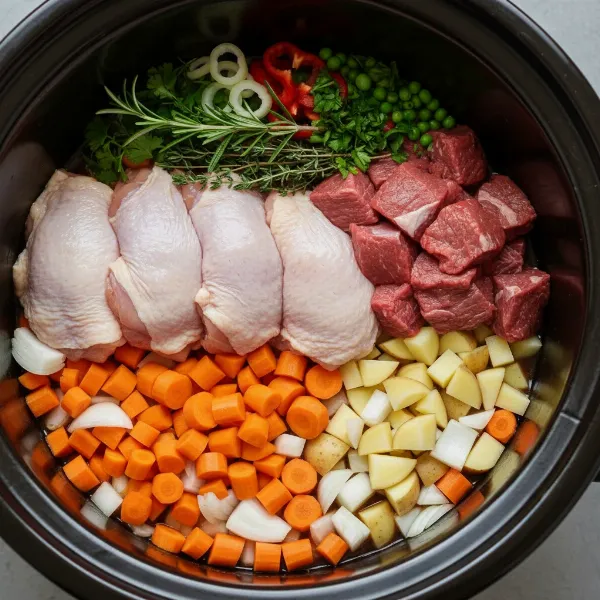 Proper layering of ingredients in a slow cooker: root vegetables at bottom, meat in middle, delicate items on top.
Using the Wrong Temperature Setting
Slow cookers usually offer “Low” and “High” settings, and understanding their difference is crucial. The “Low” setting cooks food slowly over a longer period, typically 6-8 hours, which is ideal for tenderizing tougher cuts of meat and developing deeper flavors. The “High” setting cooks faster, usually in 3-4 hours, and is suitable for more tender meats or when you’re short on time. Using “High” for too long can overcook and dry out food, while using “Low” for a recipe designed for “High” could leave food undercooked or compromise texture. Always follow recipe recommendations or adjust accordingly.
Over-reliance on Stirring
Unlike stovetop pots that require frequent stirring to prevent sticking and ensure even cooking, slow cookers thrive on minimal interference. The lid creates a sealed, steamy environment, and most recipes do not require stirring during the cooking process. Excessive stirring will not only lead to heat loss (as discussed earlier) but can also break down delicate ingredients, turning your stew into a mush. Stir only if explicitly instructed by the recipe, typically for incorporating final ingredients or ensuring even sauce distribution.
Using Metal Utensils
While seemingly minor, using metal utensils in your slow cooker’s ceramic or non-stick insert can cause irreversible damage. Metal can scratch the surface, potentially leading to food sticking and degrading the longevity of your appliance. Always opt for wooden, silicone, or heat-resistant plastic utensils to protect your slow cooker’s interior.
Ignoring Your Slow Cooker’s Capacity
Just as overfilling is a problem, so is using a slow cooker that’s too large for your recipe. If the pot is only sparsely filled, the heat will circulate differently, potentially leading to faster cooking times or dried-out food. Always choose a slow cooker size that is appropriate for the volume of ingredients you are preparing. This ensures that the heat and moisture are distributed effectively for consistently good results.
Attempting to Reheat Meals
Slow cookers are designed for cooking, not reheating. Their gradual heating process means that food takes a long time to reach a safe temperature for reheating, again creating an opportunity for bacterial growth. For reheating leftovers, it’s best to use a microwave, stovetop, or conventional oven, where food can be brought to a safe temperature more quickly.
Direct Conversion of Traditional Recipes
Transforming a stovetop or oven recipe directly into a slow cooker meal often requires more than just changing the cooking time. The moisture retention, heat distribution, and flavor concentration are vastly different. Beyond adjusting liquids, you might need to reconsider ingredient order, browning steps, and when to add delicate components. For best results, seek out recipes specifically developed for slow cookers, or be prepared to make significant modifications if converting a favorite.
Master Your Slow Cooker: Tips for Flawless Results
Avoiding these common mistakes is the first step towards slow cooker mastery. Here are some overarching tips to ensure your meals are consistently delicious:
- Read the Recipe Carefully: This sounds basic, but it’s the most important advice. Slow cooker recipes are designed with specific timings, liquid amounts, and ingredient additions in mind.
- Embrace Patience: The “slow” in slow cooker isn’t just a suggestion; it’s the method. Trust the process and resist the urge to interfere.
- Prep Smart: Chop vegetables, sear meat, and measure out spices beforehand. This makes the “dump and go” appeal even stronger.
- Know Your Appliance: Every slow cooker is slightly different. Over time, you’ll learn its nuances, hot spots, and how it handles various recipes.
- Invest in a Meat Thermometer: For recipes involving meat, a reliable meat thermometer is invaluable for ensuring safe internal temperatures and perfect doneness without guesswork.
By understanding and addressing these common slow cooker pitfalls, you’ll unlock the true potential of this convenient kitchen appliance. From rich stews to tender roasts, your slow cooker can consistently deliver comforting, delicious meals with minimal effort, making weeknight dinners and special occasions effortlessly enjoyable.
Frequently Asked Questions
Why does opening the slow cooker lid add 30 minutes to cooking time?
When you open the slow cooker lid, a significant amount of heat and steam escapes, causing the internal temperature to drop. It then takes approximately 30 minutes for the appliance to recover and return to its optimal cooking temperature, effectively prolonging the total cooking time and disrupting the process.
Can I put frozen meat directly into a slow cooker?
No, it is not safe to put frozen meat directly into a slow cooker. The slow cooker’s low temperature and gradual heating process mean that frozen meat spends too much time in the “danger zone” (40°F to 140°F), where harmful bacteria can multiply. Always thaw meat completely in the refrigerator before slow cooking.
How much liquid should I use in a slow cooker recipe?
Slow cookers retain moisture exceptionally well, so you generally need less liquid than in traditional stovetop or oven recipes. A good rule of thumb is to reduce the liquid by about one-third to one-half of what a conventional recipe calls for. The ingredients should be mostly, but not entirely, submerged.