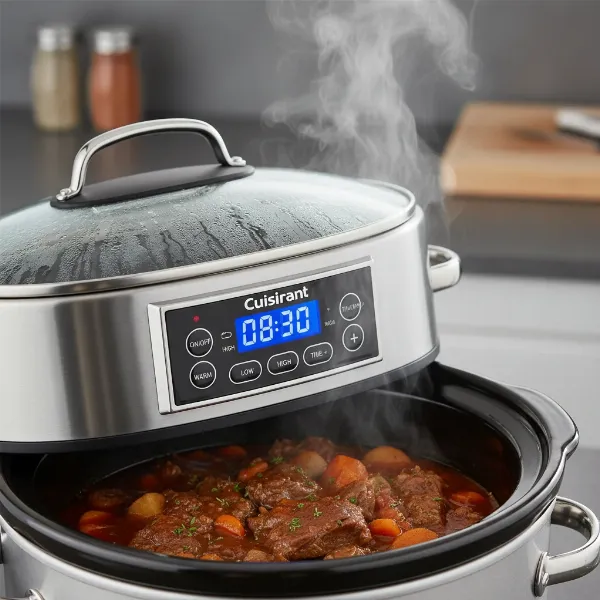
Feeding a large family or hosting gatherings can often feel like a culinary marathon, demanding hours in the kitchen and an endless stack of dishes. Imagine a world where hearty, delicious meals simmer to perfection with minimal effort, ready to serve when your busy day winds down. This is the promise of a large-capacity slow cooker, an indispensable kitchen appliance for anyone catering to a crowd. With options ranging from 8 quarts and beyond, these culinary workhorses are designed to simplify meal preparation, making family dinners and entertaining effortless. This guide will delve into what makes these appliances essential, how to choose the right one, and review some of the top models available to help you find your perfect kitchen companion.
What is a Slow Cooker and How Does It Work?
A slow cooker, often generically referred to as a Crock-Pot (which is actually a popular brand), is an electric countertop appliance designed to cook food at low temperatures over an extended period. The principle is simple yet effective: a heating element, typically located at the bottom and sometimes around the sides, gently warms an inner pot, usually made of stoneware or ceramic. This consistent, low heat allows ingredients to slowly meld together, tenderizing tough cuts of meat and infusing dishes with deep, rich flavors that are hard to achieve with quicker cooking methods.
The concept of slow cooking dates back to the 1940s, evolving significantly from basic heating devices to the sophisticated, programmable models we see today. Modern slow cookers typically consist of three main parts: an outer casing that houses the heating element, a removable inner pot (or crock), and a tight-fitting lid that traps moisture and heat, preventing evaporation and ensuring even cooking. This design allows for unattended cooking, making it a favorite for busy individuals and families.
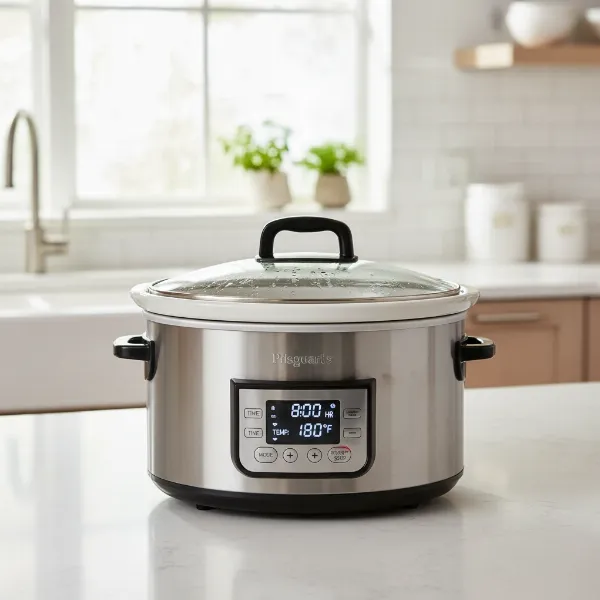 Programmable slow cooker with ceramic insert, lid, and control panel for convenient cooking.
The Unbeatable Benefits of Using a Large-Capacity Slow Cooker
Embracing a large-capacity slow cooker in your kitchen brings a multitude of advantages, especially for those managing substantial meal preparations.
Firstly, it offers unparalleled time and effort saving. The “set-it-and-forget-it” functionality means you can load ingredients in the morning, go about your day, and return to a fully cooked, delicious meal. This drastically reduces hands-on cooking time and mental load during peak hours.
Secondly, slow cooking excels at retaining nutrition and enhancing flavor. The gentle heat breaks down tough fibers in meats and vegetables, making them incredibly tender while preserving more nutrients than high-heat methods. The prolonged cooking time also allows flavors to deepen and meld, resulting in intensely savory and aromatic dishes.
Moreover, these appliances offer incredible versatility. While renowned for stews, soups, and roasts, a large slow cooker can handle everything from breakfast casseroles and hearty chilis to pulled pork for sliders, pot roasts, and even desserts like cakes and cobblers. For large families, this means consistently preparing enough food for multiple servings, perfect for leftovers or meal prepping throughout the week.
Large slow cookers are also inherently safe and easy to use. With simple controls, often just “High,” “Low,” and “Warm” settings, they require minimal culinary expertise. Modern programmable models add digital timers that automatically switch to a warm setting once cooking is complete, preventing overcooking and keeping food at a safe serving temperature.
Finally, while cooking for hours, slow cookers are generally energy-efficient compared to continuously running an oven or stovetop burners for similar durations. Their insulated design and low wattage draw mean they consume less power over time, contributing to lower utility bills.
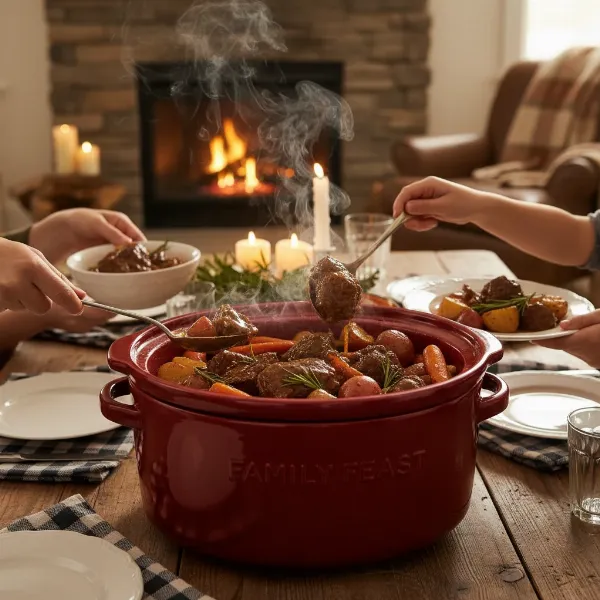 Hearty slow cooker meal, possibly a beef roast or stew, ready to serve for a large family.
“Slow cookers are perfect for anyone with a busy life who does not have time to stand over a pot. You put everything together, set cooking time, and let it do the work while you go about your day. It is perfect for tougher cuts of meat and the cooking method allows flavors to meld together.” – Laila Bazahm, Owner and Chef at El Raval.
Types of Slow Cookers: What to Look for in a Large Model
Understanding the different types and features of slow cookers is crucial when selecting the best one for your large family.
By Capacity
|
Our Picks for the Best Slow cooker in 2026
As an Amazon Associate I earn from qualifying purchases.
|
||
| Num | Product | Action |
|---|---|---|
| 1 | Hamilton Beach Slow Cooker, Extra Large 10 Quart, Stay or Go Portable With Lid Lock, Dishwasher Safe Crock, Black (33195) |

|
| 2 | Crock-Pot 6 Quart Cook & Carry Programmable Slow Cooker with Digital Timer Stainless Steel (CPSCVC60LL-S) pack of 1 |
|
| 3 | Ninja® 12-in-1 PossibleCooker™ PLUS - 8.5-qt - Sous Vide & Proof Multi-Cooker - Slow Cooker, Dutch Oven & More - Glass Lid & Integrated Spoon - Nonstick - Oven Safe Pot to 500°F - Black - MC1010 |
|
| 4 | Crock-Pot 6 Quart Programmable Slow Cooker with Timer and Auto Food Warmer Setting, Stainless Steel |
|
| 5 | Crock-Pot 7 Quart Oval Manual Slow Cooker, Stainless Steel (SCV700-S-BR), Versatile Cookware for Large Families or Entertaining |
|
| 6 | Ninja MC1001 Foodi PossibleCooker PRO 8.5 Quart Multi-Cooker, with 8-in-1 Slow Cooker, Dutch Oven, Steamer, Glass Lid Integrated Spoon, Nonstick, Oven Safe Pot to 500°F, Sea Salt Gray |
|
| 7 | Slow Cooker 10-Quart - PFOA-Free Ceramic Coating, Oven Safe to 450°F - Keep Warm Function for Large Family Gatherings (Includes Silicone Spoon) |
|
| 8 | Hamilton Beach 6-Quart Slow Cooker with 3 Cooking Settings, Dishwasher-Safe Stoneware Crock & Glass Lid, Silver (33665G) |
|
| 9 | Crock-Pot Large 8-Quart Programmable Slow Cooker with Auto Warm Setting Black Stainless Steel |
|
| 10 | Ninja MC1101 Foodi Everyday Possible Cooker Pro, 8-in-1 Versatility, One-Pot Faster Cooking Replaces 10 Tools, Family-Sized Capacity with Adjustable Temp Control, 6.5 quarts, Midnight Blue |
|
For large families, the primary focus is on capacity. Models of 8 quarts and up are ideal. An 8-quart slow cooker can typically feed 10 or more people, making it perfect for big families, entertaining, potlucks, or extensive meal prepping. Smaller 6- or 7-quart models can still serve a large family for regular dinners, but 8-quart provides more flexibility for larger cuts of meat or generous portions.
By Control Type
Slow cookers generally come with two main control types:
- Manual: These are the most straightforward, featuring a simple dial with “High,” “Low,” and “Warm” settings. They are budget-friendly and easy to operate but lack advanced features like timers.
- Programmable: These models feature digital displays and timers, allowing you to set a precise cooking duration. Once the set time expires, they often automatically switch to a “Keep Warm” setting, providing ultimate convenience and preventing food from overcooking. For busy families, programmable options are highly recommended.
By Inner Pot Material
The inner pot, or crock, significantly impacts performance and durability.
- Ceramic/Stoneware: This is the most common material, known for excellent heat retention and even heat distribution. Stoneware inserts are often dishwasher-safe, making cleanup easier. The main drawback is their weight and fragility; they can crack if dropped.
- Metal (Nonstick Coated): Some multi-cookers feature aluminum inserts with ceramic nonstick coatings. These can be lighter, and some are stovetop and oven-safe, adding versatility (e.g., for searing meat before slow cooking). However, their nonstick coating may require more careful handling to prevent scratching.
By Special Features
Modern slow cookers offer a range of features that can enhance your cooking experience:
- Locking Lids: Essential for portability, locking lids create a tight seal that prevents spills during transport, making them perfect for potlucks and tailgates.
- Temperature Probes: Some advanced programmable models include a temperature probe that allows you to monitor the internal temperature of your food without lifting the lid. The cooker can even automatically switch to “Warm” once the target temperature is reached, ensuring perfectly cooked meats.
- Multi-Cooker Functions: More versatile units may include functions like searing/sautéing, steaming, or even sous vide, consolidating multiple appliances into one.
- Lid Stands/Utensil Holders: Thoughtful design elements like these can improve convenience during cooking and serving.
Key Factors to Consider When Buying a Large Slow Cooker
Choosing the right large slow cooker involves assessing your specific needs and priorities.
Family Size and Cooking Habits
Consider how many people you typically cook for and if you often host larger gatherings. An 8-quart model is usually sufficient for 8-10 servings, while larger families or frequent entertainers might consider even larger capacities if available. Also, think about your lifestyle: do you need a truly “set-it-and-forget-it” experience, or are you comfortable with a more manual approach?
Desired Capacity (8 Quarts and Up)
Stick to the 8-quart minimum for true “large family” cooking. This size ensures you can cook a whole chicken, a substantial roast, or enough chili to feed a crowd with leftovers. While some 6- or 7-quart models are marketed for families, 8 quarts provides that extra buffer.
Control and Programmability
Decide between the simplicity of a manual dial and the convenience of a programmable digital interface. Programmable models offer timers and automatic warm settings, which are invaluable for busy schedules. Manual models are more affordable and robust, but require you to be present to switch off or to “warm” mode.
Inner Pot Material and Shape
Ceramic or stoneware inserts are excellent for even heating and retention. Consider if you need a stovetop-safe insert for browning meats beforehand. Oval shapes are generally better for larger cuts like roasts or whole chickens, while round pots are good for soups, stews, and dips.
Portability and Lid Type
If you frequently transport your slow cooker for potlucks or gatherings, a model with a locking lid and sturdy, stay-cool handles is a significant advantage. A tight-fitting lid is always crucial to prevent moisture loss during cooking.
Brand Reputation and Reviews
Research reputable brands known for their durability and performance, such as Crock-Pot, Hamilton Beach, and Instant Pot. Read recent user reviews to gauge real-world satisfaction and identify any common issues.
Budget
Slow cookers vary widely in price based on capacity, brand, and features. Determine your budget beforehand. Basic manual models are very affordable, while programmable multi-cookers with advanced features will be at the higher end.
Top 5 Best Slow Cookers for Large Families (8 Quarts and Up)
Based on extensive testing and user feedback, here are some of the best large-capacity slow cookers that stand out for their performance, features, and suitability for big families.
- Crock-Pot 8-Quart Programmable Slow Cooker
- Why it’s great for large families: Frequently hailed as the “Best Large-Capacity Cooker,” this model can easily feed 10 or more people. Its substantial 8-quart capacity is perfect for large roasts, substantial batches of chili, or enough pulled pork for a party. The digital timer simplifies cooking, automatically switching to a warm setting when the food is done, ensuring convenience for busy households. This particular model is praised for consistently cooking food well, even smaller quantities, making it versatile for varying family needs.
- GreenLife Cook Duo Slow Cooker (8-Quart)
- Why it’s great for large families: This 8-quart slow cooker stands out for its impressive heat distribution and a large interior designed to cook for a crowd. Its ceramic insert, made from sand, is noted for its non-toxic properties and versatility, often being stovetop and oven-safe for pre-searing meats or finishing dishes. While it might be lower on extra functions, its core performance for large-volume cooking is excellent, and it often comes in aesthetically pleasing color options.
- Instant Superior Cooker 7.5QT Slow Cooker
- Why it’s great for large families: Although slightly under the 8-quart mark at 7.5 quarts, this model is consistently recognized as a “Best Large” option, offering ample capacity for big family meals. While specific features can vary, Instant brand appliances are generally known for their reliability and user-friendly interfaces, making it a strong contender for those needing a significant cooking volume.
- Black+Decker 7-Quart Digital Slow Cooker
- Why it’s great for large families: This 7-quart digital slow cooker is an excellent choice for families who need to transport meals. It features a secure locking lid and large, easy-to-grip handles that make carrying a full pot safe and convenient. The digital controls allow for programmable cooking times up to 20 hours and an automatic warming function. A unique chalkboard exterior allows you to write notes, recipes, or dietary information, adding a personalized and practical touch.
- Crock-Pot 7-Quart Oval Manual Slow Cooker
- Why it’s great for large families: For those who prefer simplicity and a budget-friendly option without sacrificing capacity, this 7-quart manual model is a top pick. It provides “more than enough space for a large family” and boasts a roomy oval insert perfect for big cuts of meat. Its straightforward high, low, and warm settings make it incredibly easy to use. While it lacks a timer, its reliable performance and robust design make it a great value for families who appreciate no-frills efficiency.
Maximizing Your Slow Cooker: Tips for Use and Maintenance
To get the most out of your large slow cooker and ensure its longevity, follow these practical tips.
Best Practices for Cooking
- Fill Correctly: Most slow cookers perform best when filled at least halfway, but no more than two-thirds to three-quarters full. Underfilling can lead to overcooked food, while overfilling can cause spills and uneven cooking.
- Layer Ingredients Strategically: Place tougher, larger vegetables (like carrots and potatoes) at the bottom, as they cook slower and benefit from direct heat. Meats go next, followed by delicate vegetables and liquids.
- Adjust Liquid Amounts: Slow cookers trap moisture, so recipes rarely require as much liquid as stovetop versions. Start with less liquid, as you can always add more later if needed.
- Add Dairy Last: Dairy products (milk, cheese, sour cream) can curdle if cooked for too long at high temperatures. Stir them in during the last 30 minutes to an hour of cooking.
- Pre-Searing (Optional but Recommended): While not strictly necessary, browning meat in a separate pan before adding it to the slow cooker can add depth of flavor and better texture.
- Resist the Urge to Peek: Lifting the lid releases heat and moisture, extending the cooking time significantly. Try to avoid opening it until the last hour of cooking.
Cleaning and Care
- Always Unplug: Before cleaning, ensure your slow cooker is unplugged and cooled down.
- Wash the Inner Pot and Lid: Most stoneware or ceramic inserts and glass lids are dishwasher-safe. For stubborn stuck-on food, soak the pot in warm, soapy water before scrubbing with a non-abrasive sponge. Avoid harsh scourers that can damage nonstick coatings.
- Clean the Base: Wipe down the exterior heating unit with a damp cloth. Never immerse the electrical base in water.
- Address Odors: If the inner pot retains odors, fill it with water and a few tablespoons of white vinegar or baking soda, and let it sit for a few hours or even overnight before washing thoroughly.
Troubleshooting Common Issues
- Food Not Cooking Fast Enough: Ensure the lid is seated properly to seal in heat. Verify the correct setting (High/Low) and check if the slow cooker is adequately filled.
- Food Overcooked/Mushy: This often happens from overfilling, cooking for too long, or lifting the lid too frequently. Adjust cooking times or ensure you’re using a programmable model that switches to “Warm” automatically.
- Exterior Getting Too Hot: While some exterior heat is normal, excessive heat might indicate a problem. Always place the slow cooker on a heat-resistant surface and away from walls or other appliances. If it’s alarmingly hot, discontinue use and consult the manufacturer.
Where to Purchase a Reliable Large Slow Cooker
Finding a reliable large slow cooker is easier than ever with a variety of reputable retailers both online and in brick-and-mortar stores. Major online marketplaces like Amazon and Walmart offer extensive selections, competitive pricing, and a wealth of customer reviews to guide your decision. Specialty kitchenware stores such as Williams-Sonoma or department stores like Target often carry a curated selection of higher-end models.
When purchasing, always check for the manufacturer’s warranty and return policy. Buying from authorized dealers ensures you receive genuine products and proper customer support. Comparing prices across different retailers can also help you find the best deal on your chosen model.
Conclusion
A large-capacity slow cooker, particularly an 8-quart or larger model, is a game-changer for any busy household or culinary enthusiast feeding a crowd. It transforms the daunting task of preparing hearty, flavorful meals into a simple, hands-off process, freeing up your time and energy. By understanding the core benefits, differentiating between various types, and considering key factors like capacity, programmability, and material, you can confidently select an appliance that perfectly fits your lifestyle.
Whether you opt for a versatile programmable model or a straightforward manual workhorse, the right slow cooker will become your secret weapon for effortless cooking, ensuring tender meats, rich stews, and delicious dishes are always within reach. So, are you ready to simplify your cooking and bring more flavorful, stress-free meals to your family table?
Frequently Asked Questions
What capacity slow cooker do I need for a large family?
For a large family of 6-8 people or more, an 8-quart or larger slow cooker is highly recommended. This size comfortably accommodates large cuts of meat, whole chickens, or generous quantities of stews and chilis, providing enough food for dinner with potential leftovers.
Can I put frozen meat in an 8-quart slow cooker?
Generally, it is not recommended to cook frozen meat directly in a slow cooker due to food safety concerns. The appliance heats too slowly to bring the meat to a safe temperature quickly enough, which can allow harmful bacteria to grow. Some specialized slow cookers, like certain Hamilton Beach models, have specific defrost settings designed for this purpose, but always check your model’s manual if you plan to cook from frozen.
What’s the difference between a slow cooker and a Crock-Pot?
“Crock-Pot” is a specific brand of slow cooker, much like “Kleenex” is a brand of facial tissue. While Crock-Pot is a very popular and widely recognized brand, many other manufacturers produce slow cookers. Both appliances operate on the same principle of low-temperature, long-duration cooking, though some traditional Crock-Pots use a heating element that surrounds the stoneware insert, while other slow cookers may have a heating element primarily at the bottom.
Are slow cookers energy efficient?
Yes, slow cookers are generally considered energy efficient, especially when compared to using a conventional oven for several hours. They use relatively low wattage and their insulated design traps heat effectively, meaning they consume less electricity over the course of a long cooking cycle. This makes them an economical choice for preparing meals.
Can you overcook food in a slow cooker?
While slow cooking is forgiving, it is possible to overcook food, especially if it’s left on for too long or if the slow cooker runs at too high a temperature. This can lead to mushy vegetables or dry, stringy meats. Using a programmable slow cooker with an automatic “Keep Warm” setting can help prevent overcooking by switching to a lower temperature once the main cooking cycle is complete.