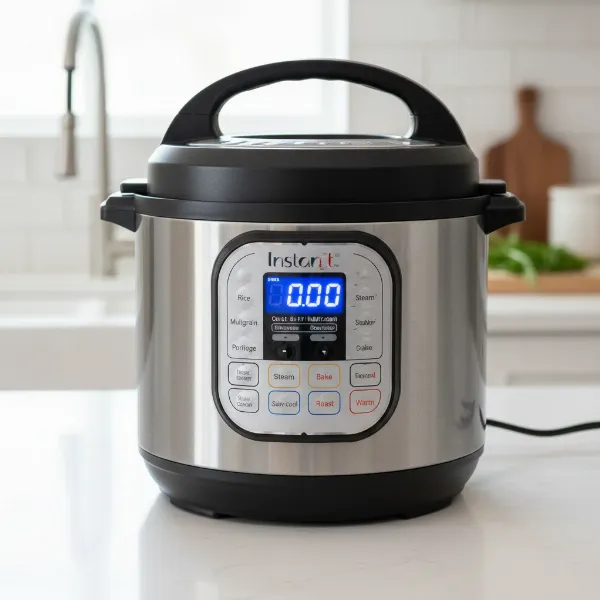
Are you tired of rushing to prepare dinner after a long, busy day? Imagine coming home to the comforting aroma of a perfectly cooked meal, ready to serve with minimal effort. This dream becomes a reality with a slow cooker, an indispensable kitchen appliance that transforms your daily routine. In this comprehensive guide, we’ll delve into everything you need to know about these culinary marvels, from their core functions and incredible benefits to selecting the perfect model for your home. We’ll also review the top slow cookers of 2026 to help you make an informed decision, ensuring delicious, stress-free meals for years to come.
What is a Slow Cooker?
A slow cooker is an electrical countertop appliance designed to simmer food gently at low temperatures over an extended period. Unlike conventional cooking methods that rely on high heat, slow cookers harness gradual, consistent heat to tenderize ingredients and meld flavors, making them ideal for dishes that benefit from prolonged cooking. This “low and slow” approach means you can prepare meals unattended, freeing up your time for other activities.
The concept of slow cooking gained popularity in the United States during the 1940s, a period when many women entered the workforce and sought convenient ways to prepare nutritious family dinners. The Naxon Utilities Corporation, led by electrical engineer Irving Naxon, developed the “Naxon Beanery All-Purpose Cooker,” inspired by traditional Jewish cholent stews that cooked for hours. In 1970, the Rival Company acquired Naxon’s patent and revolutionized home cooking with the mass-produced Crock-Pot, making slow cookers a household staple.
A typical slow cooker consists of three main parts:
- The Heating Base: The outer shell houses the electrical heating elements, which usually surround the inner pot and sometimes extend up the sides for more even heat distribution. A control panel, often with a knob or digital buttons, allows you to select temperature settings.
- The Cooking Pot (Insert): This removable vessel sits snugly within the heating base and holds the food. It’s commonly made from stoneware or ceramic, known for excellent heat retention and even cooking. Some modern inserts are made from aluminum or steel, which are lighter and may be stovetop-safe for browning ingredients.
- The Lid: Typically made of tempered glass, the lid seals in moisture and heat, allowing you to monitor your food without interrupting the cooking process, which is crucial for maintaining consistent temperatures.
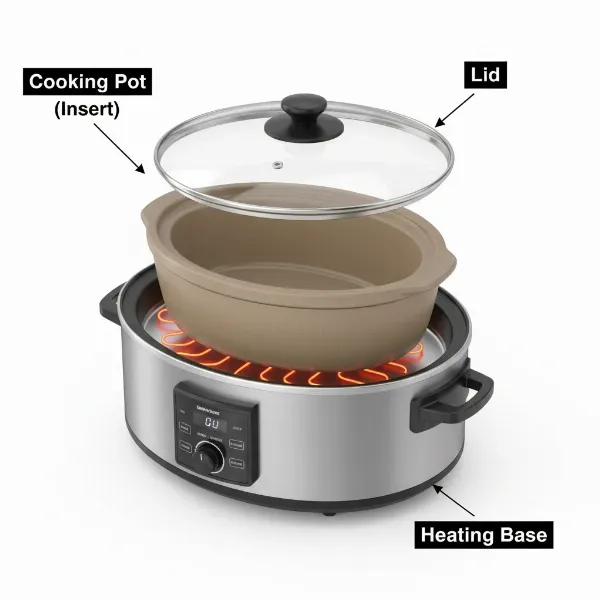 Diagram showing main parts of a slow cooker: heating base, cooking pot, and lid.
Amazing Benefits of Using a Slow Cooker
Integrating a slow cooker into your kitchen brings a multitude of advantages, enhancing both your culinary results and your lifestyle.
- Time and Effort Saving: Perhaps the most celebrated benefit, slow cookers offer unparalleled convenience. You can simply add your ingredients in the morning, set the desired cooking time, and return hours later to a fully cooked, delicious meal. This hands-off approach eliminates the need for constant monitoring, stirring, or complicated steps.
- Retains Nutrition and Flavor: The low and slow cooking method allows ingredients to gently simmer in their own juices, preserving nutrients that might be lost with higher heat. Condensation trapped by the lid acts as a self-baster, ensuring meats remain moist and tender, while vegetables absorb rich flavors from stocks and spices, resulting in deeply satisfying dishes.
- Versatile Meals: Slow cookers are incredibly versatile, capable of preparing a vast array of dishes. From hearty stews, rich chilis, and succulent pot roasts to flavorful soups, casseroles, and even some desserts like cobblers and puddings, the possibilities are extensive. They excel at transforming tougher, less expensive cuts of meat into fall-off-the-bone tenderness.
- Safety and Ease of Use: Designed for unattended operation, slow cookers are safe to leave on throughout the day. Their low cooking temperatures mean there’s very little risk of burning food. Most modern slow cookers feature removable inserts and lids that are dishwasher-safe, making cleanup remarkably easy.
- Energy Efficient: Compared to a conventional oven, a slow cooker consumes significantly less electricity, making it a more economical and environmentally friendly choice. This also prevents your kitchen from heating up excessively, especially during warmer months.
- Budget-Friendly Cooking: Slow cookers make it easy to prepare delicious meals using more affordable cuts of meat, which become incredibly tender and flavorful through the long, slow cooking process. This helps you stretch your grocery budget without compromising on taste or quality.
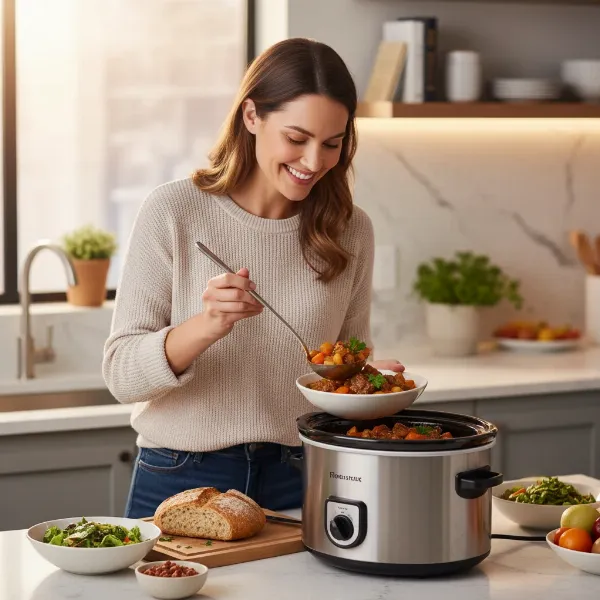 Woman happily serving a healthy meal from a slow cooker, illustrating convenience and healthy eating.
Popular Slow Cooker Types on the Market
Slow cookers come in various configurations, each offering unique advantages depending on your cooking habits and needs.
By Shape
- Oval Slow Cookers: These are the most common shape, particularly for larger capacities. Their elongated design is ideal for accommodating whole chickens, roasts, briskets, or ribs, allowing longer cuts of meat to lie flat for even cooking.
- Round Slow Cookers: Often found in smaller capacities, round slow cookers are perfect for soups, stews, chilis, and dips. They take up less counter or cabinet space, making them a good choice for smaller kitchens or single servings.
- Rectangular Slow Cookers: Less common, rectangular models typically offer the largest capacities (12+ quarts) and are excellent for catering to very large gatherings or for casserole-style dishes.
|
Our Picks for the Best Slow cooker in 2026
As an Amazon Associate I earn from qualifying purchases.
|
||
| Num | Product | Action |
|---|---|---|
| 1 | Hamilton Beach 6-Quart Slow Cooker with 3 Cooking Settings, Dishwasher-Safe Stoneware Crock & Glass Lid, Silver (33665G) |

|
| 2 | Slow Cooker 10-Quart - PFOA-Free Ceramic Coating, Oven Safe to 450°F - Keep Warm Function for Large Family Gatherings (Includes Silicone Spoon) |
|
| 3 | Ninja MC1101 Foodi Everyday Possible Cooker Pro, 8-in-1 Versatility, One-Pot Faster Cooking Replaces 10 Tools, Family-Sized Capacity with Adjustable Temp Control, 6.5 quarts, Midnight Blue |
|
| 4 | Crock-Pot 7 Quart Oval Manual Slow Cooker, Stainless Steel (SCV700-S-BR), Versatile Cookware for Large Families or Entertaining |
|
| 5 | Crock-Pot 6 Quart Cook & Carry Programmable Slow Cooker with Digital Timer Stainless Steel (CPSCVC60LL-S) pack of 1 |
|
| 6 | Ninja® 12-in-1 PossibleCooker™ PLUS - 8.5-qt - Sous Vide & Proof Multi-Cooker - Slow Cooker, Dutch Oven & More - Glass Lid & Integrated Spoon - Nonstick - Oven Safe Pot to 500°F - Black - MC1010 |
|
| 7 | Crock-Pot 6 Quart Programmable Slow Cooker with Timer and Auto Food Warmer Setting, Stainless Steel |
|
| 8 | Crock-Pot Large 8-Quart Programmable Slow Cooker with Auto Warm Setting Black Stainless Steel |
|
| 9 | Hamilton Beach Slow Cooker, Extra Large 10 Quart, Stay or Go Portable With Lid Lock, Dishwasher Safe Crock, Black (33195) |
|
| 10 | Ninja MC1001 Foodi PossibleCooker PRO 8.5 Quart Multi-Cooker, with 8-in-1 Slow Cooker, Dutch Oven, Steamer, Glass Lid Integrated Spoon, Nonstick, Oven Safe Pot to 500°F, Sea Salt Gray |
|
By Capacity
Slow cooker sizes are measured in quarts, and choosing the right capacity is key to successful cooking.
- Small (1.5-3 quarts): Ideal for individual portions, small side dishes, hot dips, or cooking for one or two people.
- Medium (4-6 quarts): Considered the “sweet spot” for most home cooks, this size is perfect for couples or small families (3-5 people). Many recipes are tailored for a 6-quart capacity, and it’s versatile enough for everyday meals and some leftovers.
- Large (7-10+ quarts): Best suited for large families (6+ people), meal prepping, batch cooking, entertaining, or preparing substantial cuts of meat.
By Pot Material
The material of the inner cooking pot significantly impacts performance and durability.
- Ceramic/Stoneware: These are the traditional materials, known for their excellent heat retention and even heat distribution. Ceramic pots are typically heavier and take longer to heat up, but they maintain a consistent temperature beautifully. They are generally not stovetop-safe and can be prone to cracking if dropped or exposed to sudden temperature changes.
- Aluminum/Steel: Lighter than ceramic, these metal inserts heat up more quickly and are often stovetop-safe, allowing you to sear or brown ingredients directly in the pot before slow cooking. Many come with nonstick coatings for easier cleanup, though care must be taken to avoid scratching the surface.
By Features
Beyond basic “low” and “high” settings, modern slow cookers offer a range of features that enhance convenience and versatility.
- Manual: Simple models with basic low, high, and sometimes a “warm” setting, controlled by a knob.
- Programmable/Digital: These feature digital controls and timers, allowing you to set precise cooking durations. They often automatically switch to a “keep warm” setting once cooking is complete, preventing overcooking and keeping food ready until you are.
- Multi-Cookers: Some advanced models combine slow cooking with other functions like pressure cooking, searing, sautéing, steaming, or even baking. This versatility can reduce the number of appliances needed in your kitchen.
- Temperature Probe: A rare but convenient feature, a probe can be inserted into meat to cook it to a specific internal temperature, then automatically switch to “warm.”
- Sear Function: Allows you to brown meats or sauté vegetables directly in the slow cooker insert (if stovetop-safe or has a dedicated sear setting), eliminating the need for an extra pan and enhancing flavor.
- Keep Warm Setting: Maintains food at a safe, serving temperature without continuing to cook it, ideal for potlucks or staggered meal times.
- Portable/Locking Lid: Features a secure lid and handles for spill-free transportation, perfect for parties or events.
Comparison Table of Slow Cooker Types
| Feature | Round Slow Cookers | Oval Slow Cookers | Ceramic/Stoneware Pots | Aluminum/Steel Pots | Manual Controls | Programmable/Digital Controls | Multi-Cookers (with Slow Cook function) |
|---|---|---|---|---|---|---|---|
| Ideal For | Soups, stews, dips, small meals | Roasts, whole poultry, large cuts of meat | Even heating, traditional slow cooking | Searing, sautéing, quick heating | Basic cooking, budget-friendly | Set-and-forget cooking, timers | Versatility (sear, pressure cook, slow cook) |
| Capacity | Often smaller (1.5-4 quarts) | Typically medium to large (4-10+ quarts) | Available across all capacities | Available across all capacities | All capacities | All capacities | Often medium to large (6-8+ quarts) |
| Pros | Compact, good for liquid-based dishes | Accommodates large foods, even cooking | Excellent heat retention, consistent results | Lighter, often stovetop-safe, faster heat | Simple, reliable, easy to use | Hands-off, auto-warm, prevents overcooking | Replaces multiple appliances, space-saving |
| Cons | Less suitable for large roasts | Takes up more counter space | Heavier, not usually stovetop-safe, fragile | Potential hot spots, nonstick coatings can scratch | No auto-off/warm, requires manual monitoring | More expensive, can be complex | Higher cost, more complex controls |
| Price | $ | $$-$$$ | $$-$$$ | $$-$$$ | $ | $$-$$$$ | $$$-$$$$ |
How to Choose the Right Slow Cooker
Selecting the perfect slow cooker involves considering your individual needs and preferences. Here’s a guide to help you find your ideal kitchen companion:
Determine Your Usage Needs
Start by assessing how you plan to use your slow cooker.
- Number of People: How many mouths will you be feeding regularly? This will directly influence the capacity you need.
- Types of Meals: Do you primarily cook soups and stews, or do you frequently prepare large cuts of meat for family dinners?
- Kitchen Space: Consider your available counter and storage space. Oval models, while versatile, can take up more room.
Choose the Right Capacity
Matching capacity to your household size is crucial for optimal results.
- 1-2 people: A 1.5 to 3-quart slow cooker is sufficient.
- 3-5 people: A 4 to 6-quart model is often ideal and aligns with most slow cooker recipes.
- 6+ people or batch cooking/entertaining: Opt for a 7 to 10-quart slow cooker. Remember, a slow cooker should be at least half full for best results, but never overfilled past two-thirds to three-quarters.
Prioritize Safe and Easy-to-Clean Pot Material
- Ceramic/Stoneware: If even heat distribution and traditional slow cooking are your priorities, ceramic is an excellent choice. Look for models with removable, dishwasher-safe inserts.
- Metal (Aluminum/Steel): If you value the ability to sear ingredients directly in the pot or prefer a lighter insert, metal is suitable. Ensure any nonstick coatings are lead-free and ideally PFAS- and PFOA-free.
- Removable Pots: Always choose a slow cooker with a removable inner pot for effortless cleaning. Glass lids are also preferred for visibility and often dishwasher-safe.
Consider Essential Features
Beyond basic cooking settings, certain features can greatly enhance your slow cooking experience.
- Timer and Automatic Keep Warm: These are highly recommended, especially if you’re away from home during cooking. A timer prevents overcooking, and the automatic “keep warm” function holds your meal at a safe serving temperature.
- Sear Function: If you want to brown meats for added flavor without dirtying a separate pan, a slow cooker with a built-in sear function (either stovetop-safe insert or a dedicated sear setting) is a valuable addition.
- Programmability: For more control over cooking cycles, a programmable model offers greater flexibility.
- Portable Design: If you frequently take your slow-cooked dishes to potlucks or gatherings, a model with a locking lid and sturdy handles is a practical feature.
Research Brands and User Reviews
Investigate reputable brands known for their durability and performance. Read user reviews and expert assessments to gauge real-world performance, reliability, and ease of use. This can provide valuable insights into specific models and help avoid common pitfalls.
Compare Prices and Reputable Retailers
Balance the features you need with your budget. While advanced features often come with a higher price tag, excellent basic models are available. Purchase from reputable retailers that offer good warranties and customer support.
Top 5 Slow Cookers of 2026
Based on extensive testing, user reviews, and cutting-edge features, here are five of the best slow cookers dominating the market in 2026:
-
Cuisinart Cook Central 6-Quart Multi-Cooker:
- Highlights: This versatile multi-cooker consistently ranks as a top overall pick for its user-friendly interface and robust functionality. It goes beyond basic slow cooking, offering sautéing, steaming, and “keep warm” settings. The wide, shallow cooking pot ensures even heat distribution, perfect for browning meats directly in the unit before slow cooking. Separate screens for time and temperature eliminate complex scrolling.
- Ideal For: Home cooks seeking a versatile appliance that simplifies multi-step recipes and offers consistent, reliable performance.
- Considerations: It is slightly larger than some other 6-quart models, so factor in counter space.
-
Ninja Foodi PossibleCooker PRO 8.5-Quart Multi-Cooker:
- Highlights: The Ninja Foodi PossibleCooker PRO stands out for its ultimate searing capability and its ability to replace up to 14 different cooking tools. Featuring Triple Fusion Heat technology, it ensures exceptional browning and even cooking. Its large 8.5-quart capacity is perfect for substantial meals and entertaining. The insert is often oven-safe, allowing for finishing dishes with a crispy crust.
- Ideal For: Users who desire a high-performance multi-cooker that offers maximum versatility, including advanced searing and various cooking functions, without cluttering the kitchen with multiple appliances.
- Considerations: This model is typically on the higher end of the price spectrum due to its extensive features.
-
Hamilton Beach Defrost & Go Programmable 6-Quart Slow Cooker:
- Highlights: Recognized as an excellent value pick, this Hamilton Beach model offers a surprising array of features at an accessible price point. Its programmable settings provide true hands-off cooking, often including a “defrost” function which adds to its convenience. User reviews frequently praise its intuitive design and consistent results, making it a dependable choice for everyday meals.
- Ideal For: Budget-conscious buyers or beginners looking for a reliable, programmable slow cooker that delivers great performance without a hefty investment.
- Considerations: While functional, it may not include premium features like stovetop searing found in higher-end multi-cookers.
-
Crock-Pot Programmable 8-Quart Slow Cooker:
- Highlights: A classic workhorse, this 8-quart Crock-Pot is a go-to for large families and batch cooking. It offers simple, straightforward programmable controls, allowing you to set cooking times and automatically switch to a “keep warm” setting. Its generous capacity handles family-sized roasts, chilis, and stews with ease, making it a reliable staple for many kitchens.
- Ideal For: Families or individuals who frequently cook large quantities, prioritize capacity and reliability, and appreciate the trusted Crock-Pot brand.
- Considerations: The lid typically doesn’t lock for transport, and it takes up considerable counter space.
-
GreenLife Cook Duo Slow Cooker 6-Quart:
- Highlights: The GreenLife Cook Duo is celebrated for its non-toxic, ceramic insert, crafted from sand, offering an eco-friendly option. It provides impressive heat distribution and can be stovetop- and oven-safe, adding to its versatility for searing or finishing dishes. Available in a range of vibrant colors, it also adds a touch of aesthetic appeal to any kitchen.
- Ideal For: Those prioritizing non-toxic cooking materials, even heat distribution, and a stylish design, with the added benefit of stovetop and oven compatibility for its insert.
- Considerations: While excellent, it may be lower on additional advanced functions compared to some multi-cookers.
Tips for Using and Maintaining Your Slow Cooker Correctly
Maximizing the lifespan and performance of your slow cooker, while ensuring delicious and safe meals, involves following a few best practices.
Safe and Effective Usage Tips
- Prepare Ingredients Properly: Always defrost frozen meat completely before placing it in the slow cooker to ensure it reaches a safe cooking temperature quickly. For enhanced flavor, sear meats on the stovetop beforehand.
- Layer Ingredients Strategically: Place root vegetables (like potatoes and carrots) at the bottom, as they cook slower and benefit from direct heat. Meats go next, followed by other vegetables and liquids.
- Mind Your Liquids: Slow cookers retain moisture very efficiently, so if adapting a non-slow cooker recipe, reduce the liquid content by about 20%. The pot should be filled at least halfway but no more than two-thirds to three-quarters full.
- Resist the Urge to Peek: Opening the lid allows heat and moisture to escape, significantly extending cooking times. Try to avoid lifting the lid until at least the last hour of cooking.
- Add Delicate Ingredients Later: Dairy products (milk, cream, cheese), tender vegetables (peas, mushrooms, zucchini), and fresh herbs should be added toward the end of the cooking cycle to prevent curdling, overcooking, or loss of flavor. Pasta and rice are best cooked separately and added just before serving.
“A slow cooker is your secret weapon for making tough cuts of meat incredibly tender and flavorful. Don’t underestimate the power of ‘low and slow’ to transform your meals.” – Chef Elena Rodriguez, Culinary Expert
Cleaning and Maintenance Tips
- Always Cool Down: Before cleaning, always turn off and unplug your slow cooker, allowing all components to cool completely. Never immerse a hot ceramic pot in cold water, as this can cause it to crack.
- Easy Cleanup: Most removable stoneware inserts and glass lids are dishwasher-safe. For handwashing, use warm, soapy water and a soft sponge. Avoid abrasive cleaners or scouring pads, which can damage surfaces. A rubber spatula can help remove stubborn food residue.
- Deep Cleaning Stains: For tough stains or residue, fill the pot with water just above the food line, add 1/2 cup distilled white vinegar (for a 3-quart pot) or 1 cup (for a 6-quart pot), then slowly add an equal amount of baking soda. Let the bubbles subside, cover, and cook on LOW for an hour. Once cooled, wash as usual.
- Never Immerse the Base: The heating base of your slow cooker is an electrical component and should never be immersed in water or any other liquid. Wipe the exterior with a damp cloth if needed.
- Inspect and Store: Regularly check the power cord for any signs of damage. Store your slow cooker in a cool, dry place. Using slow cooker liners can also significantly simplify cleanup, especially for sticky dishes. Consider replacing worn-out parts like a cracked inner pot or a faulty lid seal to maintain efficiency.
Where to Buy Reliable Slow Cookers?
Finding a reliable slow cooker is easier than ever with numerous reputable retailers offering a wide selection. For official products and comprehensive warranties, consider purchasing from:
- Major Online Retailers: Websites like Amazon, Best Buy, and Walmart often carry an extensive range of slow cooker brands and models, complete with customer reviews and competitive pricing.
- Department Stores: Stores such as Macy’s, Kohl’s, and JCPenney frequently feature kitchen appliance sections with various slow cooker options, sometimes offering sales and brand-specific promotions.
- Specialty Appliance Stores: Dedicated kitchenware and appliance stores provide expert advice and a curated selection of higher-end models.
- Manufacturer Websites: Purchasing directly from brand websites (e.g., Crock-Pot, Cuisinart, Hamilton Beach) can ensure authenticity and direct access to customer support and warranty services.
Always compare prices, check return policies, and look for models with good manufacturer warranties to protect your investment.
Conclusion
The humble slow cooker remains a powerhouse in the modern kitchen, offering unparalleled convenience, delicious results, and a path to healthier eating. From its historical roots in simplifying home cooking to today’s feature-rich multi-cookers, this appliance continues to be a favorite for busy individuals and families alike. By understanding the different types, their benefits, and how to choose the right one for your lifestyle, you’re now equipped to make an informed decision. Whether you’re simmering a savory stew or preparing a tender roast, the perfect slow cooker is ready to transform your culinary journey. Which delectable slow-cooked dish will you prepare first?
Frequently Asked Questions
What types of food are best suited for a slow cooker?
Slow cookers excel at preparing dishes that benefit from long, gentle simmering. This includes tough cuts of meat like chuck roast, pork shoulder, and short ribs, which become incredibly tender. They are also perfect for soups, stews, chilis, casseroles, pot roasts, pulled pork, and even some desserts like fruit crumbles.
Can I leave my slow cooker on all day while I’m at work?
Yes, modern slow cookers are designed to be safe for unattended cooking for several hours. Their low heat settings maintain a safe temperature, and many programmable models automatically switch to a “keep warm” function once cooking is complete, ensuring your meal is ready when you return home without overcooking.
How full should a slow cooker be for optimal cooking results?
For the best cooking performance and to prevent food safety issues, a slow cooker should be filled at least halfway, but no more than two-thirds to three-quarters full. Underfilling can lead to overcooking and drying out, while overfilling can cause uneven cooking and spills.