For many home cooks, the slow cooker is a kitchen hero, transforming raw ingredients into delicious, tender meals with minimal effort. It’s natural to wonder if this beloved appliance can also be your go-to for reheating those precious leftovers. While the slow cooker excels at cooking and keeping food warm, direct reheating of cold leftovers in it presents significant food safety risks. Understanding the critical distinction between gently warming already hot food and bringing cold food up to a safe temperature is key to harnessing your slow cooker’s benefits without compromising health.
The Critical Distinction: Reheating vs. Keeping Warm
The primary function of a slow cooker is to cook food slowly and consistently over many hours, or to hold already hot food at a safe serving temperature. It is not designed to rapidly bring cold food through the bacterial “danger zone” to a safe eating temperature. Trying to reheat cold leftovers directly in a slow cooker can take too long, allowing harmful bacteria to multiply to dangerous levels, even if the food eventually gets hot.
Food safety guidelines, including those from the U.S. Department of Agriculture (USDA), strongly advise against using a slow cooker to reheat chilled leftovers. The slow, gradual heating process of these appliances is precisely what makes them unsuitable for quick reheating, as it can keep food within unsafe temperature ranges for extended periods.
Understanding Food Safety “Danger Zone” and Temperatures
At the heart of safe food handling lies the “danger zone,” the temperature range between 40°F (4°C) and 140°F (60°C). This is where bacteria, which can cause foodborne illness, grow most rapidly. When reheating food, the goal is to pass through this zone as quickly as possible.
To be considered safely reheated, all leftovers must reach an internal temperature of 165°F (74°C). This temperature effectively kills most harmful bacteria. After reaching this critical temperature using a faster method, your slow cooker can then step in to keep the food warm for serving. For holding purposes, food should consistently remain at or above 140°F (60°C) to prevent bacterial growth. The only reliable way to confirm these temperatures is by using a food thermometer, inserted into the thickest part of the food.
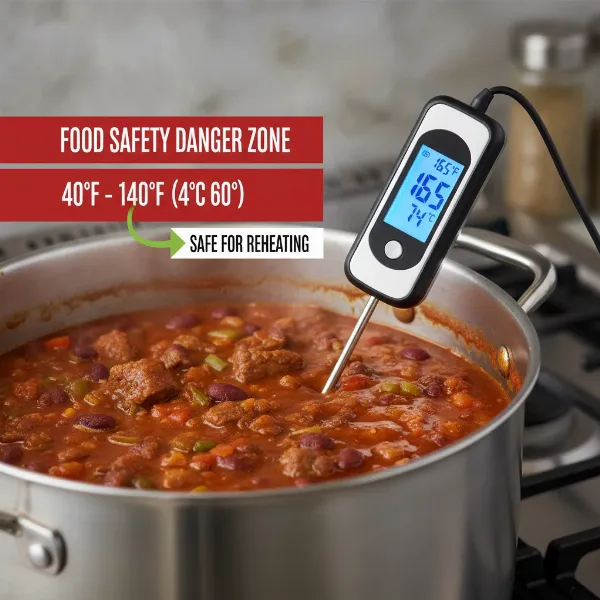 Food thermometer measuring internal temperature, illustrating safe food zone.
Preparing Leftovers for Safe Slow Cooker Warming
Since direct reheating in a slow cooker isn’t recommended, proper preparation involves reheating your food to safety elsewhere before introducing it to the slow cooker. Start by storing any unused portions in shallow, covered containers and refrigerating them within two hours of initial cooking. This rapid cooling helps minimize bacterial growth.
When it’s time to enjoy your leftovers, use conventional methods like a stovetop, microwave, or oven to bring the food up to the required 165°F (74°C). This ensures that any potential bacteria are eliminated quickly. Crucially, avoid placing a chilled ceramic slow cooker insert directly onto a hot slow cooker base, as the sudden temperature change can cause the insert to crack or break. Always transfer reheated food into an already warm slow cooker.
Step-by-Step Guide: Using Your Slow Cooker for Warming Leftovers
Once your leftovers have been safely reheated, your slow cooker becomes an excellent tool for keeping them warm, especially for gatherings or extended serving times. Here’s how to do it safely and effectively:
Reheat to 165°F First
|
Our Picks for the Best Slow cooker in 2026
As an Amazon Associate I earn from qualifying purchases.
|
||
| Num | Product | Action |
|---|---|---|
| 1 | Ninja MC1101 Foodi Everyday Possible Cooker Pro, 8-in-1 Versatility, One-Pot Faster Cooking Replaces 10 Tools, Family-Sized Capacity with Adjustable Temp Control, 6.5 quarts, Midnight Blue |

|
| 2 | Hamilton Beach Slow Cooker, Extra Large 10 Quart, Stay or Go Portable With Lid Lock, Dishwasher Safe Crock, Black (33195) |
|
| 3 | Ninja MC1001 Foodi PossibleCooker PRO 8.5 Quart Multi-Cooker, with 8-in-1 Slow Cooker, Dutch Oven, Steamer, Glass Lid Integrated Spoon, Nonstick, Oven Safe Pot to 500°F, Sea Salt Gray |
|
| 4 | Crock-Pot 6 Quart Cook & Carry Programmable Slow Cooker with Digital Timer Stainless Steel (CPSCVC60LL-S) pack of 1 |
|
| 5 | Crock-Pot 6 Quart Programmable Slow Cooker with Timer and Auto Food Warmer Setting, Stainless Steel |
|
| 6 | Ninja® 12-in-1 PossibleCooker™ PLUS - 8.5-qt - Sous Vide & Proof Multi-Cooker - Slow Cooker, Dutch Oven & More - Glass Lid & Integrated Spoon - Nonstick - Oven Safe Pot to 500°F - Black - MC1010 |
|
| 7 | Slow Cooker 10-Quart - PFOA-Free Ceramic Coating, Oven Safe to 450°F - Keep Warm Function for Large Family Gatherings (Includes Silicone Spoon) |
|
| 8 | Crock-Pot 7 Quart Oval Manual Slow Cooker, Stainless Steel (SCV700-S-BR), Versatile Cookware for Large Families or Entertaining |
|
| 9 | Crock-Pot Large 8-Quart Programmable Slow Cooker with Auto Warm Setting Black Stainless Steel |
|
| 10 | Hamilton Beach 6-Quart Slow Cooker with 3 Cooking Settings, Dishwasher-Safe Stoneware Crock & Glass Lid, Silver (33665G) |
|
Always begin by reheating your leftovers to a minimum internal temperature of 165°F (74°C) using a conventional oven, microwave, or stovetop. Use a food thermometer to verify the temperature in several spots.
Preheat Your Slow Cooker
Before transferring the hot food, preheat your slow cooker on the “Low” or “Warm” setting for about 20-30 minutes. This ensures the crock is already warm and won’t cool down your food, helping to maintain its temperature.
Transfer and Maintain Temperature
Carefully transfer the piping hot, reheated food into the preheated slow cooker. Set the slow cooker to its “Warm” setting if available, or “Low” if “Warm” is not an option. Monitor the internal temperature periodically with a food thermometer, ensuring it consistently stays at or above 140°F (60°C).
Ensure Proper Fill Level
For optimal and even warming, your slow cooker should be at least half full, but no more than two-thirds full. This allows the heat to distribute properly, keeping all parts of the food at a safe temperature without overcooking or drying out.
Stir Occasionally
If practical, stir the contents of your slow cooker occasionally. This helps distribute heat evenly and prevents hot spots or cold spots, ensuring all portions remain at a safe serving temperature.
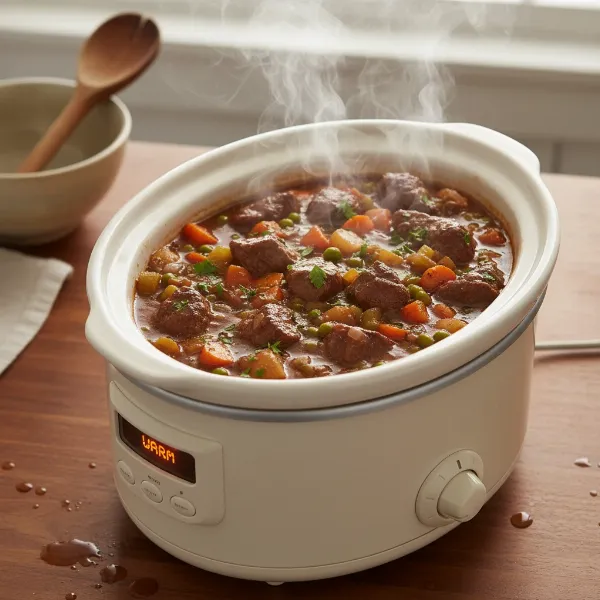 Slow cooker keeping hot, reheated leftovers warm for serving.
Best Practices for Slow Cooker Leftover Management
Using your slow cooker to hold reheated leftovers can be a fantastic convenience, especially for certain types of dishes.
Suitable Foods for Warming: The best foods for slow cooker warming are typically liquid-rich dishes like soups, stews, chili, casseroles, and pulled meats (like pulled pork or chicken). These foods tend to maintain moisture well and heat evenly when stirred.
Adding Liquid for Moisture: If your dish seems a bit thick or prone to drying out, consider adding a small amount of broth, water, or other liquid before transferring it to the slow cooker. This helps prevent the food from becoming too dry or sticking to the bottom during the warming period.
Maximum Holding Time: While a slow cooker can keep food warm, it’s not meant for indefinite holding. Generally, food can be safely held at or above 140°F (60°C) for up to 2-4 hours. After this, food quality may decline, and the risk of bacterial growth, though minimized, can increase over extended periods. Plan to consume or discard food held in a slow cooker within this timeframe.
Common Mistakes and How to Avoid Them
Even with the best intentions, it’s easy to make mistakes when dealing with food and slow cookers. Being aware of these common pitfalls can help ensure your family stays safe and your meals remain delicious.
- Not reheating fully before transferring: This is the most critical mistake. Always ensure your leftovers reach 165°F (74°C) with a thermometer before putting them into the slow cooker for warming.
- Leaving food in the danger zone too long: Slow cookers are inherently slow. If you attempt to reheat cold food directly, it will spend too much time between 40°F and 140°F, creating a perfect environment for bacteria.
- Not using a thermometer: Guessing the temperature is a recipe for disaster. A reliable food thermometer is an inexpensive and essential tool for verifying food safety.
- Overfilling or underfilling for warming: An incorrectly filled crock can lead to uneven heating. Follow the half to two-thirds full guideline for optimal warming.
- Putting cold stoneware on a hot base: The thermal shock can cause the ceramic insert to crack, rendering your slow cooker unusable. Always preheat the slow cooker before adding already hot food.
“A slow cooker is a chef’s best friend for maintaining warmth, but it’s a food safety hazard if used for initial reheating from cold. Always get your food hot first, then let your slow cooker work its magic to keep it perfectly warm.” – Chef Eleanor Vance, Culinary Institute Food Safety Specialist
Conclusion
While your slow cooker is an indispensable appliance for tender, flavorful meals, its role in handling leftovers is specific: it’s for keeping already reheated food safely warm for serving, not for bringing cold food up to temperature. Prioritizing food safety by first reheating leftovers to 165°F (74°C) using faster methods, and then transferring them to a preheated slow cooker set to at least 140°F (60°C), ensures both deliciousness and peace of mind. By following these guidelines, you can maximize convenience without compromising the health of your loved ones. How will you integrate these safe practices into your meal preparation routine this week?
Frequently Asked Questions
Can I reheat frozen food in a slow cooker?
No, frozen food should never be directly reheated in a slow cooker. You must first thaw it completely and then reheat it to 165°F (74°C) using a microwave, stovetop, or oven before transferring it to a slow cooker to keep warm.
How long can food stay warm in a slow cooker?
Once food has been safely reheated to 165°F (74°C) and transferred to a preheated slow cooker set to at least 140°F (60°C), it can typically be held safely for serving for up to 2-4 hours. Always check the temperature periodically.
What if my slow cooker only has “Low” and “High” settings, no “Warm”?
If your slow cooker lacks a dedicated “Warm” setting, use the “Low” setting. Monitor the internal temperature with a food thermometer to ensure the food consistently stays at or above 140°F (60°C). Stirring helps maintain even heat distribution.
What types of foods are best for warming in a slow cooker?
Soups, stews, chilis, casseroles, and pulled meats are ideal for slow cooker warming. Their liquid content helps them stay moist and allows for more even heat distribution, making them less prone to drying out compared to other food types.