Hard water stains, those unsightly white, chalky deposits, are a common nuisance for homeowners. They appear on showerheads, faucets, and perhaps most frustratingly, on the heating bases of our essential kitchen and home appliances. These mineral buildups, primarily calcium and magnesium, not only mar the appearance of your beloved slow cooker or kettle but can also silently undermine their performance and lifespan. You’ve likely spotted them, clinging stubbornly to surfaces where water frequently heats and evaporates. This guide will walk you through effective, safe methods to banish these stubborn stains, ensuring your appliances run efficiently and look their best.
Understanding Hard Water Stains and Their Impact
Hard water is water that contains a high concentration of dissolved minerals, predominantly calcium and magnesium, picked up as it travels through soil and rock. When this water is heated, especially in appliances like kettles, coffee makers, slow cookers, and water heaters, the water evaporates, leaving these minerals behind as solid deposits. This process is known as limescale formation.
While seemingly harmless, these mineral deposits can have significant consequences. Limescale acts as an insulating layer, forcing heating elements to work harder to achieve the desired temperature. This reduced efficiency translates directly into higher energy consumption and increased utility bills. Over time, excessive buildup can also restrict water flow, clog pressure sensors, and even lead to premature equipment failure, resulting in costly repairs or replacements. Beyond functionality, hard water stains are simply an eyesore, diminishing the appeal of otherwise pristine appliances.
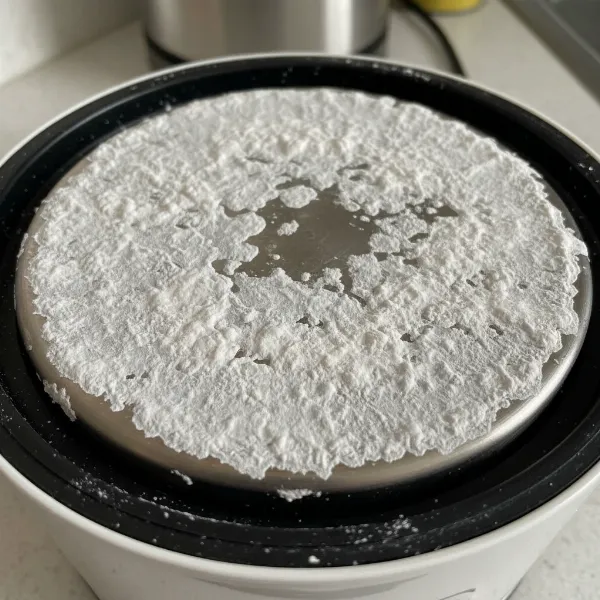 Close-up of significant white chalky hard water stains on a metal appliance heating element.
Essential Cleaning Tools and Ingredients
Tackling hard water stains doesn’t always require harsh chemicals. Many effective solutions can be found right in your pantry. Before you begin any cleaning, always ensure the appliance is unplugged and completely cool to prevent electric shock or burns.
Here’s what you’ll typically need:
- White Vinegar: The superhero of natural descaling, its acetic acid effectively dissolves mineral deposits.
- Baking Soda: A mild abrasive that works well on its own or, even better, in combination with vinegar to create a stain-lifting fizz.
- Lemon Juice: Another natural acid, though often less potent than vinegar, it can be used for lighter stains and leaves a pleasant scent.
- CLR (Calcium, Lime, Rust Remover): A heavy-duty commercial cleaner for more severe buildup. Use with caution and according to manufacturer instructions.
- Soft Cloths or Microfiber Towels: For wiping and applying solutions without scratching surfaces.
- Sponges or Non-Abrasive Scrub Brushes: To gently scrub away loosened deposits.
- Old Toothbrush: Excellent for reaching tight spots and crevices in heating elements.
- Spray Bottle: Handy for applying diluted solutions evenly.
- Gloves: Recommended when using stronger commercial cleaners.
Step-by-Step Methods for Hard Water Stain Removal
Different appliances and stain severities may call for varying approaches. Always remember to test any cleaning solution on an inconspicuous area first.
The Vinegar Soak Method
|
Our Picks for the Best Slow cooker in 2026
As an Amazon Associate I earn from qualifying purchases.
|
||
| Num | Product | Action |
|---|---|---|
| 1 | Ninja® 12-in-1 PossibleCooker™ PLUS - 8.5-qt - Sous Vide & Proof Multi-Cooker - Slow Cooker, Dutch Oven & More - Glass Lid & Integrated Spoon - Nonstick - Oven Safe Pot to 500°F - Black - MC1010 |

|
| 2 | Ninja MC1101 Foodi Everyday Possible Cooker Pro, 8-in-1 Versatility, One-Pot Faster Cooking Replaces 10 Tools, Family-Sized Capacity with Adjustable Temp Control, 6.5 quarts, Midnight Blue |
|
| 3 | Crock-Pot 6 Quart Programmable Slow Cooker with Timer and Auto Food Warmer Setting, Stainless Steel |
|
| 4 | Slow Cooker 10-Quart - PFOA-Free Ceramic Coating, Oven Safe to 450°F - Keep Warm Function for Large Family Gatherings (Includes Silicone Spoon) |
|
| 5 | Crock-Pot 7 Quart Oval Manual Slow Cooker, Stainless Steel (SCV700-S-BR), Versatile Cookware for Large Families or Entertaining |
|
| 6 | Hamilton Beach Slow Cooker, Extra Large 10 Quart, Stay or Go Portable With Lid Lock, Dishwasher Safe Crock, Black (33195) |
|
| 7 | Crock-Pot 6 Quart Cook & Carry Programmable Slow Cooker with Digital Timer Stainless Steel (CPSCVC60LL-S) pack of 1 |
|
| 8 | Crock-Pot Large 8-Quart Programmable Slow Cooker with Auto Warm Setting Black Stainless Steel |
|
| 9 | Hamilton Beach 6-Quart Slow Cooker with 3 Cooking Settings, Dishwasher-Safe Stoneware Crock & Glass Lid, Silver (33665G) |
|
| 10 | Ninja MC1001 Foodi PossibleCooker PRO 8.5 Quart Multi-Cooker, with 8-in-1 Slow Cooker, Dutch Oven, Steamer, Glass Lid Integrated Spoon, Nonstick, Oven Safe Pot to 500°F, Sea Salt Gray |
|
This method is highly effective for internal heating bases, such as those found in electric kettles, coffee makers, or even the inner well of a slow cooker.
- Preparation: Ensure the appliance is unplugged and empty.
- For Kettles/Coffee Makers: Fill the reservoir or kettle with an equal parts mixture of white vinegar and water. For tough stains, you can use undiluted vinegar.
- For Slow Cooker Heating Bases: Since most slow cooker heating bases are not designed to hold liquid directly, you can adapt this method. Lightly dampen several paper towels or soft rags with white vinegar. Carefully place these vinegar-soaked cloths directly onto the hard water stains on the heating base, ensuring good contact.
- Soak Time: Let the solution sit. For light stains, 15-30 minutes may suffice. For stubborn, older deposits, allow it to soak for several hours or even overnight. The vinegar works to dissolve the mineral bonds.
- Scrub and Rinse: After soaking, remove the cloths or empty the liquid. Use a soft cloth, sponge, or an old toothbrush to gently scrub away any remaining loosened deposits.
- Thorough Rinsing: This step is crucial. For kettles and coffee makers, rinse several times with fresh water. For slow cooker bases, wipe down thoroughly with a clean, damp cloth, ensuring no vinegar residue remains. Allow the appliance to air dry completely, preferably overnight, before plugging it back in.
Baking Soda Paste for Targeted Stains
Baking soda’s mild abrasive quality makes it excellent for scrubbing without scratching, particularly for newer or lighter stains.
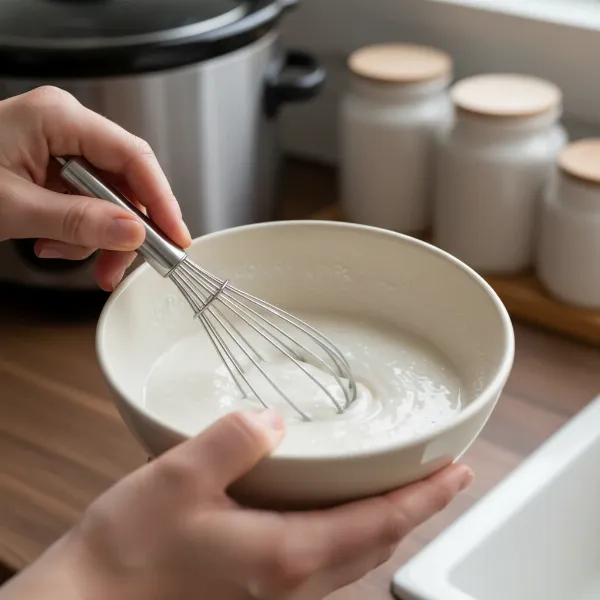
- Prepare the Paste: Mix a few tablespoons of baking soda with just enough water to form a thick paste.
- Apply: Apply the paste directly onto the hard water stains on the heating base.
- Scrub Gently: Using a damp sponge or soft-bristled brush (like an old toothbrush), gently scrub the stained areas in circular motions.
- Rinse: Wipe away the paste and rinse the area thoroughly with a clean, damp cloth. Dry completely.
Combining Vinegar and Baking Soda
For those particularly stubborn stains that resist a single approach, the fizzy reaction between vinegar and baking soda can be a powerful ally.
- Initial Application: Apply a layer of baking soda paste to the stains.
- Add Vinegar: Gently spray or dab white vinegar over the baking soda. You’ll observe a fizzing reaction, which helps to lift and break down mineral buildup.
- Soak and Scrub: Let the mixture sit for 5-10 minutes. Then, scrub with a non-abrasive sponge or brush.
- Rinse: Wipe clean with a damp cloth and dry thoroughly.
Using Commercial Descalers (e.g., CLR)
When natural methods aren’t quite enough, commercial descalers like CLR (Calcium, Lime, and Rust Remover) can be highly effective.
- Read Instructions Carefully: Always, always follow the manufacturer’s instructions for dilution and application. These products are potent.
- Dilution: Many descalers require dilution. For instance, CLR often suggests mixing one part CLR with eight parts water for kettles and boilers.
- Application: Apply the diluted solution to the stained heating base, typically using a cloth or sponge. Avoid direct contact with skin and eyes.
- Soak Time: Allow it to sit for the recommended duration (e.g., 10-15 minutes for CLR). Do not exceed this time, especially on delicate surfaces.
- Thorough Rinsing: Rinse the area exceptionally well with cold water to remove all chemical residue. Repeated rinsing is often necessary.
- Ventilation: Ensure good ventilation in your workspace when using these products.
Comparing Cleaning Methods: Which is Right for You?
Choosing the best method depends on the severity of the stains, the type of appliance, and your preference for natural versus chemical solutions.
| Method | Effectiveness | Ease of Use | Cost | Safety | Suitable For |
|---|---|---|---|---|---|
| Vinegar Soak | High (especially overnight) | Moderate (soaking time) | Low | Very Safe (natural) | Kettles, coffee makers, slow cooker wells |
| Baking Soda Paste | Moderate (lighter stains) | Easy | Low | Very Safe (natural) | Surface stains, gentle scrubbing |
| Vinegar & Baking Soda | High (for tougher stains) | Moderate | Low | Safe (natural, fizzy) | Stubborn surface stains, moderate buildup |
| Commercial Descalers (CLR) | Very High (severe stains) | Moderate (requires caution) | Moderate | Caution (chemicals) | Heavy limescale, internal heating elements |
Preventing Future Hard Water Stains
Prevention is always easier than a cure. By adopting a few simple habits, you can significantly reduce the formation of hard water stains on your appliance heating bases:
- Wipe Dry After Use: After each use, especially for appliances where water collects, wipe the heating base completely dry. This prevents minerals from evaporating and leaving deposits.
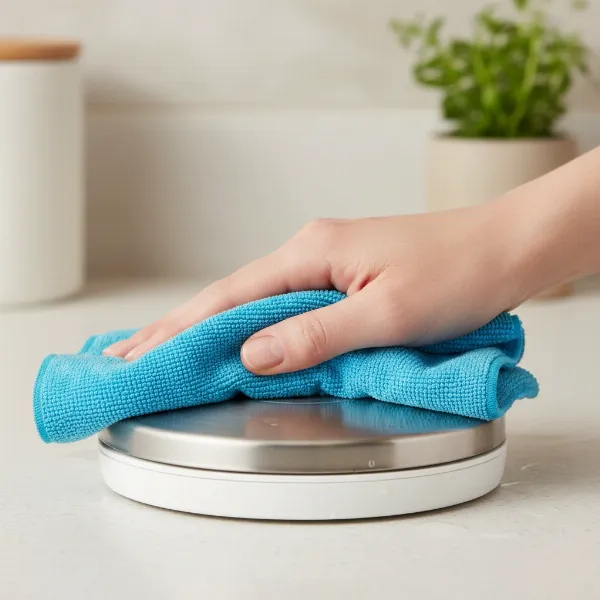 Hand wiping the heating base of a kitchen appliance with a soft cloth to prevent stains.
 - Use Filtered Water: If you live in an area with particularly hard water, using filtered water for your appliances (like kettles and coffee makers) can drastically reduce mineral buildup over time.
- Regular Light Cleaning: Don’t wait for heavy buildup. A quick wipe with a vinegar-dampened cloth once a week can prevent stains from setting in.
- Consider a Water Softener: For a whole-home solution to hard water, installing a water softener can be a long-term investment that protects all your appliances and plumbing from mineral damage.
Expert Tips for Appliance Maintenance
Maintaining your appliance’s heating base goes beyond just removing visible stains. Regular care can extend its life and ensure optimal performance.
“Ignoring hard water buildup isn’t just an aesthetic issue; it’s a silent threat to your appliance’s longevity and efficiency. Regular descaling is the single most important step you can take to keep your heating elements in top condition.” – Admin, Crockpotz.com
- Never Immerse Electrical Components: Always remember that the heating base of most appliances is electric. Never submerge it in water or place it under a running faucet unless explicitly stated by the manufacturer.
- Refer to Your Appliance Manual: When in doubt, always consult your appliance’s user manual. It may offer specific cleaning recommendations or warnings tailored to its materials and design.
- Be Patient with Tough Stains: Some older, deeply set stains might require multiple applications or longer soaking times. Avoid abrasive scrubbers that could scratch the surface.
Conclusion
Hard water stains on your appliance heating bases can be a frustrating and detrimental issue, affecting everything from energy efficiency to the overall lifespan of your cherished kitchen tools. By understanding what causes these mineral deposits and employing effective cleaning strategies using common household ingredients like white vinegar and baking soda, you can restore your appliances to their sparkling best. Remember, regular maintenance and proactive prevention are key to keeping your heating bases clean, efficient, and extending the life of your appliances. What steps will you take today to keep your heating elements spotless?
Frequently Asked Questions
Can I use bleach to remove hard water stains from my appliance heating base?
No, it is strongly advised not to use bleach to remove hard water stains. Bleach is not effective against mineral deposits and can react negatively with cleaning acids like vinegar, producing dangerous fumes. Stick to acidic cleaners or specialized descalers for hard water.
How often should I descale my appliance’s heating base?
The frequency depends on your water hardness and appliance usage. In hard water areas or with frequent use, descaling every 1-3 months is a good practice. For softer water or less frequent use, every 6 months to a year might suffice.
Are hard water stains harmful to my health?
While generally not harmful to health, consuming water with excessive mineral deposits from limescale buildup can sometimes alter the taste of beverages. The primary concern is the impact on appliance performance and longevity, not direct health risks from the stains themselves.
What if the stains won’t come off even after repeated cleaning?
For extremely stubborn or old stains, you might need to consider a stronger commercial descaler, used strictly according to instructions. If it’s a critical component like a water heater element, professional servicing might be the safest and most effective option to avoid damage.
Can hard water permanently damage my appliance?
Yes, if left unaddressed, significant hard water buildup can lead to permanent damage, reduced heating efficiency, and even complete failure of heating elements or other internal components, ultimately shortening the appliance’s lifespan and necessitating replacement.