In the bustling rhythm of modern life, the slow cooker stands as a beacon of culinary convenience, transforming raw ingredients into tender, flavorful meals with minimal effort. This countertop hero allows you to “set it and forget it,” returning to a hot, homemade dinner. But as you navigate the world of slow cooking, a crucial question arises: which insert material is best for your needs? The choice between ceramic and metal can significantly impact your cooking experience, particularly when it comes to achieving perfectly even results.
This comprehensive guide will delve into the nuances of ceramic and metal slow cooker inserts, exploring their definitions, operational principles, benefits, and drawbacks. We’ll analyze which material excels at even cooking, discuss critical safety considerations, and offer practical advice to help you select the ideal slow cooker for your kitchen, ensuring every meal is cooked to perfection.
What is a Slow Cooker and How Does it Work?
A slow cooker is an electric countertop appliance designed to cook food at low temperatures over an extended period. This gentle, consistent heat breaks down tough cuts of meat, tenderizes vegetables, and allows flavors to meld beautifully. Typically, a slow cooker comprises three main components: an outer heating base, an inner cooking insert, and a lid.
The heating element in the base surrounds the insert, providing heat from the bottom and sides (in the case of Crock-Pots, which traditionally use ceramic inserts that fit into a heated casing). This design ensures that food heats slowly and uniformly. The tight-fitting lid traps moisture and heat, creating a steamy environment that prevents food from drying out, while also allowing condensation to drip back into the pot, preserving liquids and flavors. This “low and slow” method is perfect for stews, soups, roasts, and a myriad of other dishes, making meal prep effortless and incredibly rewarding.
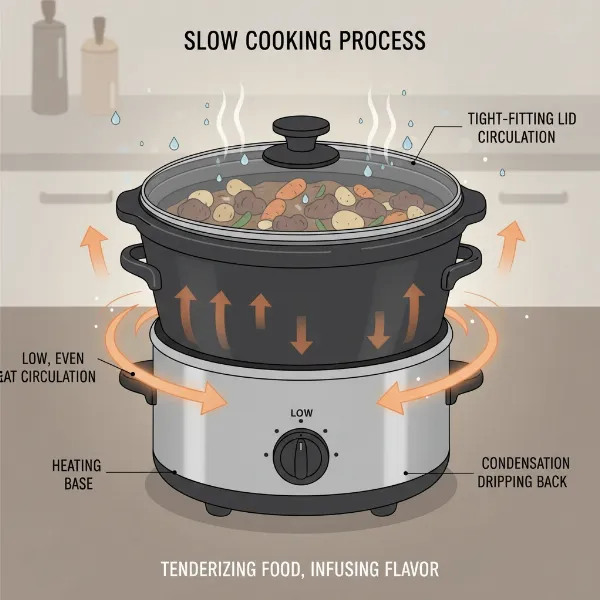 Illustration of a slow cooker with base, insert, and lid, showing heat circulation and steam.
The Heart of the Matter: Ceramic Slow Cooker Inserts
Ceramic inserts, often referred to as stoneware or crock-pots, are the traditional choice for slow cooking. They are typically made from glazed ceramic material and are renowned for their exceptional heat retention properties.
Even Cooking & Heat Retention
|
Our Picks for the Best Slow cooker in 2026
As an Amazon Associate I earn from qualifying purchases.
|
||
| Num | Product | Action |
|---|---|---|
| 1 | Crock-Pot Large 8-Quart Programmable Slow Cooker with Auto Warm Setting Black Stainless Steel |

|
| 2 | Hamilton Beach Slow Cooker, Extra Large 10 Quart, Stay or Go Portable With Lid Lock, Dishwasher Safe Crock, Black (33195) |
|
| 3 | Ninja MC1001 Foodi PossibleCooker PRO 8.5 Quart Multi-Cooker, with 8-in-1 Slow Cooker, Dutch Oven, Steamer, Glass Lid Integrated Spoon, Nonstick, Oven Safe Pot to 500°F, Sea Salt Gray |
|
| 4 | Slow Cooker 10-Quart - PFOA-Free Ceramic Coating, Oven Safe to 450°F - Keep Warm Function for Large Family Gatherings (Includes Silicone Spoon) |
|
| 5 | Ninja MC1101 Foodi Everyday Possible Cooker Pro, 8-in-1 Versatility, One-Pot Faster Cooking Replaces 10 Tools, Family-Sized Capacity with Adjustable Temp Control, 6.5 quarts, Midnight Blue |
|
| 6 | Ninja® 12-in-1 PossibleCooker™ PLUS - 8.5-qt - Sous Vide & Proof Multi-Cooker - Slow Cooker, Dutch Oven & More - Glass Lid & Integrated Spoon - Nonstick - Oven Safe Pot to 500°F - Black - MC1010 |
|
| 7 | Hamilton Beach 6-Quart Slow Cooker with 3 Cooking Settings, Dishwasher-Safe Stoneware Crock & Glass Lid, Silver (33665G) |
|
| 8 | Crock-Pot 7 Quart Oval Manual Slow Cooker, Stainless Steel (SCV700-S-BR), Versatile Cookware for Large Families or Entertaining |
|
| 9 | Crock-Pot 6 Quart Programmable Slow Cooker with Timer and Auto Food Warmer Setting, Stainless Steel |
|
| 10 | Crock-Pot 6 Quart Cook & Carry Programmable Slow Cooker with Digital Timer Stainless Steel (CPSCVC60LL-S) pack of 1 |
|
Ceramic inserts are highly prized for their ability to maintain a stable and consistent temperature throughout the cooking process. Their dense, heavy nature means they heat up slowly but retain heat remarkably well, distributing it evenly across the entire surface. This minimizes the risk of hot spots and ensures that your ingredients cook uniformly, resulting in tender, thoroughly cooked dishes. This even heat distribution is particularly beneficial for recipes like dried beans, which require consistent heat to soften properly.
Benefits of Ceramic Inserts
- Superior Heat Distribution: Ceramic excels at spreading heat evenly, preventing scorching and ensuring consistent cooking from all sides.
- Excellent Heat Retention: Once heated, ceramic stays hot for a long time, which is ideal for slow cooking and keeping food warm after it’s done.
- Non-Reactive Surface: High-quality ceramic is naturally non-reactive, meaning it won’t impart metallic flavors to acidic foods like tomato sauces or citrus marinades.
- Aesthetic Appeal: Many ceramic inserts are designed to be attractive enough to go directly from the cooker to the table, serving as an elegant serving dish.
- Oven-Safe Options: Some ceramic inserts are oven-safe, allowing for browning or finishing dishes in the oven without transferring to another pan.
Drawbacks of Ceramic Inserts
- Heavy and Bulky: The substantial weight of ceramic inserts can make them difficult to handle, especially when full, and cumbersome to clean in a sink.
- Fragile: Ceramic is prone to chipping, cracking, or shattering if dropped or subjected to sudden temperature changes (thermal shock), which can lead to rapid cracking and potential release of trapped substances.
- Potential for Leaching: Older or lower-quality glazed ceramic inserts may contain lead or cadmium in their glazes, which can leach into food over extended cooking times, particularly with acidic ingredients. Even newer “lead-free” ceramics can develop micro-fissures over time, potentially releasing trace amounts of these heavy metals.
- Not Stovetop Safe: Ceramic inserts are generally not designed for direct stovetop use, meaning you’ll need a separate pan to sear meats or sauté vegetables before adding them to the slow cooker, creating more dirty dishes.
- Flavor Absorption: Porous ceramic can absorb odors and flavors from strong dishes if not cleaned thoroughly, potentially transferring them to subsequent meals.
The Alternative: Metal Slow Cooker Inserts (Aluminum & Stainless Steel)
Metal slow cooker inserts are gaining popularity, often made from aluminum or, less commonly, stainless steel. These materials offer different characteristics compared to traditional ceramic.
Even Cooking & Heat Conduction
Metal inserts, especially aluminum, heat up much faster than ceramic. While this speed can be advantageous for quicker startup, aluminum inserts can sometimes suffer from less even heat distribution compared to ceramic. Heat tends to concentrate at the bottom, which may lead to scorching if liquids are too low or not stirred occasionally.
However, modern designs, particularly those utilizing stainless steel with an encapsulated aluminum core, aim to provide excellent heat conduction and more uniform heat across the cooking surface, mitigating the hot spot issue.
Benefits of Metal Inserts
- Lightweight: Metal inserts are significantly lighter than ceramic, making them much easier to lift, carry, and clean.
- Durable: While aluminum can dent, metal inserts are generally less prone to shattering if dropped than ceramic. Stainless steel is particularly robust.
- Stovetop Safe (Many Models): A major advantage of many metal inserts is their ability to be used directly on the stovetop for searing meats or sautéing aromatics before slow cooking. This “one-pot” functionality reduces cleanup and builds deeper flavors.
- Faster Heating: Metal heats up quickly, reducing the initial waiting time before the slow cooking process truly begins.
- Versatility: Stainless steel multi-cookers often offer various functions beyond slow cooking, including pressure cooking, sautéing, and steaming, making them a more versatile appliance.
Drawbacks of Metal Inserts (Aluminum/Coated Metal)
- Potential for Aluminum Leaching: Some evidence suggests that aluminum can leach into food, especially during prolonged cooking with acidic ingredients. This has raised health concerns, including links to neurological conditions.
- Non-Stick Coating Degradation: Many aluminum inserts come with non-stick coatings, which can scratch, chip, and wear out over time, exposing the underlying aluminum and potentially releasing harmful chemicals.
- Less Even Heating (Aluminum): Without proper design, aluminum can create hot spots at the bottom, increasing the risk of food sticking or scorching if not monitored.
- Denting: While not as fragile as ceramic, aluminum inserts can be prone to bending or denting if mishandled.
The Stainless Steel Advantage
For those concerned about the safety and performance of both glazed ceramic and coated aluminum, stainless steel emerges as a superior choice. Surgical-grade stainless steel inserts are recognized as one of the safest materials for slow cooking. They are durable, non-toxic, and designed to prevent chemicals from leaching into food, even during extended cooking sessions. High-quality stainless steel inserts often feature an aluminum core sealed within, offering excellent heat conduction and distribution while keeping the aluminum from direct food contact. These inserts are also typically stovetop and oven-safe, providing unmatched versatility and peace of mind.
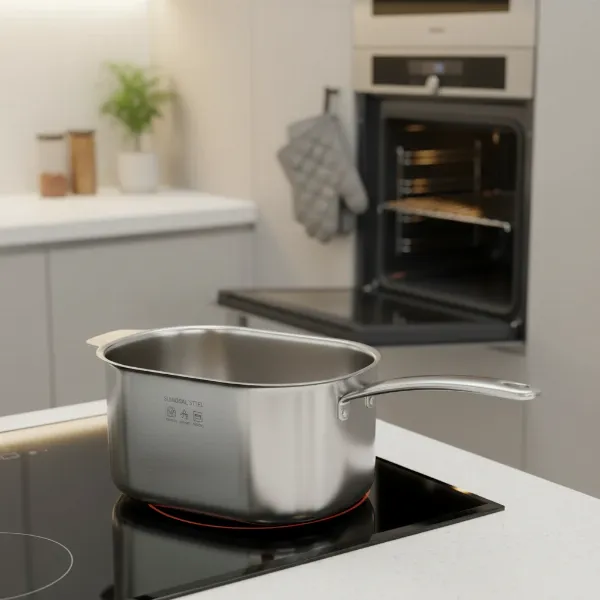 A high-quality stainless steel slow cooker insert, highlighting its stovetop and oven-safe features.
Direct Comparison: Ceramic vs. Metal Inserts for Even Cooking
Let’s break down the key differences to help you decide which material aligns best with your cooking preferences.
| Feature | Ceramic Inserts | Metal Inserts (Aluminum/Coated) | Stainless Steel Inserts |
|---|---|---|---|
| Even Cooking | Excellent – retains heat consistently, few hot spots | Good – heats fast but can have hot spots, uneven heat at bottom | Very Good – good heat conduction, often with aluminum core for even distribution |
| Heat Retention | Superior – stays hot for extended periods | Moderate – heats up and cools down faster | Good – retains heat well once hot |
| Durability | Prone to chipping/shattering, less denting | Prone to denting, less likely to shatter. Coatings wear out. | Highly Durable – resistant to dents, scratches, and shattering |
| Weight | Heavy and bulky | Lightweight | Moderate – heavier than aluminum, lighter than ceramic |
| Versatility | Generally not stovetop safe, some oven-safe | Often stovetop safe for searing, some oven-safe | Stovetop, oven, and sometimes multi-cooker functions |
| Cleaning | Easier if glazed and non-stick, but heavy. Can absorb odors. | Easy, especially if non-stick (until coating wears). Lightweight. | Very Easy – non-reactive, non-porous, dishwasher safe (most) |
| Safety Concerns | Potential for lead/cadmium leaching, especially if chipped or old | Potential for aluminum leaching, non-stick chemical leaching | Safest option – non-toxic, no leaching concerns (surgical grade) |
| Cost | Varies, traditional mid-range | Generally more budget-friendly than premium ceramic/SS | Often higher upfront cost, but long-lasting investment |
Choosing the Right Insert for Your Cooking Style
Selecting the best slow cooker insert boils down to your priorities in the kitchen.
- If Evenness is Your Top Priority and You Prefer Traditional Methods: A high-quality ceramic insert might be your choice. It excels at slow, even cooking, creating incredibly tender results without much intervention. However, be mindful of its weight and fragility.
- If Versatility and Convenience are Key: A metal insert, particularly a stovetop-safe one, offers the advantage of searing and slow cooking in the same pot, streamlining your meal prep and reducing dishes. Consider stainless steel for enhanced durability and safety.
- If Health and Non-Toxicity are Paramount: Surgical-grade stainless steel is the clear winner. It provides excellent cooking performance while eliminating concerns about heavy metal leaching or chemical coatings, making it a long-term, healthy investment.
Consider how often you cook, the types of dishes you make, your strength for lifting heavy pots, and your willingness to invest in a potentially more expensive but safer and more durable appliance.
Tips for Maximizing Even Cooking in Any Slow Cooker
No matter your insert material, these tips can help you achieve consistently delicious, evenly cooked meals:
- Fill Appropriately: Do not overfill or underfill your slow cooker. For best results, fill the insert between half and two-thirds full. This allows for proper heat circulation and cooking.
- Cut Food Evenly: Ensure that all ingredients, especially vegetables and meats, are cut into similar-sized pieces. This promotes uniform cooking, as smaller pieces will cook faster than larger ones.
- Start with Warm/Hot Liquid: If your recipe calls for liquid, using warm or hot liquid can help the slow cooker reach temperature more quickly and maintain even cooking from the start.
- Resist the Urge to Peek: Lifting the lid releases accumulated heat and moisture, which can significantly extend cooking times and disrupt even temperature distribution. Try to only open the lid when necessary, such as for stirring (especially for aluminum inserts) or checking doneness at the end.
- Layer Ingredients Strategically: Place root vegetables and tougher cuts of meat at the bottom of the insert, closer to the heat source, as they require longer cooking times. More delicate ingredients can be added later or layered on top.
Conclusion
The journey to finding the perfect slow cooker insert, whether ceramic or metal, is a personal one, dictated by your culinary needs and preferences. Ceramic inserts shine for their unparalleled heat retention and even cooking, delivering classic slow-cooked tenderness. Metal inserts, especially the versatile stovetop-safe varieties, offer convenience and faster heat-up times. For those who prioritize both superior performance and uncompromising health, high-quality stainless steel inserts provide an excellent, non-toxic solution.
Ultimately, understanding the unique characteristics of each material empowers you to make an informed decision, ensuring that your slow cooker becomes an indispensable tool for crafting delicious, evenly cooked meals that nourish your family and simplify your life. Which slow cooker insert will you choose to elevate your kitchen experience?
Frequently Asked Questions
Is ceramic or metal better for even cooking?
Ceramic inserts generally offer superior and more consistent even cooking due to their excellent heat retention and distribution properties. They heat up slowly and maintain a stable temperature, preventing hot spots. Metal inserts, while heating faster, can sometimes have uneven heat concentration at the bottom, though modern stainless steel designs aim to minimize this.
Can I sear in a ceramic slow cooker?
No, ceramic slow cooker inserts are typically not designed for stovetop searing. Their material is not suited for direct high heat, and subjecting them to thermal shock (hot stovetop to cool liquid) can cause them to crack or shatter. You would need a separate pan to sear ingredients before transferring them to a ceramic slow cooker.
Are there health concerns with metal slow cooker inserts?
Concerns exist primarily with aluminum inserts, as aluminum can leach into food, especially acidic dishes, during prolonged cooking, potentially posing health risks. Non-stick coatings on metal inserts can also degrade and release chemicals. However, surgical-grade stainless steel inserts are considered a safe, non-toxic alternative, often featuring an aluminum core sealed within for heat distribution without direct food contact.
What is the safest slow cooker insert material?
Surgical-grade stainless steel is widely considered the safest material for slow cooker inserts. It is non-reactive, highly durable, and does not leach harmful chemicals into food, even during extended cooking. Unlike glazed ceramic, there’s no risk of lead or cadmium, and unlike coated aluminum, there are no concerns about non-stick chemical degradation or aluminum exposure.