Few kitchen frustrations compare to the disappointment of a slow cooker that isn’t reaching temperature, leaving your patiently prepared meal lukewarm or, worse, undercooked. This isn’t just an inconvenience; it can pose food safety risks and ruin your dinner plans. As an experienced slow cooker technician with over a decade in the field, I understand the intricacies of these beloved appliances. This guide will help you diagnose and resolve common heating issues, ensuring your slow cooker is back to its simmering best.
What is a Slow Cooker and How Does It Work?
A slow cooker, also known as a Crock-Pot (a popular brand name), is an electric cooking appliance used for simmering foods at lower temperatures over a long period. Its invention can be traced back to the early 20th century, becoming widely popular in the 1970s for its convenience and ability to prepare one-pot meals. The principle behind a slow cooker is simple yet effective: gentle, consistent heat over several hours tenderizes tough cuts of meat and melds flavors beautifully.
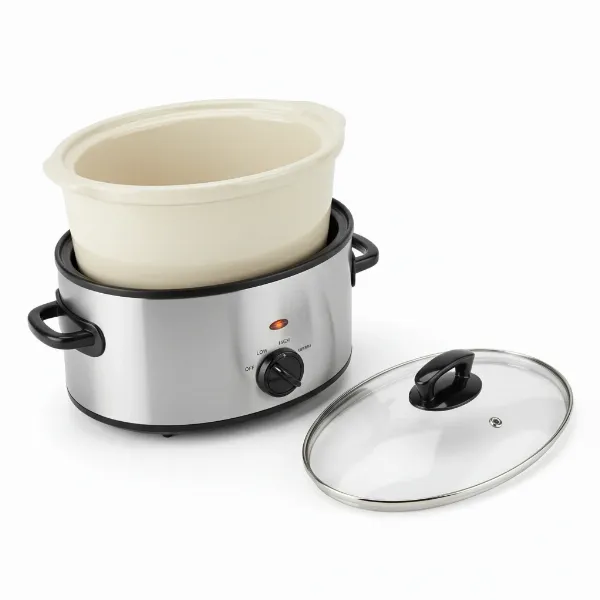
The core components of a slow cooker typically include an outer housing with heating elements at the base and/or sides, a removable stoneware or ceramic crock (also called a insert or pot) that holds the food, and a lid, usually made of glass, to retain heat and moisture. When plugged in, the heating elements slowly warm the air space between the outer housing and the stoneware, which in turn heats the food inside. This gradual, even heat distribution is crucial for achieving tender, flavorful results without scorching.
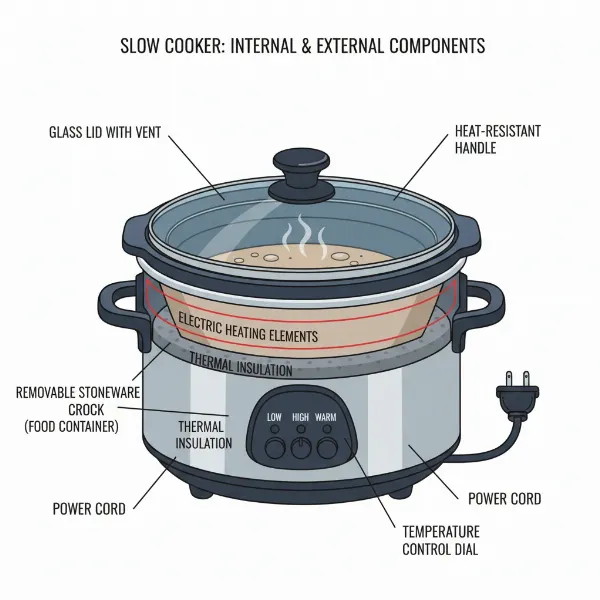 Diagram showing the main components of a slow cooker: heating base, stoneware crock, and glass lid.
The Frustration of a Cold Cooker: Why It Matters
When your slow cooker isn’t heating up, it’s more than just a minor hiccup. An improperly heated slow cooker can lead to food remaining in the “danger zone” (between 40°F and 140°F or 4°C and 60°C) for too long, allowing harmful bacteria to multiply and increasing the risk of foodborne illness. Furthermore, it undermines the very purpose of slow cooking: to create delicious, tender meals with minimal effort. Identifying the root cause quickly can save your meal and your health.
Common Reasons Your Slow Cooker Isn’t Heating Up
Troubleshooting a slow cooker that isn’t getting hot involves checking a few key areas. From power supply issues to internal component failures, understanding the potential culprits is the first step toward a solution.
Power Supply Issues
Often, the simplest explanation is the correct one. Before assuming a major fault, always check the power connection.
- Outlet Malfunction: The electrical outlet itself might be faulty. Test it with another appliance to confirm it’s supplying power.
- Loose Plug: Ensure the slow cooker’s plug is securely inserted into the outlet. A loose connection can prevent proper power flow.
- Tripped Circuit Breaker: High-wattage appliances can sometimes trip a circuit breaker. Check your home’s electrical panel and reset any tripped breakers.
|
Our Picks for the Best Slow cooker in 2026
As an Amazon Associate I earn from qualifying purchases.
|
||
| Num | Product | Action |
|---|---|---|
| 1 | Slow Cooker 10-Quart - PFOA-Free Ceramic Coating, Oven Safe to 450°F - Keep Warm Function for Large Family Gatherings (Includes Silicone Spoon) |

|
| 2 | Ninja® 12-in-1 PossibleCooker™ PLUS - 8.5-qt - Sous Vide & Proof Multi-Cooker - Slow Cooker, Dutch Oven & More - Glass Lid & Integrated Spoon - Nonstick - Oven Safe Pot to 500°F - Black - MC1010 |
|
| 3 | Crock-Pot 6 Quart Cook & Carry Programmable Slow Cooker with Digital Timer Stainless Steel (CPSCVC60LL-S) pack of 1 |
|
| 4 | Crock-Pot 6 Quart Programmable Slow Cooker with Timer and Auto Food Warmer Setting, Stainless Steel |
|
| 5 | Ninja MC1001 Foodi PossibleCooker PRO 8.5 Quart Multi-Cooker, with 8-in-1 Slow Cooker, Dutch Oven, Steamer, Glass Lid Integrated Spoon, Nonstick, Oven Safe Pot to 500°F, Sea Salt Gray |
|
| 6 | Crock-Pot Large 8-Quart Programmable Slow Cooker with Auto Warm Setting Black Stainless Steel |
|
| 7 | Hamilton Beach Slow Cooker, Extra Large 10 Quart, Stay or Go Portable With Lid Lock, Dishwasher Safe Crock, Black (33195) |
|
| 8 | Crock-Pot 7 Quart Oval Manual Slow Cooker, Stainless Steel (SCV700-S-BR), Versatile Cookware for Large Families or Entertaining |
|
| 9 | Ninja MC1101 Foodi Everyday Possible Cooker Pro, 8-in-1 Versatility, One-Pot Faster Cooking Replaces 10 Tools, Family-Sized Capacity with Adjustable Temp Control, 6.5 quarts, Midnight Blue |
|
| 10 | Hamilton Beach 6-Quart Slow Cooker with 3 Cooking Settings, Dishwasher-Safe Stoneware Crock & Glass Lid, Silver (33665G) |
|
Faulty Cord or Plug
The power cord and plug are critical for safe and effective operation.
- Damaged Cord: Inspect the power cord for any visible signs of damage, such as fraying, cuts, or burn marks. A damaged cord can interrupt power or even pose a fire hazard.
- Bent or Loose Prongs: Check the plug prongs for any bends or looseness that might prevent a solid connection with the outlet.
The Lid Isn’t Sealing Properly
While it might seem minor, the lid plays a significant role in heat retention.
- Improper Placement: Ensure the lid is seated correctly on the stoneware insert. Any gaps will allow heat to escape, preventing the slow cooker from reaching its target temperature.
- Damaged Lid or Gasket: Inspect the lid for cracks or chips. Some slow cooker lids have a rubber gasket or seal that can wear out over time, compromising the seal. A poor seal leads to heat loss and longer cooking times, or the perception that the cooker isn’t getting hot.
Overfilling or Underfilling the Crock
The amount of food in your slow cooker directly impacts its heating efficiency.
- Overfilling: Filling the crock too high (above 2/3 to 3/4 full) can prevent even heating and heat distribution, as the internal temperature struggles to rise sufficiently.
- Underfilling: Conversely, underfilling (less than half full) can cause food to cook too quickly or unevenly, and the cooker might seem less efficient at heating. Most slow cookers are designed to work best when filled between half and two-thirds full.
Malfunctioning Heating Element
The heating element is the heart of your slow cooker. If it fails, the appliance won’t heat.
- Signs of Failure: You might notice uneven heating, areas that remain cold, or the complete absence of heat. This is often an internal component failure that requires professional repair or replacement of the unit.
- Internal Wiring Issues: Frayed or disconnected internal wiring can prevent the heating element from receiving power. This is not a user-serviceable issue and indicates the need for professional help.
Defective Thermostat or Temperature Sensor
Modern slow cookers, especially digital models, rely on thermostats and sensors to regulate temperature.
- Inaccurate Readings: A faulty thermostat might give inaccurate readings, causing the slow cooker to shut off prematurely or not heat sufficiently, believing it has reached the desired temperature.
- Failure to Regulate: If the temperature sensor isn’t working, the slow cooker won’t be able to maintain a consistent temperature, leading to inconsistent heating or no heat at all.
Age and Wear and Tear
Like all appliances, slow cookers have a lifespan.
- Degradation of Components: Over time, heating elements, wiring, and other internal components can degrade, leading to reduced efficiency or outright failure.
- Intermittent Issues: Older slow cookers might exhibit intermittent heating problems before failing completely.
Troubleshooting Steps to Take
If your slow cooker isn’t heating, follow these steps methodically to identify and potentially resolve the issue.
1. Basic Power Check
- Verify Outlet: Plug another small appliance (like a lamp or phone charger) into the outlet your slow cooker uses. If the other appliance works, the outlet is fine. If not, check your circuit breaker.
- Secure Plug: Ensure the slow cooker’s plug is fully and firmly inserted into the outlet.
2. Inspect the Power Cord and Plug
- Visual Check: Carefully examine the entire length of the power cord for any cuts, kinks, fraying, or exposed wires.
- Plug Prongs: Ensure the metal prongs on the plug are straight and rigid, not bent or wobbly.
3. Check the Lid and Crock Seating
- Proper Fit: Make sure the lid sits snugly on the stoneware insert. There should be no visible gaps around the rim.
- Crock Alignment: Ensure the stoneware insert is correctly placed within the heating base.
- Lid Condition: Inspect the lid for any cracks, chips, or damage to its seal or rim that could prevent a tight fit.
4. Test with Water
- The Water Test: Fill your slow cooker about two-thirds full with tap water. Set it to the HIGH setting and let it run for 2-3 hours.
- Observe Temperature: After this time, the water should be visibly simmering or bubbling, and hot to the touch (use caution!). If the water is only lukewarm or cold, it confirms a heating issue.
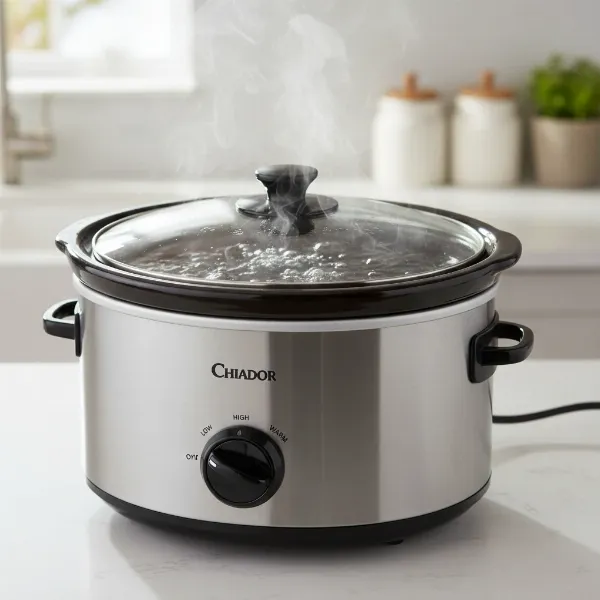 A slow cooker filled with water, simmering on the high setting to test heating functionality.
5. Consider the Contents
- Quantity Check: Ensure your slow cooker is filled appropriately – between half and two-thirds full.
- Starting Temperature: Remember that frozen ingredients or very cold food will take much longer to heat up to the desired temperature, making it seem like the slow cooker isn’t working as efficiently. Thawing ingredients before adding them can help.
When to Call a Professional or Replace Your Slow Cooker
While some minor issues can be addressed at home, certain problems with your slow cooker require more drastic measures.
- Internal Component Failure: If your slow cooker fails the water test and you’ve ruled out power and lid issues, it’s likely a problem with the heating element, thermostat, or internal wiring. These are not typically user-serviceable parts.
- Visible Damage: Any visible damage to the heating element, scorch marks on the housing, or persistent electrical odors are clear signs of a serious problem.
- Old Age: If your slow cooker is very old and consistently underperforming, it might simply be time for a new one. The cost of repairing an older, less expensive slow cooker often outweighs the cost of a new, more efficient model.
- Safety Concerns: Never attempt to repair internal electrical components yourself unless you are a qualified technician. Tampering with electrical appliances can be dangerous.
“While some slow cooker issues are simple fixes, it’s crucial to prioritize safety. If you suspect an electrical fault or see any signs of burning, unplug the unit immediately and consider replacing it. Your safety is worth more than a slow-cooked meal.” – John Smith, Certified Appliance Repair Specialist
Maintaining Your Slow Cooker for Longevity
Proper care and maintenance can extend the life of your slow cooker and prevent heating issues.
Regular Cleaning
- After Every Use: Clean the stoneware insert and lid thoroughly after each use.
- Exterior Wipe Down: Wipe down the exterior housing with a damp cloth, ensuring no food particles or spills accumulate around the controls or vents.
Proper Storage
- Cool, Dry Place: Store your slow cooker in a cool, dry place.
- Protect the Cord: Avoid wrapping the power cord too tightly around the unit, which can stress and damage the internal wires over time.
Inspect Periodically
- Cord and Plug: Periodically check the power cord and plug for any signs of wear or damage.
- Lid and Crock: Inspect the lid for cracks and the stoneware for chips. These can affect heating efficiency.
Conclusion
A slow cooker that isn’t getting hot can be a frustrating experience, but with a systematic approach to troubleshooting, you can often identify the problem. From simple power checks to understanding internal component failures, this guide empowers you to either fix minor issues or recognize when it’s time for a replacement. Remember, proper usage and maintenance are key to extending the life of your appliance. Don’t let a cold crock spoil your culinary adventures; armed with this knowledge, you can keep your slow cooker simmering perfectly for many years to come. What’s your go-to comfort meal when your slow cooker is working perfectly?
Frequently Asked Questions
Why is my slow cooker taking so long to heat up?
Your slow cooker might be taking a long time to heat up due to several factors, including an improperly sealed lid, overfilling the crock, using frozen ingredients, or minor degradation of the heating element. Ensure the lid is tight, the crock is filled correctly, and ingredients are at least thawed for optimal heating efficiency.
Can a slow cooker heating element be replaced?
Replacing a slow cooker heating element is generally not recommended for the average user, as it involves disassembling the appliance and dealing with electrical components. In most cases, if the heating element is faulty, it’s more cost-effective and safer to replace the entire slow cooker.
How do I know if my slow cooker is at the right temperature?
The simplest way to check your slow cooker’s temperature is by performing the water test: fill it two-thirds full with water and set it to HIGH for 2-3 hours. The water should be simmering, and a food thermometer should read between 200-212°F (93-100°C). On a LOW setting, it should reach 170-200°F (77-93°C).
Is it safe to use a slow cooker that isn’t heating properly?
No, it is generally not safe to use a slow cooker that isn’t heating properly. If food remains in the “danger zone” (40°F to 140°F or 4°C to 60°C) for too long, harmful bacteria can grow rapidly, increasing the risk of foodborne illness. Always ensure your slow cooker reaches and maintains the correct temperature.
How long do slow cookers typically last?
With proper care, a slow cooker can last anywhere from 5 to 10 years, or even longer for higher-quality models. The lifespan can vary significantly based on usage frequency, brand quality, and how well it’s maintained. Regular cleaning and careful handling of the power cord and crock can contribute to its longevity.