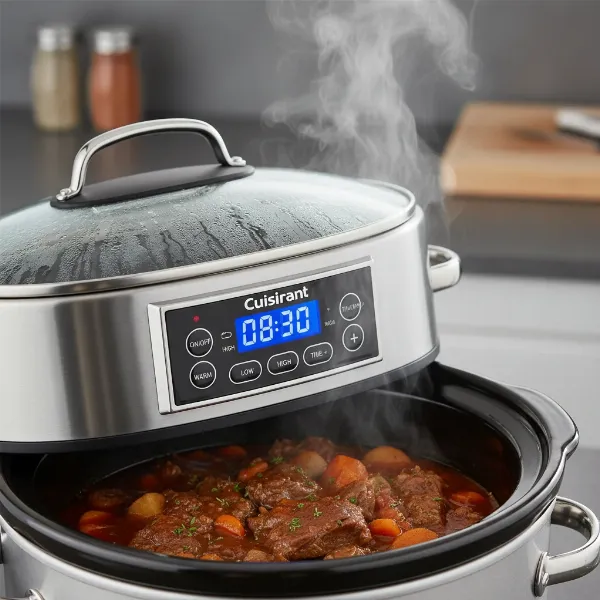
Have you ever wondered why a tough cut of meat, after hours simmering in a slow cooker, transforms into a succulent, fall-apart masterpiece? It’s not magic; it’s a captivating display of culinary science. The humble slow cooker, often underestimated, leverages fundamental chemical and physical processes to turn resilient cuts into tender, flavorful dishes that delight the palate. Understanding this science allows us to appreciate the art of “low and slow” cooking and master the creation of incredibly tender meat.
What is Slow Cooking and Its Core Principle?
Slow cooking is a culinary method characterized by cooking food at low temperatures for an extended period. This technique typically employs appliances like slow cookers or crockpots, designed to maintain a consistent, gentle heat over many hours. The core principle lies in patience: allowing heat and time to work together to gradually break down tough components in food, particularly meat. While modern slow cookers gained popularity in the latter half of the 20th century for their convenience, the concept of cooking low and slow to tenderize food has roots in ancient cooking traditions.
A slow cooker generally consists of a heating element at the base, an inner pot (often ceramic or stoneware), and a tight-fitting lid. The heating element provides consistent, radiant heat, while the heavy pot and lid create a sealed, moist environment. This trapped moisture is crucial, preventing food from drying out and aiding in the tenderization process. The controlled, low temperature ensures an even cook, making it an ideal method for transforming even the most resilient ingredients.
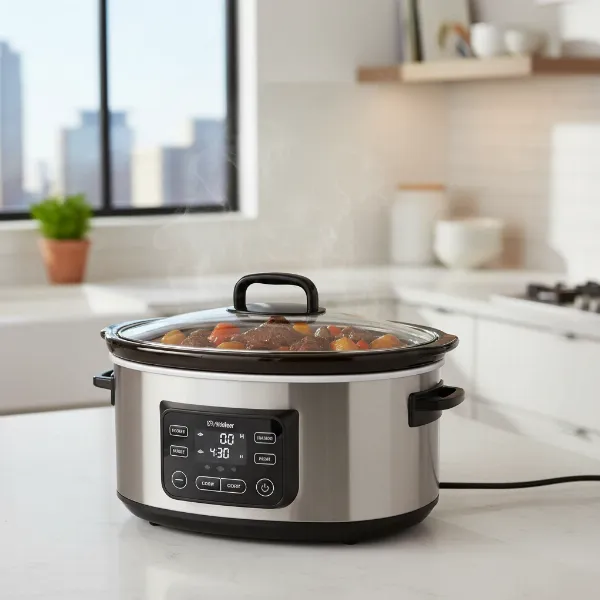 a modern electric slow cooker with ceramic pot and glass lid on a kitchen counter
The Amazing Benefits of Slow Cooking for Meat
Beyond the sheer convenience, slow cooking offers a multitude of benefits, particularly when preparing meat. One of the most compelling advantages is its ability to tenderize even the toughest cuts, making them incredibly palatable and enjoyable. This method also excels at preserving the inherent moisture of the meat. Unlike high-heat cooking, which can quickly dry out muscle fibers, the gentle, prolonged heat of a slow cooker minimizes moisture loss, resulting in remarkably juicy dishes.
Slow cooking also acts as a flavor amplifier. The extended cooking time allows ingredients to meld and deepen in taste, creating complex and rich profiles that are difficult to achieve with faster methods. Furthermore, it’s incredibly versatile, capable of transforming meat into a vast array of dishes, from hearty stews and succulent pulled pork to tender roasts and flavorful curries. This hands-off approach saves significant time and effort in the kitchen, freeing you to attend to other tasks while your meal gently cooks to perfection. It can also be more energy-efficient than running a large oven for several hours, making it a cost-effective choice for long cooking durations.
The Scientific Secrets Behind Tender Meat in a Slow Cooker
The secret to a slow cooker’s tenderizing prowess lies deep within the biochemistry and physics of meat. It’s a carefully orchestrated dance of heat, time, and moisture that transforms raw, tough muscle into a melt-in-your-mouth experience.
Collagen’s Role: The Toughness Factor
|
Our Picks for the Best Slow cooker in 2026
As an Amazon Associate I earn from qualifying purchases.
|
||
| Num | Product | Action |
|---|---|---|
| 1 | Crock-Pot Large 8-Quart Programmable Slow Cooker with Auto Warm Setting Black Stainless Steel |

|
| 2 | Crock-Pot 6 Quart Cook & Carry Programmable Slow Cooker with Digital Timer Stainless Steel (CPSCVC60LL-S) pack of 1 |
|
| 3 | Slow Cooker 10-Quart - PFOA-Free Ceramic Coating, Oven Safe to 450°F - Keep Warm Function for Large Family Gatherings (Includes Silicone Spoon) |
|
| 4 | Hamilton Beach 6-Quart Slow Cooker with 3 Cooking Settings, Dishwasher-Safe Stoneware Crock & Glass Lid, Silver (33665G) |
|
| 5 | Crock-Pot 7 Quart Oval Manual Slow Cooker, Stainless Steel (SCV700-S-BR), Versatile Cookware for Large Families or Entertaining |
|
| 6 | Hamilton Beach Slow Cooker, Extra Large 10 Quart, Stay or Go Portable With Lid Lock, Dishwasher Safe Crock, Black (33195) |
|
| 7 | Ninja MC1001 Foodi PossibleCooker PRO 8.5 Quart Multi-Cooker, with 8-in-1 Slow Cooker, Dutch Oven, Steamer, Glass Lid Integrated Spoon, Nonstick, Oven Safe Pot to 500°F, Sea Salt Gray |
|
| 8 | Ninja® 12-in-1 PossibleCooker™ PLUS - 8.5-qt - Sous Vide & Proof Multi-Cooker - Slow Cooker, Dutch Oven & More - Glass Lid & Integrated Spoon - Nonstick - Oven Safe Pot to 500°F - Black - MC1010 |
|
| 9 | Ninja MC1101 Foodi Everyday Possible Cooker Pro, 8-in-1 Versatility, One-Pot Faster Cooking Replaces 10 Tools, Family-Sized Capacity with Adjustable Temp Control, 6.5 quarts, Midnight Blue |
|
| 10 | Crock-Pot 6 Quart Programmable Slow Cooker with Timer and Auto Food Warmer Setting, Stainless Steel |
|
At the heart of meat’s texture is collagen, a fibrous protein that forms the primary component of connective tissue. This collagen acts like a natural glue, holding muscle fibers together and attaching muscles to bones. In cuts of meat from well-exercised parts of an animal, such as the shoulder or leg, collagen is abundant, making these cuts inherently tough and chewy when raw or cooked quickly. For instance, a beef chuck roast, known for its chewiness, is rich in this resilient connective tissue.
The Magic of Low Heat and Long Duration
The brilliance of slow cooking stems from its sustained application of low heat. While high temperatures cause muscle fibers to contract rapidly and expel moisture, making meat tough, slow cooking operates at a more forgiving range, typically between 160°F and 205°F (71-96°C). This gentle heat allows the meat to cook gradually without causing significant tightening or moisture loss from the muscle fibers.
Collagen’s Transformation to Gelatin
The pivotal scientific event in slow cooking is the transformation of collagen into gelatin. As collagen is exposed to these low, consistent temperatures over several hours, it undergoes a process called hydrolysis. The tightly wound triple-helix structure of collagen begins to unravel and dissolve. This is not an instantaneous process; it requires sustained heat and time. Once denatured, collagen breaks down into gelatin, a soluble protein.
Gelatin is a remarkable substance. It’s a rich, viscous liquid that lubricates the meat, contributing immensely to its tender, silky texture. Crucially, gelatin has an incredible capacity to absorb water—up to 10 times its own weight. This means that any moisture released by the meat during cooking is absorbed by the gelatin, which then bastes the meat from within, ensuring it remains incredibly juicy and succulent. This is why slow-cooked ribs often “fall off the bone” – the collagen that once secured them has dissolved into gelatin.
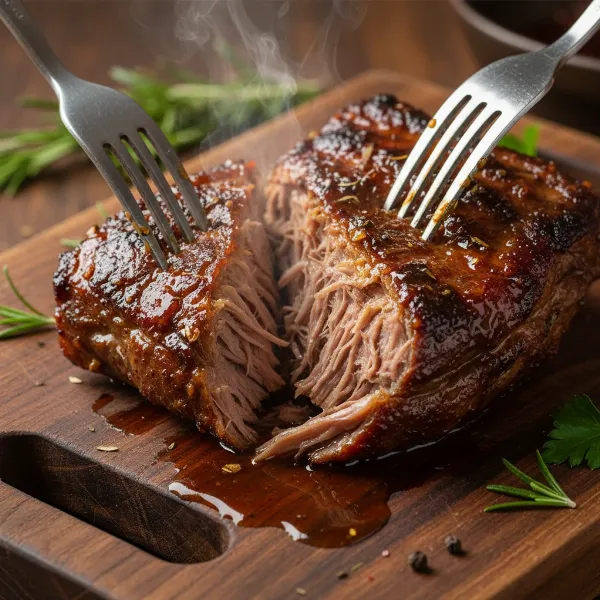 a close-up of extremely tender, fall-apart slow-cooked beef being easily shredded by forks
Muscle Fiber Denaturation and Moisture Retention
While collagen steals the spotlight for tenderness, changes in muscle fibers also play a significant role. Muscle proteins, such as actin and myosin, denature (unfold and change structure) as the temperature rises. At lower slow cooking temperatures, this denaturation happens gently. This controlled process leads to less shrinkage of muscle fibers and, consequently, reduced moisture expulsion compared to rapid, high-heat cooking. The continuous presence of liquid in a slow cooker further aids in retaining moisture, creating a consistently juicy final product. Furthermore, the gentle heat can deactivate natural enzymes in meat, like cathepsins and calpains, which further aids in tenderization.
“Tenderness in meat comes from the melting of collagen – the connective tissue protein present in meat. When collagen melts, it turns into gelatin, a rich liquid that gives meat a lot of flavour as well as a silky texture.” – Rib N Reef Steakhouse & Cigar Lounge
Choosing the Right Cuts for Maximum Tenderness
Not all cuts of meat are created equal for the slow cooker. To truly leverage the science of tenderization, you need to select cuts that are rich in collagen and connective tissue. These “tougher” cuts are precisely the ones that benefit most from the low and slow method, transforming from chewy to unbelievably tender.
Cuts Rich in Connective Tissue
The best candidates for slow cooking typically come from areas of the animal that get a lot of exercise. These muscles develop more collagen, which, as we’ve learned, converts into gelatin during prolonged cooking. Excellent choices include:
- Beef Chuck Roast: A classic for stews and pot roasts, this cut from the shoulder is well-marbled and collagen-rich, resulting in juicy, fall-apart goodness.
- Brisket: Sourced from the breast, brisket has a high collagen content, making it perfect for pulled beef or smoky barbecue-style dishes.
- Short Ribs: These well-marbled ribs are packed with collagen and transform into incredibly flavorful, tender meat.
- Pork Shoulder (Boston Butt): Ideal for pulled pork, this cut is naturally tough but becomes buttery and flavorful through slow cooking.
- Lamb Shank: Rich in collagen, lamb shank is perfect for braises and stews, yielding succulent meat that easily falls off the bone.
- Beef Cheeks and Oxtail: These cuts are exceptionally high in gelatin and connective tissue, producing rich, luxurious results.
- Chicken Thighs: While chicken breasts can dry out, chicken thighs have higher fat content and connective tissue, making them better suited for slow cooking.
Cuts to Avoid (or Adjust for)
Leaner, more tender cuts, such as beef tenderloin, sirloin, pork loin, or chicken breast, are generally not ideal for slow cooking. These cuts have less collagen and can easily dry out and become stringy or tough if subjected to long cooking times, losing their natural succulence. If you choose to slow cook leaner meats, significantly reduce the cooking time and ensure ample liquid is present to prevent them from drying out.
Tips for Achieving Perfectly Tender Slow-Cooked Meat
While the science is consistent, a few practical tips can help ensure your slow-cooked meat reaches its peak tenderness and flavor every time.
Browning Beforehand
Before adding your meat to the slow cooker, consider searing it quickly in a hot pan. This step, known as the Maillard reaction, creates a rich, caramelized crust that adds significant depth of flavor to the final dish. While it doesn’t directly contribute to tenderness, it immensely enhances the overall taste profile.
Don’t Overfill
Avoid packing your slow cooker too tightly. An overfilled pot can prevent even cooking, as heat may not distribute uniformly, leading to some parts being undercooked or overcooked. Leave enough space for liquids to simmer gently.
Resist Lifting the Lid
Every time you lift the lid of your slow cooker, you release a significant amount of trapped heat and moisture, effectively lowering the internal temperature and extending the cooking time. For optimal results, keep the lid securely in place until the designated cooking time is nearly complete.
Sufficient Liquid
Ensure there is always enough liquid in the slow cooker to cover the meat, or at least a good portion of it. This moist environment is crucial for the efficient breakdown of collagen into gelatin and for preventing the meat from drying out. The liquid also becomes a flavorful broth infused with all the rich juices and gelatin.
Resting the Meat
Just like with other cooking methods, allowing your slow-cooked meat to rest for 10-15 minutes after cooking can improve its texture. This allows the juices to redistribute throughout the meat, ensuring every bite is moist and tender.
Where to Find Reliable Slow Cooking Information?
For those eager to delve deeper into the world of slow cooking, a wealth of reliable information exists. Reputable sources include established cookbooks specializing in slow cooker recipes, well-regarded food blogs by experienced chefs and home cooks, and official manufacturer guides for specific slow cooker models. These resources often provide not only recipes but also detailed tips on ingredient preparation, cooking times for various cuts, and troubleshooting common issues, ensuring your slow cooking journey is both rewarding and delicious.
Conclusion
The unparalleled tenderness of slow-cooked meat is a testament to the elegant interplay of time, temperature, and fundamental chemistry. By understanding how the gentle, prolonged heat converts tough collagen into silky gelatin, you gain insight into why cuts like chuck roast and brisket transform into succulent, fall-apart dishes. This process not only guarantees exceptional tenderness and juiciness but also unlocks a depth of flavor unmatched by faster cooking methods. Embrace the “low and slow” approach, and you’ll consistently create comforting, delicious meals that impress with their incredible texture.
What culinary creation will you unveil with the science of slow cooking in your kitchen tonight?
Frequently Asked Questions
Why does my slow cooker meat sometimes turn out dry?
Slow cooker meat can turn out dry if it’s a very lean cut with low collagen content, or if it’s overcooked beyond the point where collagen has converted and muscle fibers have begun to expel too much moisture. Ensuring sufficient liquid and choosing appropriate cuts helps prevent dryness.
Can I use frozen meat directly in a slow cooker?
For food safety reasons, it is generally not recommended to put frozen meat directly into a slow cooker. The slow initial heating time in a slow cooker can keep the meat in the “danger zone” temperature range (40°F to 140°F or 4°C to 60°C) for too long, allowing harmful bacteria to multiply. Always thaw meat completely before slow cooking.
What’s the difference between a slow cooker and a Dutch oven?
A slow cooker is an electric appliance designed to cook food at a consistent low temperature over a long period, often unattended. A Dutch oven is a heavy, thick-walled cooking pot, usually made of cast iron, that can be used on the stovetop or in the oven for slow cooking (braising, stewing) but requires external heat and more monitoring.
How long can you safely slow cook meat?
Most slow cooker recipes for meat typically range from 4-8 hours on high or 6-10 hours on low, depending on the cut and size. Always follow recipe guidelines and ensure the meat reaches a safe internal temperature, checking specific USDA recommendations for different types of meat.
Is slow cooking healthy?
Yes, slow cooking can be a very healthy method. It often involves minimal added fats, and the gentle cooking process can help retain nutrients. It’s also excellent for preparing meals with vegetables and legumes, promoting a balanced diet.